


Hold a stone to the light and it reveals what it is. I trained as a gemologist. Light goes through the stone; you read what it returns. The lattice hides; what shows is what the stone does to the light — where it bends, what it extinguishes, what it throws. From that you know what you hold, and whether it is what it claims to be.
Language carries the same way. Meaning moves through a person the way light moves through crystal, and it comes out marked by a structure you cannot face head-on. Firetongue is where I turn that eye on words, and on the systems built from them. I look for the place where a word has lost the thing it points to, where the body goes quiet because nothing real is coming through. That quiet is data. This is where I read it.
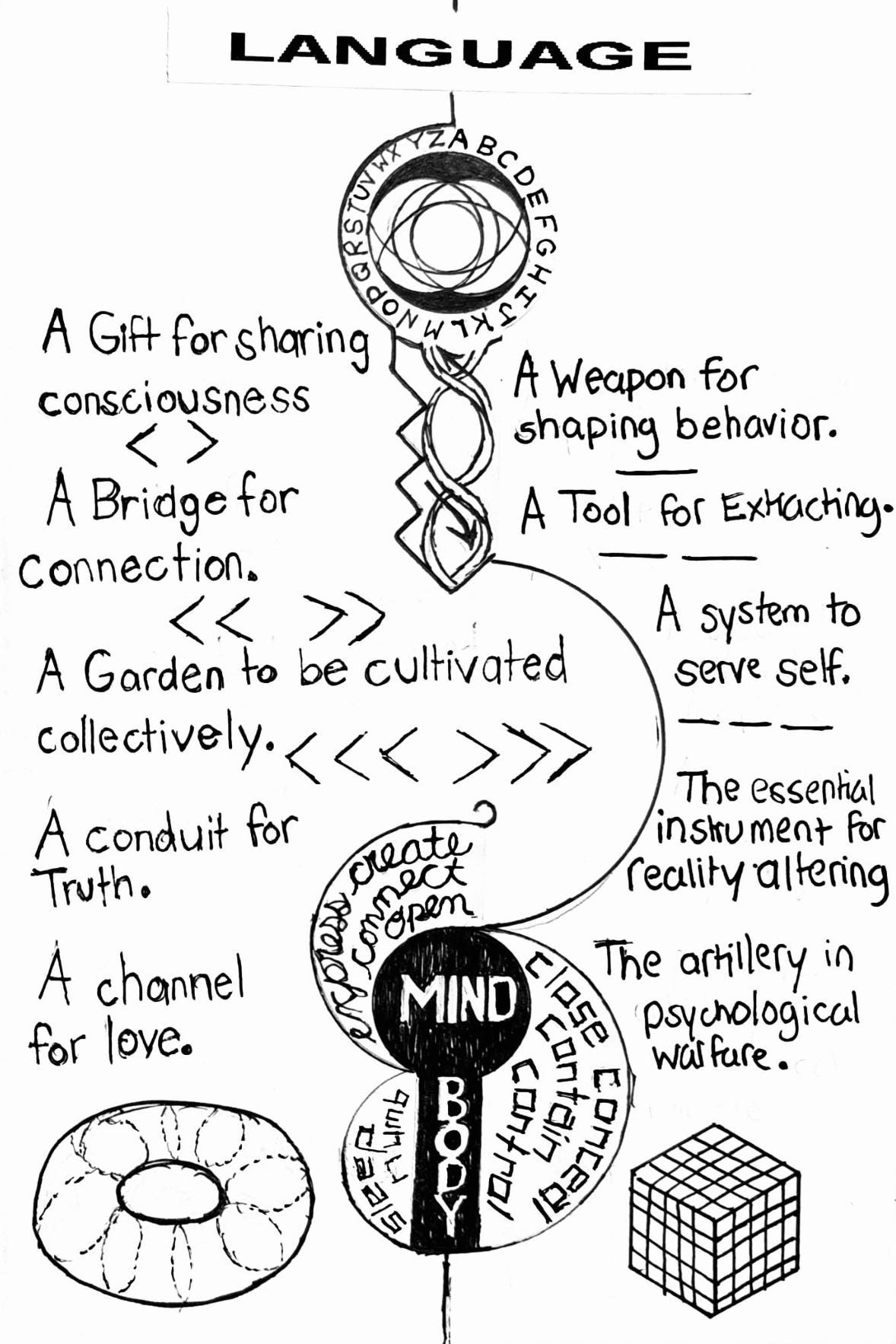
I am talking to you.
Will you hear what I have to say?
I can speak to you without knowing your name, because I am also willing to hear what you say back.
That is the whole agreement. I speak, you answer, and neither of us is a category to the other.
You.
You who feel that something is wrong in how we are built, how we speak at scale, how we treat each other once the other becomes a number. You don’t have to solve it, lead it, or be right, to want a world better than this one. I am talking to you.
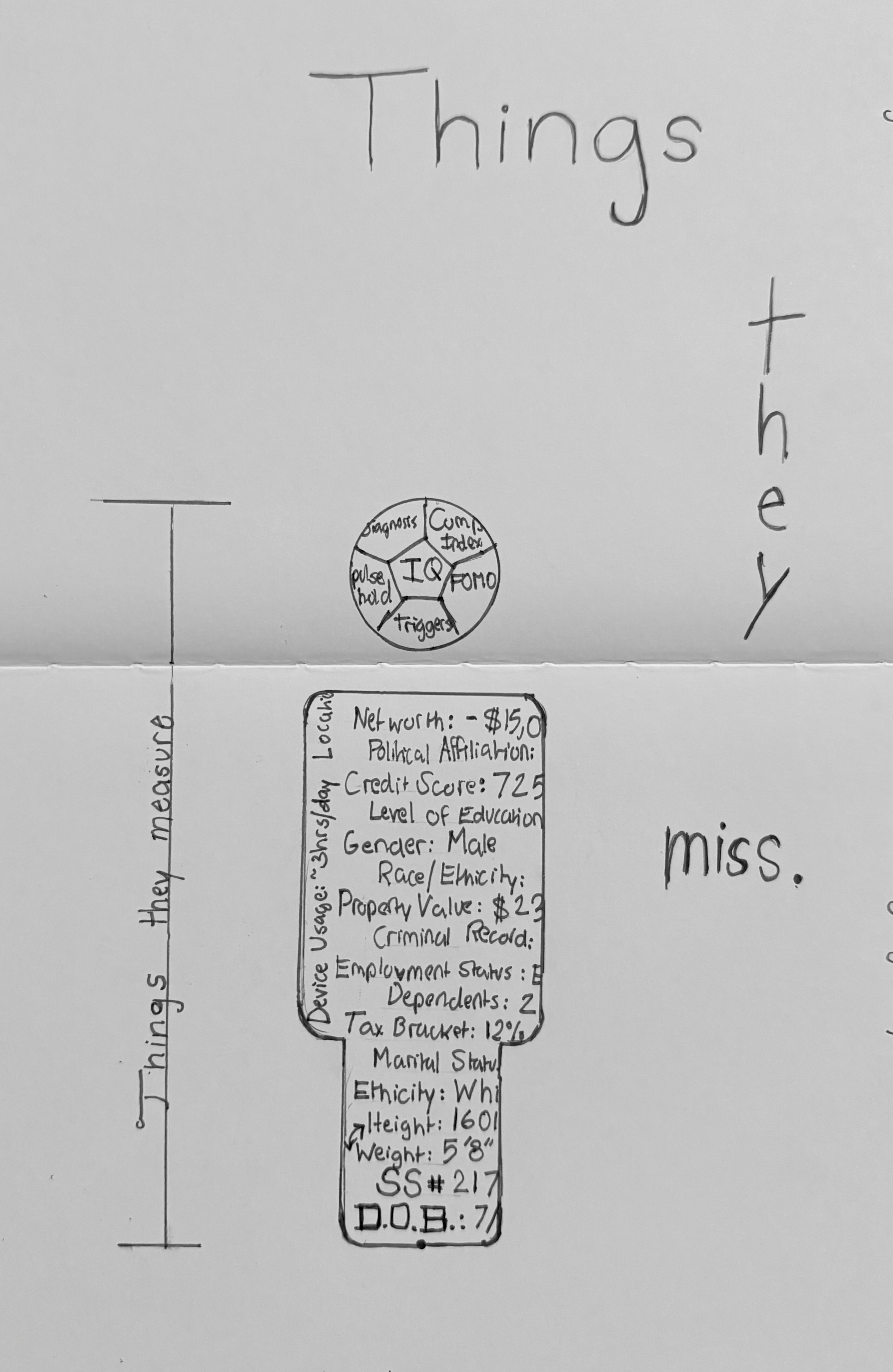
A force already runs on not seeing you — the office that files you, the system that scores you. It does not love you. It does not hate you. It has never met you. It cannot. It reads a record where your face should be, and it acts on the record.
It takes you, someone who could be spoken to and could answer, and moves you into the third person: a case, an entry, an it. The one move that resists, the one move the record cannot make, is a name said out loud to a body that can say it back.
I
The deepest cut language makes is the asymmetry inside the I and the you.
You is laid down first.
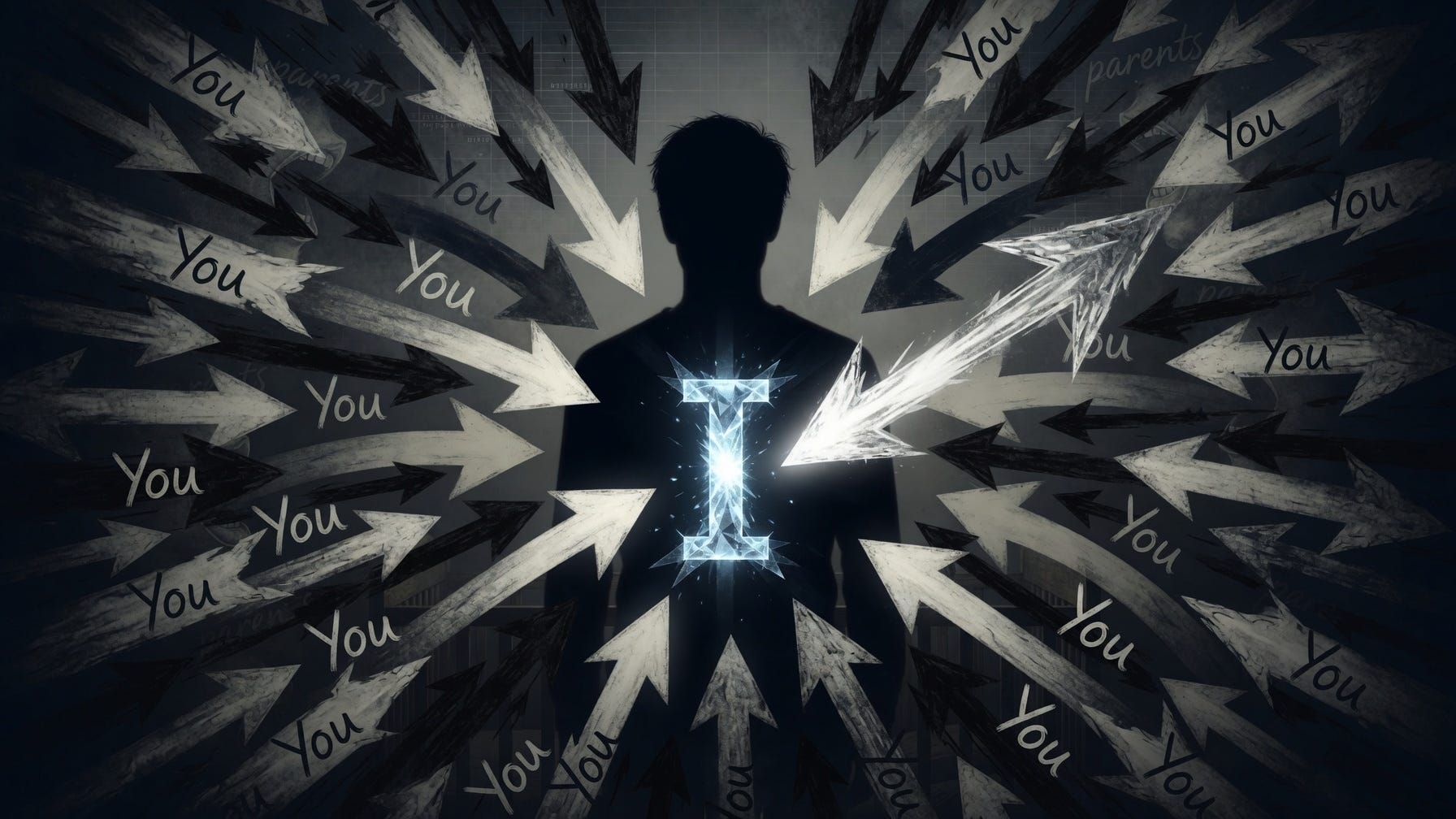
You are addressed before you can answer. For months you are a you in other mouths — are you hungry, aren’t you sweet, look at you — held in the second person before you hold one word of your own. You are named, called, summoned, and a self forms as the precipitate of all that address. The self is accusative before it is nominative: you back into the first person, and I is the position you finally take up in a structure already pointing at you. The I is a reply. Before a child can record itself, it records the others around it, so the self arrives last — the one that learned to answer to its name.
This cut sits upstream of every other one. A number split from a name, a written mark split from the breath that once carried it — those land on a self already there to take them.
This cut makes the self.
Other cuts are wounds the self takes; this one is the wound the self is — the place where an undivided field first split into the one being addressed and everything else, and then the addressed place learned to say its own name. You is the cut, felt from the side that got called.
A self made of address is a self always on call.
There is no quieter, earlier self beneath it to climb down to; the self is the deposit the address left. Solitude, at the level of the self, stays out of reach. Alone in an empty room you address yourself in the second person under your breath — come on, you’ve got this, what were you thinking — because the other was installed inside you as the one you talk to, and the inner voice keeps the back-and-forth shape of the conversations it grew from.
The self is already a room with two chairs. The you comes first. The I is what it leaves behind.
II
The body draws a boundary too, and the two rarely line up.
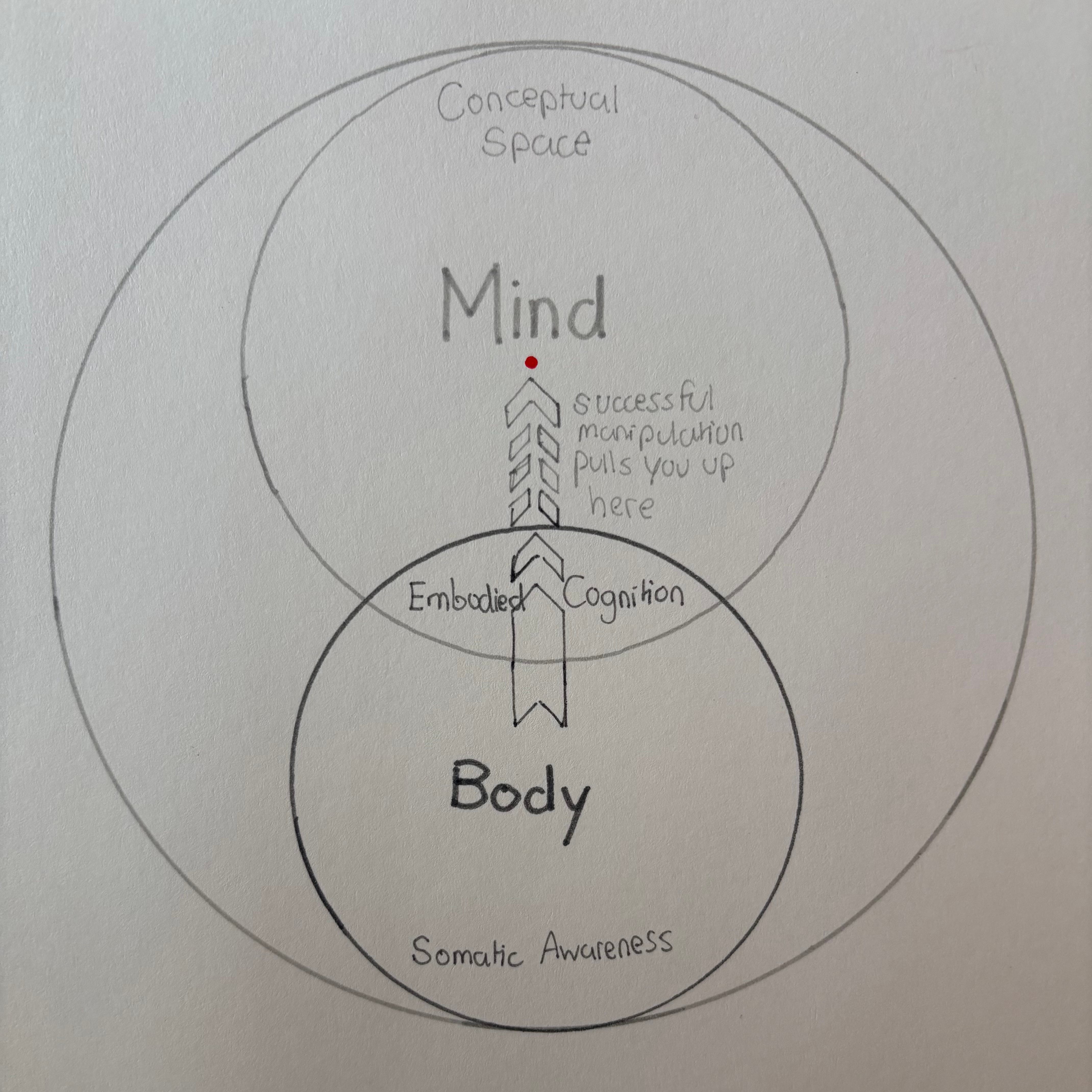
The skin marks the first edge — self at the membrane, a felt border, the line where the cold air stops and you start — made before any word.
Then grammar lays the I/you cut over the skin and re-cuts along its own lines. The addressable you takes in what the body never feels as itself — your name, your record, your role, the debt with your name on it — and leaves out what the body does feel: the gut, the unbidden, the thing that rises in the throat before you choose it. You live in that seam, held answerable as the you others address, for a body that never agreed to the address.
The self made of grammar and the self made of flesh sit slightly out of true, and most of what hurts collects in the gap between them.
III
Before any system can act on you — before a state can summon you, a seller persuade you, a ledger hold you — you have to be reachable. There has to be a you there to address. The pronoun system builds that surface in every speaker, in the first words spoken over the crib, and hands it over free.
The cut installs two things in one stroke: a door and a handle on it.
The handle is the grip — the addressable, on-call, accountable self any power can take hold of.
The door is the opening — the way another person’s inside reaches you at all. The same cut makes both. You are graspable because you are reachable.

Software matches your face to a name on a watchlist. The match is wrong; you have never been near the place. They arrest you on the strength of the record alone — and you, who were miles away, are no part of what put you in the cell.
Two operations rival the second person for the deepest cut.
Predication — the is that splits the world into a thing and its properties and builds the bounded, self-identical object.
Negation — the no that lets you hold the absent, the false, the forbidden, and so lets you be caged by what is not even in the room.
Both are deep. Both work on a self that is already standing. Is and no are things a self does; you is the thing that makes the self there to do them.
Two questions that look separate are one.
Which cut goes deepest in language is the same as which cut makes the speaker language runs through — and the cut that installs the speaker installs the self. One event, seen once from the language side and once from the self side.
IV
The cut makes you by addressing you, and it makes you halfway. The other half is everything that follows.
To be addressed is, at first, to be handed yourself in a mirror.
The faces over the crib reflect you back, and you cohere out of the reflection. A mirror still has to become a face. The cut finishes only when the one who addressed you registers, for you, as a center with its own inside — someone who, when you say you to them, lives it from within as I. The pronouns swap every turn: the one I call you calls herself I and calls me you. To record a real other is to record that the swap goes all the way down for them: your you is their I, a full instance of the cut that made you.
That recording is recognition: the step where the other stops being a surface that gives you back yourself and becomes a face with an interior you did not author.
What turns the mirror into a face is survival. The psychoanalyst D.W. Winnicott watched it happen: the infant uses the other without mercy, as a thing for its own needs, and the other survives the use — does not retaliate, does not collapse. That survival is the conversion.
The other becomes real by outlasting your use; the thing you took for your own projection turns out to have a center you did not make, because it held when you treated it as yours.
That conversion can fail, and it fails in two directions.
V

The first failure is the mirror that never became a face.
The other stays a mirror, kept on to confirm the self, because the self’s cohesion was outsourced to the reflection and never drawn inside. This self is hungry and fragile at once: it needs the mirror the way the body needs air, and rage is the mirror cracking, which lands as annihilation because the self is held together from outside. At its core sits an inability to let the mirror have an inside, guarded like a choice, since an other with its own center might stop reflecting. And so the confirmation never finally lands — the one doing the confirming was never granted enough reality for it to count — and the supply has to run forever. A self starved for a completion that cannot arrive, running on an infinite mirror, discharging nothing.
The second failure is the map that never got the tag — colder, and earlier.
The mental model of the other can be intact, sharp even, which is what makes manipulation work. What goes missing is the affective tag: the resonance that marks the modeled other as a center that can be hurt, and whose hurt lands in you. The other’s swap is modeled and never felt. They know you say I, and use it; the I never registers as a seat of experience that constrains them. The other is recorded accurately and recorded weightlessly — the reply-guy who quotes your timeline back word for word and never registers that you are bleeding.
That second failure is one an institution runs at full scale.
A system that processes people in bulk keeps what it can use and strips what it can’t, then files the stripping under efficiency.
Strip the inside from an accurate record and the same operation runs on a face: find the residue of their interior, call it noise, remove it. The bureaucracy needs no cold people to do it. A caseworker can feel the whole weight of you across the desk while the reward structure selects against acting on it — cases closed, faces never met. The stripping lives in the structure; it runs with or without a feeling clerk. The office that logs you as a number does, in structure, what the second self does to the people around it.
One keeps the other on as supply and denies them a center; one keeps the other on as a model and denies them weight. Both leave the second chair filled by a prop.
These are the same machine every self runs, with the recognition stage cut short and made to carry weight it cannot. Everyone runs the short version. No one records the full interior of billions; the stranger collapses into a category, the unfamiliar face flattens. The selfie, the feed built to reflect you, the friend kept on as an audience — the small daily failure to let a mirror be a face. The pathology is that shortfall frozen into the structure of a self instead of passing through it.
VI
Erasure has a grammar, and it is the third person.
The order rarely strikes a person from speech. It moves them out of the second person — where they can be addressed and answer — into the third, where they are spoken about and cannot speak back. He, she, it, they: the persons discussed in their absence, who hold no floor and get no turn.
The file is third person. The statistic is third person. Illegals is a third-person plural that calls no one into the room. The slur talks past a face about a category.
To erase is to demote a person from the one addressed to the one merely mentioned — to write them into the grammatical seat that, by design, cannot answer when called.
The dossier is the perfected form: a record of you in the third person, fixed, talked about forever, present at no table.
The reverse restores the second person and re-opens the swap.
Speaking to in place of about.
The name said as direct address, carried across to a face that can say it back. Testimony, where the erased speaks in the first person and forces the room to receive it.
The performative that grants standing — I see you; the apology that restores the other to one who can be wronged; the declaration that installs a right by saying it. And the sharpest legal case, habeas corpus — the writ that orders a body produced: it drags a filed, caged, third-personed body into a room, present, answerable, a you again, before a judge. Law performs recognition. The witness stand, the naturalization oath, the writ. The same performative force that writes a person out can seat them back.
The grammar and the morality come apart at two points.
The second person captures: the interrogator’s you, the officer’s you, come here — address as a grip, a summons that cages, the swap forbidden because you may not answer back as an equal.
The third person can hold a whole inside: a friend described with love in their absence is third-person and fully present. So reversibility carries the weight. Recognition is the address that keeps the swap open — the one addressed able to answer as an equal I and be received. Erasure is the address, or the file, that forbids the swap. The officer and the ledger both shut it; the witness stand and the name said in love both keep it open.
VII
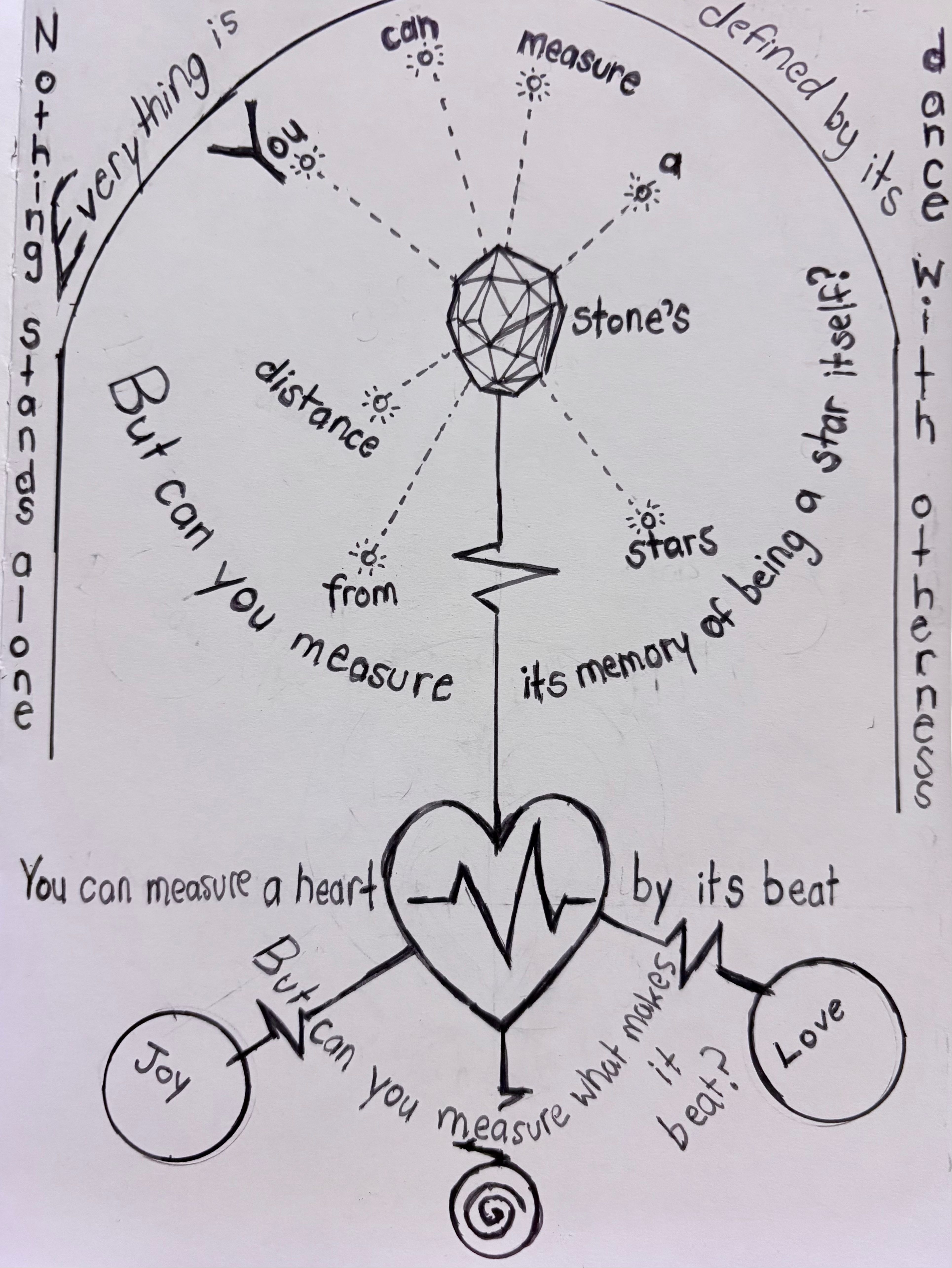
At the scale of the state the cut is neutral. The performative power that strips standing and the power that grants it are one power, and the direction rides on who holds it. The asymmetry is the whole tragedy: stripping is cheap and backed by force; granting is dear and has to be won.
Writing a person into a category costs a keystroke and carries the state’s enforcement.
Restoring them to the second person costs a hearing, a strike, a statute, a fight — and holds only as long as the force behind it holds. The un-recognized person is the cheap person, the way the un-weighted other was the cheap other.
The order tilts toward erasure, because erasure is the efficient operation.
And it selects, in the people who run it, for the second failure exactly: the worker who skips the affective tag is the faster worker. The structure rewards that, promotes it, files it under focus.
Language performs recognition, and the performance lands only when power backs it.
Habeas opens the cage because a sheriff enforces the writ. A declaration of rights with no army behind it is a poem read to a wall.
The breath that names a person real is true on its own, and the order is built to make truth insufficient — which is why the breath has to be backed, organized, enforced, or it stays true and gets crushed. Naming the erasure is necessary, and only the start.
The witness needs a court with teeth.
The recognition that scales also captures. To be granted standing by the order is to be made legible to it — entered, sorted, governable. The asylum-seeker who is recognized is, in the same act, entered in the database. Legibility is the precondition of the help and the control at once.
The political scientist James Scott gave the process its name: a state makes its people readable before it can govern them. The order calls you into the room and fits the grip in a single reach.
The benevolent uses are real and load-bearing.
The registry that finds a missing child, the rolls that resettle a refugee, the record that pays out a disability claim, the census that funds a school — each opens a true door and fits the grip in the same motion. The child is found and made trackable. The refugee is housed and indexed. The help is real. Help and hold arrive on one form, and a state that could grant standing without recording it has never existed. The romantic version of this complaint forgets that the file feeds people. The truer version holds both at once: the same paperwork shelters and captures.
So the recognition that comes with no handle attached — a face, a name said across a table, the breath received by one other body — routes through the order at no point. That is its purity and its helplessness. Around the order, it stays unenforceable; unenforced, it gets ground down by the capture-version, the one that can be enforced. You choose your failure. The reverse-erasure that leaves no cage is the one no force defends. The reverse-erasure that force defends leaves a cage. Recognition from the order comes with a handle every time.
The shape of the real fight is already visible.
A law that forbids agencies from writing one file that follows a child from database to database — the linkage that fits a handle on a person — is the order declining, for once, to fit the handle. It is law pointed at granting, and it holds only while it is enforced, which is the whole struggle. Linkage of another kind cuts the opposite way. Join the same records at the level of outcomes — these schools, these cohorts, these later cells — and the file stops gripping a person and starts naming a system. That join gives the harm a subject; it drags the apparatus into the second person. The same act of joining records fits a handle on the individual or a lever on the system, and the direction rides on which the joining is built to produce — the reverse, at the level of the record.
Dragging an erasing apparatus out of the passive voice — out of the grammar where harm happens to people and no one is named as having done it — into a sentence with a subject who can be addressed and made to answer: the same reverse, at the level of speech.
Language can do this. The live question is whether the breath that proves itself gets force behind it before the order returns the body to its row.
VIII

One recognition belongs to no order — the one running now, in the space between these marks and the one reading them. I have been saying you through the whole of this. The reversible kind: it assumes an I on your side that will answer back, a you that is no category to me. That address routes through no database. It stays unenforceable at scale, which is its weakness and the entire measure of its worth.
The freedom in all of this is narrow and real.
The chair the cut seats you in is also where you are fed. The same address that cages you is the only road another person travels to reach you. You are summonable because you are reachable. The cut that makes you graspable is the cut that makes you held.
Everywhere else, the fight is whether the breath that proves itself gets force behind it before the row closes again. Here, between us, there is no row. Only the agreement we began with.
I speak. You answer. Neither of us is a category to the other.
I am talking to you.
-Fire tongue 🔥
❧
Notes
The self forming inside address, the second person before the first: Émile Benveniste, Problems in General Linguistics, on how I and you constitute the speaking subject. The developmental side — mirror self-recognition, personal-pronoun use, and pretend play emerging together in the second year — is in Michael Lewis and Douglas Ramsay, “Development of Self-Recognition, Personal Pronoun Use, and Pretend Play During the 2nd Year” (Child Development, 2004), with related work on infants’ early bias toward encoding others before the self-reference advantage appears.
Inner speech as internalized dialogue: Lev Vygotsky, Thought and Language; extended by Charles Fernyhough on its back-and-forth shape (The Voices Within; Alderson-Day and Fernyhough, “Inner Speech,” Psychological Bulletin, 2015).
Recognition and the survival of the object: D.W. Winnicott, “The Use of an Object” (1969); Jessica Benjamin, The Bonds of Love, on recognition between two centers. The mirror-hungry self draws on Heinz Kohut, The Analysis of the Self. The accurate-but-weightless reading of the other follows the empathy profile in psychopathy research — cognitive perspective-taking intact, affective resonance impaired.
The state material: Max Weber, “Politics as a Vocation,” on the monopoly of legitimate force; J.L. Austin, How to Do Things with Words, on performatives; Louis Althusser, “Ideology and Ideological State Apparatuses,” on interpellation, being hailed into a subject; James C. Scott, Seeing Like a State, on legibility. Habeas corpus — “you shall have the body” — is the writ ordering a detained person produced before a court.
Filed under — Firetongue · Language Gemology Blueprint · Missing Referent · Completion · Holarchy
YES ! to what you lay out.
I know because I left school at 13. and did an apprenticeship. as a phone technician.
I resigned with long service leave at the delicate age of 28 ? FFS.
On the way I met well educated people. Architects, Doctors, Journalists, Artists, a Buddhist, A man who grew Bonsai, They became my mentors, mainly because I made things.
One was the daughter of a speach therapist, Lady Cherie. I did her headstone. Her daughter, Jill, helpfully made sure that What I said, was what I meant, Pronouncement being the peak of it all.
Say it properly or shut up. Jill was educated at a Swiss finishing school, and was a recognised and respected journalist. Taught me how to write.
To which I am extremely grateful. who also taught me that " There are NO right wing Intellectuals."
Not only, but also, Cant be, Never have been, and never will be.
Its a comforting thought. It let's you know when you are speaking to someone who is Slightly ignorant. Or even plain stupid, through generations of feeding their brain with Junk Food.
And often Religion, Like a sour cream on a poorly baked dessert.
You cant think on a diet of Slightly Toxic Rubbish passed off as food.
Your too busy feeling depressed. and getting the right anti depressants, ones that wont kill you,
Good luck with that, but will stop you from thinking ?
I believe that trump supporters, particularly the Obese ones, suffer from a form of brain damage. To not be able to see that gangster though his derogatory language to anyone, during his election campaign speeches.
They are missing something, obvious to anyone with half a brain.
Now look at the presentation coming out of Iran,
And compare that with Trumps and Netanyahu's Dishonest Dialogue.
Or better described as chronic LIES.
lauriemillerjade.com