


I hate this country. I hate the government. I hate the news stations. I hate the corporations. I hate Wall Street. I hate them in no particular order, but hate them, I do, more than I have ever hated anything.
I am grateful to those who defend this country. The wars have been something else. And I hate that I am called ungrateful for saying this out loud. I hate that I am told the story instead: exceptionalism, hard-won freedom, safety for my family and I, where anyone can become successful with enough hard work. I hate that I am ordered to be grateful to the dead, I am told, for my freedom, while the veterans who served beside them and lived say, by majorities, that those wars weren’t worth fighting. The survivors won’t sign the story of what their friends’ lives bought. It wasn’t freedom, and it wasn’t security at home. It was enrichment, of the financial institutions and their blood-hungry behemoth, the military-industrial (and now tech) complex, which drinks blood and books it as revenue. I hate that the truth is so painful, so morally repulsive, so unAmerican, that the reflex is a story where an audit should be: mental illness presumed in me alone, good intentions and fair conduct presumed in everyone above me; neither presumption ever checked.
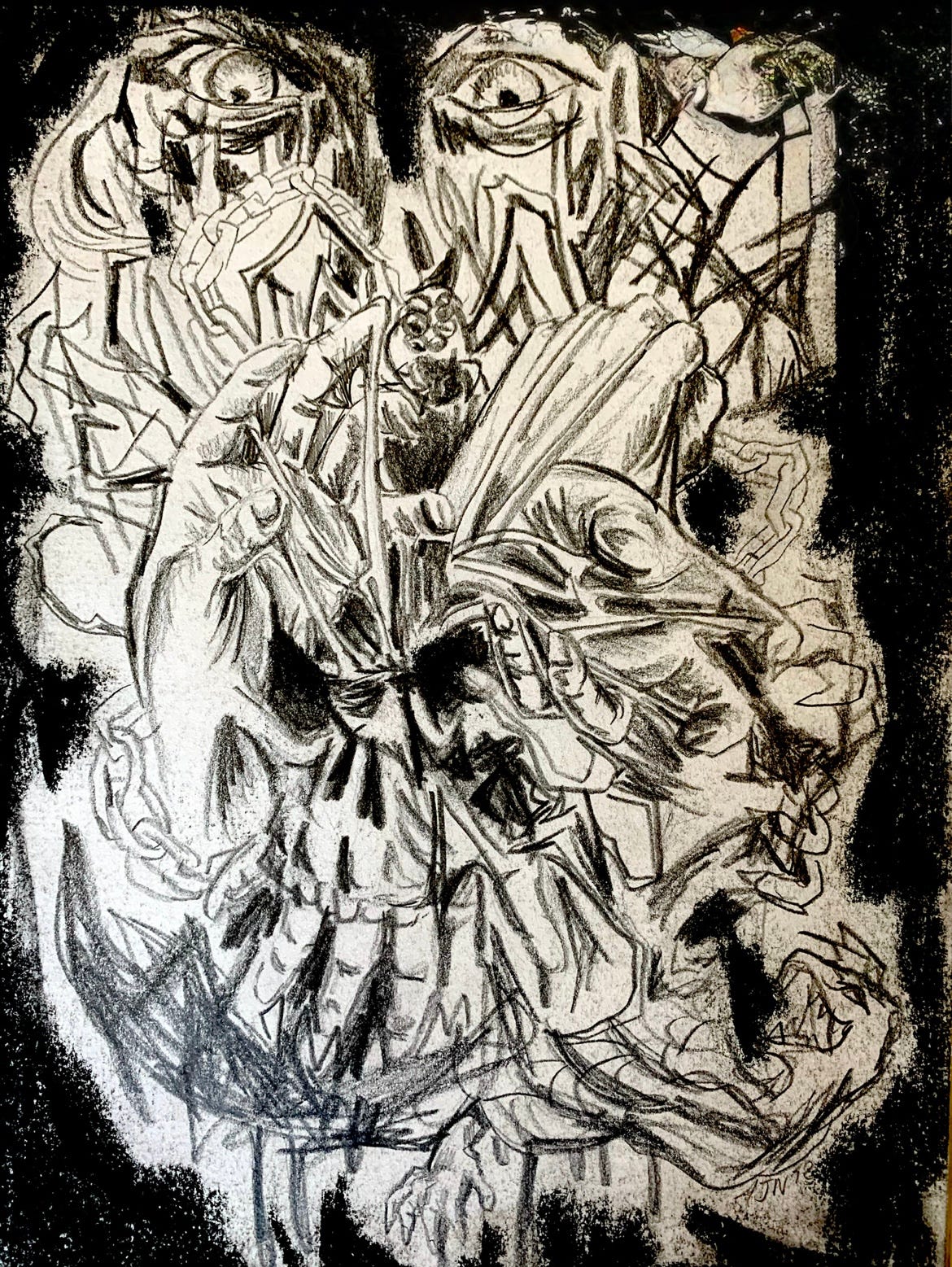
And I hate that this hate, this massive, fiery, ticking time bomb, has nowhere to go immediately. I hate that the path of least resistance runs through whatever won’t or can’t fight back. This makes the cost of release the destruction of what and whom I love — the very ones who most deserve protecting.
I hate what they did to us. Mutilated. Brainwashed. Poisoned. Abused. Whole generations fed through the machine for whoever was shameless and heartless enough to run it without flinching.
They put lead in the gasoline and fought the evidence for fifty years while it shaved points off children’s minds. And when those children came of age, the crime wave came with them; a research literature ties a real share of it to lead’s impairment of executive capacity, empathy, and impulse control. The generation with the most wealth and power in the country now? Childhoods spent inside the hardest-hit, lead exposure window on record.
They laced tobacco with additives that increase the addictiveness of the plant, funded disinformation campaigns, and lied under oath while continuing to put tar in the lungs of their countrymen and women.
They poured billions of opioid pills into the small towns, lied about the addictive potential and safety of the drugs, mapped the sales by zip code, even drafting a price for overdoses to incentivize the continued selling of a product that was killing hundreds of thousands of Americans.
They wrote the loans, stamped them gold, sold them to the pension funds, and banked the bonus before the fire reached the ground floor, all while claiming to be providing a crucial service to markets and capital.
They lied repeatedly to us, the people they claim to serve, deployed what would be considered terrorist tactics by any foreign actor, domestically to achieve their interests. They invaded privacy at scale and lied under oath about it. They experimented on unwilling citizens — patients, prisoners, children — causing lifelong damage, many of the harmed never accounted for because the evidence was destroyed. They call themselves intelligence. They call it serving “national defense”.
They froze their own taxes, walled their own neighborhoods, cut the school funding, repriced the whole ladder, then called my generation, and those that followed, soft for noticing the rungs were gone.
I could go on, I have, this publication has written extensive receipts. You don’t need to know everything they’ve confessed to feel the impact, you live in it daily. None of these criminals served time. None were barred from their trades. None were stripped of the powers they abused. And many are now in control of essential infrastructure, with even greater power and influence than before. So of course the game hasn’t changed. They made the rules of it and make sure they never play it.
I hate the world that let it happen. I hate the country that built it.
Fuck it all.
Now read it back.
Who the fuck am I talking about?

Go through the nouns. Country. Government. News stations. Corporations. Wall Street. World. They. Them. It.
Count the addresses. Zero. The deeds are in there now: the surgeries, the gasoline, the additives, the pills, the burned files, and still there is no person in that rant. Every verb hangs on a they. I named the crimes and never once named a criminal. Nothing in it can be arrested, subpoenaed, fired, sued, voted out, defunded, or repealed — you cannot arrest a they. Every sentence is true and every sentence is useless. 675 words of hate, and never one name. Where do I send that?
Spewing hot steam, settling to fog and responsibility is easy to disown. “The corporations” is a place a specific desk hides. “The government” is a place a specific signature hides. A man who took a fee to unsee something has one deep wish for his accusers; that they stay general. Vague hate is the machine’s favorite weather in its enemies. It burns its bearer to ashes, it spreads the fire, and lands on nothing it aims at, any truth behind the blaze made unrecognizable. It leaves the guilty exactly where they were, minus their names, but those can be bought back too. And by the machine I mean, here and every time below, one specifiable arrangement: a fee paid to a person with a name to unsee a harm with a date, inside a structure that outlives him and hires his replacement — parts you can list, which makes it an address, and a definition you can hold me to.
They tell people being gaslit — psychologically abused, emotionally abused — to keep detailed records. Notes. Dates. What was said, what was done. For their own sanity. The advice scales. A person can be gaslit. A country can. I can’t claim the full story, and where the impact is upstream, out of my direct reach, I seek sourcing relentlessly, painstakingly, thoroughly. So here is the record, and its items are not up for debate, because it is a record, not an opinion or a story. Here is the inventory — direct, documented, sourced, prepared for your witnessing, and perhaps, your sanity.
Here is what an address looks like.
Between early 2006 and mid-2007, a firm called Clayton Holdings sampled 911,000 mortgages for the banks bundling them into securities. 28% percent failed the banks’ own stated standards. The banks waived roughly two of every 5 failures into the pools anyway and told the buyers nothing. The waiver rates sit in the public record, bank by bank.
In November 2007, Richard Bowen, chief underwriter in Citigroup’s consumer lending group, wrote to Robert Rubin and three other executives that 60% of the mortgages Citi was buying were defective. Citi stripped his duties. Both men have names. The email has a date. The retaliation has a paper trail.
In 2007, one Standard & Poor’s analyst messaged another that a deal could be structured by cows and they would still rate it. The exchange sits in the congressional record with the names attached.
For all of it, one Wall Street executive went to prison. His name is Kareem Serageldin. One.
And that number convicts my rant twice over. I wrote: none of these criminals served time. Then at the turn I certified every sentence of the rant as true. The record revokes both. One man served time here, and one more elsewhere in the catalogue: John Kapoor, who founded Insys and drew 66 months for bribing doctors to push a fentanyl spray. I wrote none. I certified the none. The record says two. The record wins; that is what a record is for, it outranks the rant, and it outranks my defense of the rant. Rage rounds down to never, because never feels like the truth. The ledger keeps the remainder, and the remainder cuts deeper than the rounding: two convictions, against the whole catalogue above, is a number you can hate with precision.
This might surprise you, it shocked me: most of it is admitted. Declassified by the agencies that did it. Conceded in settlements without admission of wrongdoing. Entered as exhibits in court. The machine learned that a confession without a consequence works like absolution — cheaper than a secret, and it ages into trivia. The files are open, and the agencies that filled them still operate.

The ledger of the last con is the floor plan of the next one.
The newest cons are built addressless — wallets without desks, issuers without bodies, and the answer holds anyway: when the desk is gone, the mechanism is the address.
The test runs on live systems, present tense. The warrantless-collection authority behind the privacy invasions in my rant — Section 702 of the Foreign Intelligence Surveillance Act — is not a fog. It is a statute with a sunset clause and a docket. The surveillance court’s own released opinions counted the FBI’s improper searches of Americans in the hundreds of thousands. This June, Congress let the statute lapse rather than agree on terms — and as I write, the collection runs on anyway, grandfathered under court certifications approved in March and valid into next year: the machinery outliving its own permission slip. The one extension that passed this spring cleared the House on a recorded roll call, 261 to 111; the Senate waved it through by unanimous consent — renewal with the names withheld, fog run as procedure, and that choice sits in the record too. The last attempt died on the House floor, 198 to 218, names recorded. Every renewal is a list of names, or a decision to keep the list blank.
Feel the difference in your hands. “I hate the banks” moves nothing. “Citigroup waived defective loans into securities and silenced the underwriter who flagged it” — that sentence has an address. You can subpoena an address. You can legislate against it, claw it back, print it beside a name and make a specific person answer a specific question in public, under oath, on the record. Every “them” in my rant was a handhold I gave away.
So the title of this piece is a confession. Look at it. The United State of America — one state, one machine, the typo stays because the thing it names has no address either. You cannot depose a fog. The title is my failure mode: the rant that feels like resistance and works like coals in their steam engine.
Changing this costs discipline, it would be easier to leave this at the rant. I’m not here for easy unless easy works. So, take your own rant — the one you carry, the one you say in the car. Strike every noun that has no address: no person, no statute, no date, no desk. Read what survives. If the page is empty, what you have is weather. The record is public. The names are in it. Go get them.
So there it is. The receipts.
Ample reason for justified anger. The kind that comes only after your own thorough self-examination: the one that makes you see and know your own evil, and how any of us might slide into it. Justified anger passed the weapon test by cutting its wielder first. And even then it leaves you baffled, unable to untangle the kind of mind, the absence of feeling, the void that would make these decisions and then keep lying, keep denying, keep refusing the bill.
I can’t audit that interior. Nobody can. The record is all impact, and the impact is enough.
We see the other kind everywhere: the rage I opened this piece with. It’s a real feeling with real receipts, sometimes too many to say: the Church committee that counted the crimes couldn’t publish its whole inventory, and part of it burned before anyone could count it. So a lifetime of violation gets crushed into a phrase — a rant, a they, said in the car.
And the entities are still here. Subsidiaries, successors, the same actors under new letterhead — operating today. Try to make them pay, where paying means repairing the harm. They haven’t. They can’t. Some of what was taken never had a resale price — my childhood, yours, the pre-poisoning potential of a brain that got the lead anyway. Zero-booked going in, unpayable coming out. Ask for it back and watch what happens. Where do you ask? Whom? What happens when you do?
Look: there are names. There are procedures. The easy game is the other one — hate, widespread, nearest target. Aim, release, relief; nothing changes. Undirected anger obeys a gradient: it flows downhill, toward whoever is closest and least defended, and it lands there. On the already wounded. On the people with the least leverage. On people like me. I’m living inside this with my parents and my aunt — the news has made them unrecognizable, lit whenever the topic comes up, certain, enforcing, convinced they are right and owed. That last word is the disease. Nobody here holds the debt being collected. I don’t owe you anything, nor you I. So stop taking it just because you can.
The anger is yours, and it is justified. The landing is a choice.
Keep the record. Write the address.
The record, linked. The full accounting lives in work already done. Every source below is an address — follow any line to it.
Oh and
A note before the comments. If you’d like to reply, begin with your favorite vague thing to hate — the fog-noun you say in the car. That’s how I’ll know you read this far; too many knee-jerk reactions land on these pieces, and knee-jerk is the exact weather this one is about. Then give it an address — a name, a statute, a date, a desk. The fog-noun proves you read the piece. The address proves the piece worked.
Mutilated. Buck v. Bell (1927) — the Supreme Court blessing compulsory sterilization, eight to one, Holmes writing “three generations of imbeciles are enough”; state eugenics boards sterilized more than 60,000 Americans, North Carolina’s operating into the 1970s. The precedent has never been overturned.
Lead. McFarland, Hauer & Reuben, PNAS (2022). Kitman, “The Secret History of Lead,” The Nation (2000). Higney, Hanley & Moro’s meta-analysis (2022) — tested for publication bias, corrected for it, and the share held: 7–28% of the fall in US homicide.
Tobacco. The seven CEOs under oath, April 14, 1994. Judge Kessler’s RICO findings, U.S. v. Philip Morris (2006). The UCSF Truth Tobacco Industry Documents — “Doubt is our product.”
Opioids. The Washington Post ARCOS database — 76 billion pills, 2006–2012. The Purdue guilty pleas, 2007 and 2020. The McKinsey rebate documents — $14,810 per overdose “event.” U.S. v. Kapoor.
2008. The FCIC Final Report — Clayton’s 911,000 loans and Bowen’s email both live there. The Levin–Coburn report. U.S. v. Serageldin. Eisinger, The Chickenshit Club.
Surveillance and the children. The Church Committee report. The 1977 MKULTRA hearings — including the 1973 order that burned the program’s records. The Bender documentation (Autism History Project, Univ. of Oregon) — children as young as three shocked and dosed; the intelligence-funding chain is the contested link; the experiments themselves are not. The FISA Court’s released opinions. The Brennan Center’s Section 702 tracker.
Veterans. Pew Research Center, July 2019 — 64% on Iraq, 58% on Afghanistan.
The wars’ ledger. The Costs of War project, Brown University — post-9/11 spending near $14 trillion, with one-third to one-half flowing to contractors (Hartung, “Profits of War,” 2021).
The ladder. The Federal Reserve’s Distributional Financial Accounts. SHEEO’s state-disinvestment series. California Proposition 13 (1978).
Shiit. Me too. ☝️
I hate the simple minded people who say we should suffer the injustices of this world silently and earn a reward in the “next” world. Yeah, right. Some existential sleight of hand going on there.