


This piece discusses opioid deaths, child exploitation, war, and corporate harm to families. It includes documented details that are difficult to read.
Someone I love very much started crying yesterday. A song came on that reminded them of someone they lost and loved dearly a few years ago. The grief was pure, appropriate, natural, and painful.
I received an email that a colleague had unexpectedly lost their sister. She was only 32. I don’t know the details. I know I have two sisters, each within a year of that age. I can only imagine the grief at losing them.
I watch media repurpose the abuse and killing of human beings for economic and partisan agendas constantly. Fractured families, broken bodies, thrown on the table with performed reverence or contemptuous dehumanization, whichever serves the message — if they mention the bodies at all. People are dying. Children are losing parents. Parents are losing children. Land that held generations is burning. That is what is happening. Everything said about it from behind a desk is privileged blindness.

This week the CEO of BlackRock sat down with BBC to discuss the war in Iran. It sounded like a portfolio review. Two oil price scenarios, trade route disruptions, GDP implications. Not a single mention of the human cost. Not his domain, you might object. BlackRock holds significant stakes in major US defense contractors, and weeks earlier Fink had called the conflict “a good long-term investment opportunity.” The silence is the perspective. That interview gained more traction than anything I’ve seen discussing the morality of the war or the lives of those dying in it and the families they leave behind.
Grief is supposed to be sacred. It is the body’s honest response to irreversible loss.
In June 2009, consultants from McKinsey & Company sat down with Purdue Pharma’s Chief Medical Officer to solve a problem. The mothers of dead children were grieving too loudly. It was threatening sales.
According to McKinsey’s own internal documents — obtained by subpoena and quoted verbatim in the Massachusetts Attorney General’s complaint — the purpose of that meeting was to discuss how to “counter emotional messages from mothers with teenagers that overdosed in [sic] OxyContin.”
That “[sic]” matters. It means the Attorney General was quoting McKinsey’s own words exactly as written — the grammatical error preserved to prove it was a direct lift from their documents.

In 2013, Purdue Pharma — already a convicted criminal company, having pled guilty to misbranding OxyContin in 2007 — hired McKinsey to revive its sales. McKinsey developed a strategy called “Evolve to Excellence,” designed to “turbocharge” OxyContin sales by targeting “High Value Prescribers” — doctors writing the most opioid prescriptions, including prescriptions that federal prosecutors later described as “unsafe, ineffective, and medically unnecessary.”
By 2017, McKinsey had developed a presentation projecting that 2,484 CVS customers would either overdose or develop opioid use disorder in a single year. Their proposed solution: a rebate for every overdose event. Massachusetts Attorney General Maura Healey testified before Congress that McKinsey’s own analyses described this as an “attractive option” for Purdue if the payment was “in the range of $6,000 to $14,000 for each patient who was harmed.”
They put it in a slide deck. They presented it to leadership. Former McKinsey consultant Anand Giridharadas called it “the banality of evil, MBA edition” — “They knew what was going on. And they found a way to look past it, through it, around it, so as to answer the only questions they cared about: how to make the client money and, when the walls closed in, how to protect themselves.”
I love my children more than anything. I cannot imagine life without them. They are still young, but I pray every day they live long past me — happy, full lives.
That feeling, that want, interferes with the profit model of some of the most influential corporations in the world.
It threatens BlackRock’s investments in defense contractors. It threatens Meta, which a jury ordered this week to pay $375 million after finding the company knowingly endangered children and concealed child sexual exploitation on its platforms. And it threatened McKinsey’s campaign to turbocharge Purdue’s opioid sales.
McKinsey’s proposed solution to the grieving mothers: recruit pain patients to publicly advocate for the drugs — weaponizing one group of suffering people against the grieving families of another. They then advised Purdue to tell doctors that opioids provide “freedom” and “peace of mind” and give patients “the best possible chance to live a full and active life.” The Massachusetts complaint notes these claims were deliberately crafted to skirt Purdue’s existing Corporate Integrity Agreement — McKinsey designed the language specifically to avoid triggering the legal constraints from Purdue’s previous criminal conviction.
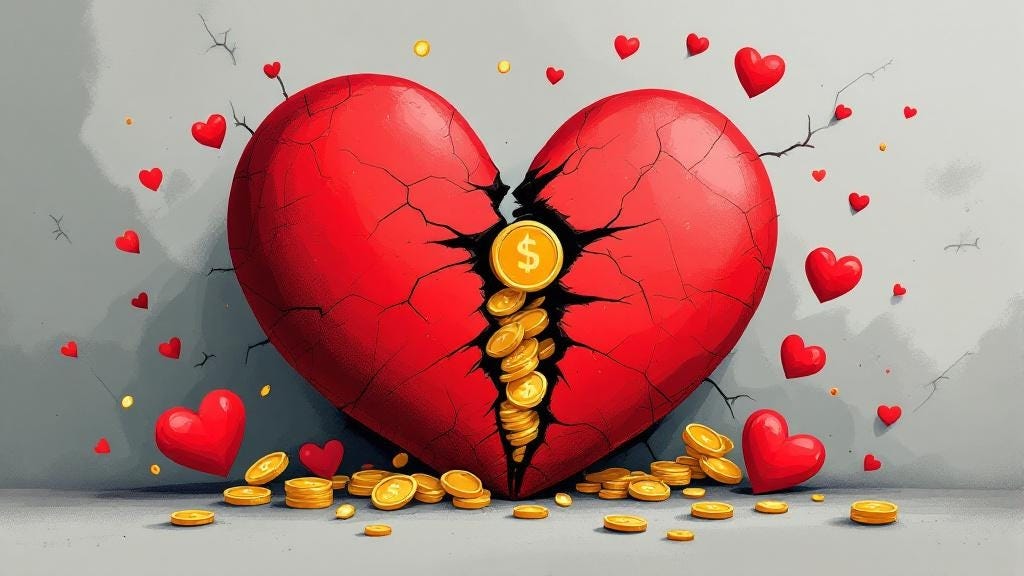
That was a meeting. That was a topic on an agenda. How to neutralize a mother’s grief so they could keep selling the drug that killed her child. How to craft new lies careful enough to thread the needle of an existing criminal conviction.
The cartel doesn’t lie and say their drugs are safe. The cartel doesn’t have doctors prescribe their product to people genuinely pursuing pain relief. And the cartel doesn’t send consultants to a conference room afterward to discuss how to emotionally counter the grieving parents of children who died from their product.
McKinsey does. Did. For fifteen years across seventy-five separate engagements with Purdue alone. And was only held to account in December 2024 — more than a decade after the worst of the conduct.
That conviction was thirteen months ago. Today, McKinsey is the firm telling your employer how many of you to keep. In January 2026, their global managing partner announced the company now employs 40,000 humans and 25,000 AI agents — and expects those numbers to reach parity by year’s end. They published their own report showing that 30% of companies plan AI-driven workforce reductions this year. They are advising those companies. They have cut 5,000 of their own employees in eighteen months.
The company that calculated a rebate for every overdose is now calculating a replacement cost for every worker. The spreadsheet is the same. The product changed.
Think about what a person has to become to sit in that room and treat a mother’s grief as a variable to be managed. Think about how far from life you have to travel for that to register as strategy.
These people should be removed from positions of influence with the same urgency we apply to anyone operating without the capacity for treating human life and relationship as sacred — so they cannot cause further harm.
So here is what I am asking you to do.
Share this.
Send it to everyone you know. Say their name out loud. McKinsey & Company. Say the names of the companies and governments that still hire them and pay them billions after a criminal conviction for helping kill 500,000 people.
Make it expensive.
Make it socially expensive.
Make it reputationally expensive.
Make it cost more to build a fortune off death than it does to serve the people in your community.
Because right now the math runs the other way. A consulting firm can turbocharge a drug that kills half a million people, calculate rebates per overdose, strategize against grieving mothers, destroy the evidence, and walk away with a fine that amounts to two months of revenue and a single partner doing six months in a cell. That is what your child’s life is worth in their spreadsheet.
The only thing that changes that math is you. They lobby against legislation. They advise the regulators. They absorb the fines.
What they cannot absorb is a world that refuses to do business with them. A world where every university, every government agency, every corporation that hires McKinsey has to answer one question: you know what they did, you know they were criminally convicted for it, and you chose to pay them anyway — why?
That question, asked loudly and publicly and relentlessly, is the only thing that makes the math change.
Ask it.

Every fact cited here is public record.
The U.S. Department of Justice announced McKinsey’s $650 million criminal settlement on December 13, 2024. McKinsey agreed that it “knowingly and intentionally” conspired with Purdue to aid and abet the misbranding of prescription drugs. One partner, Martin Elling, was sentenced to six months in federal prison for destroying more than 100 documents. McKinsey has paid approximately $1.6 billion total across all opioid-related settlements. The 114,000 internal documents are publicly archived at the UCSF-Johns Hopkins Opioid Industry Documents Archive, free for anyone to read.
The company is still operating. Still advising governments. Still advising the companies that shape your children’s lives.
Now you know. What you do with it is yours.
Additional sources:
Congressional testimony (AG Healey, April 27, 2022): congress.gov | MA AG Complaint / ProPublica: propublica.org | Rebate projections: beckershospitalreview.com | City of Seattle complaint: seattle.gov | McKinsey-FDA conflicts (House Oversight): oversightdemocrats.house.gov | McKinsey AI workforce (Jan. 2026): yahoo.com | McKinsey State of AI / 30% layoff projections: finalroundai.com
— @inspiritedinsight
That drug company I think I watch a documentary on it man it was fuken evil they paid the doctors to sell the drugs and get them hooked on them
I was recently hospitalised with a broken FEMA , advised them many times No Oxy, they ignored me so many time until I really went off my head, told them all to fuck off, until someone would listen, eventually after 5 days they listened. Why don’t they believe us, when we are telling our truth.