


It’s hard to live my life when I’m always writing about it. I read my words from a week ago and had forgotten I’d written them. I knew I’d recorded them, I see the page dated, lines composed. I didn’t know I’d written that. I don’t think in words until I think something I don’t want to forget, or something I can’t forget despite wanting to. They have the same shape: a passing thing made to stay. A key I can copy, hand out, keep in a case and lock away, easy knowing I own it.
A page reads closer to a voice than we think. I never thought much of it. I could swap one for the other; I couldn’t do that with a face or a hand on my arm. The words carry the same information, and once recorded, both outlast the speaker. I almost went and got the overlaps again. I’d have had to research them, and the more I thought about recording the data, measured but unfelt, the less I wanted to. What I didn’t have to go looking for because it’s stayed with me: language is the body carried past its edge — what’s left when breath moves through a living shape and keeps its geometry. We read letters with the same eye we read a face or a hillside by. The strokes were shapes we knew before anyone wrote them — L, a corner where an object ends or turns; T, one thing in front of another; Y, where a branch leaves the trunk. A hundred writing systems are built from these junctions, and the letters in each run about three strokes.
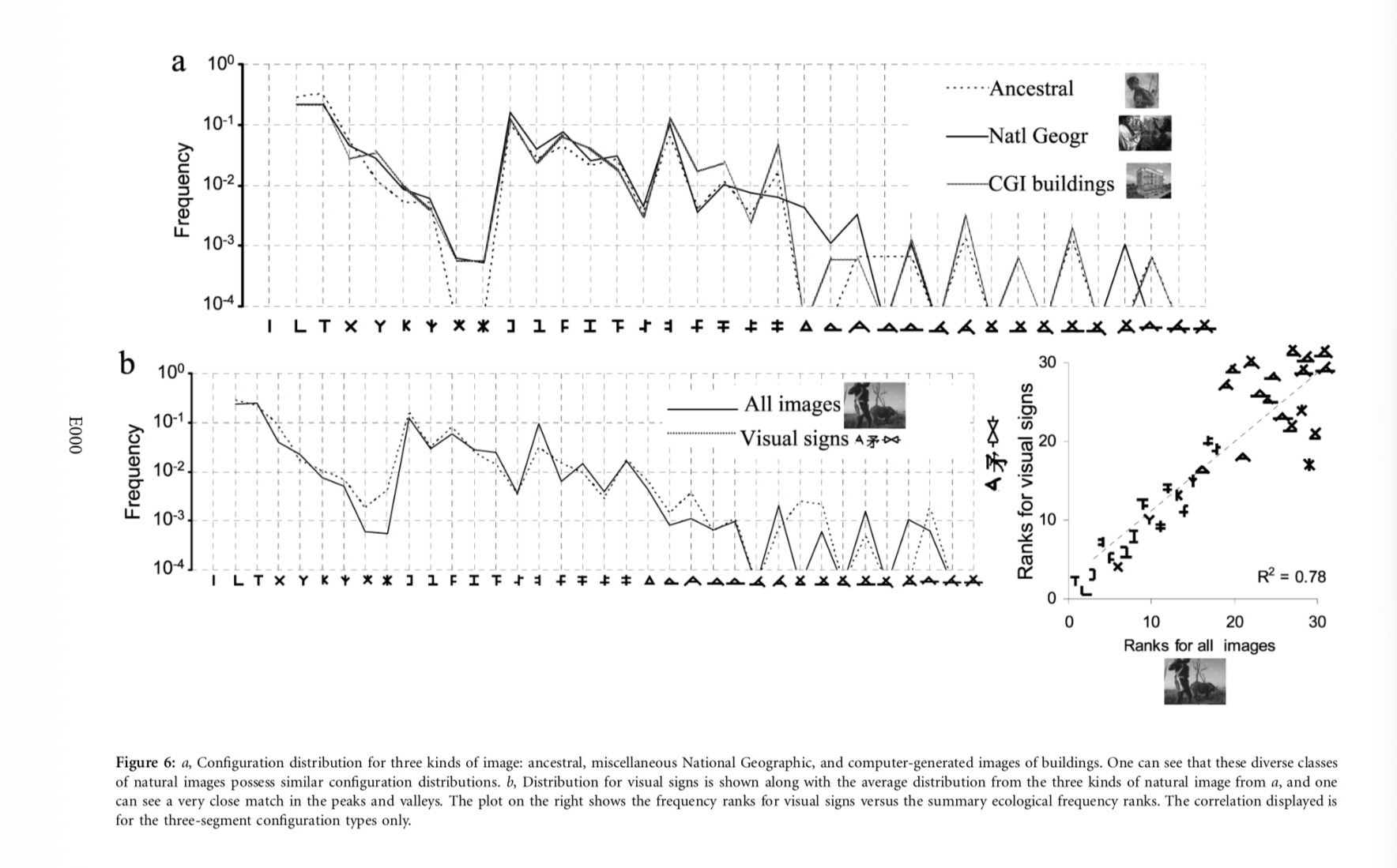
And here I am, analyzing what was meant to be felt. It’s hard to live my life when I’m writing about it. For most of history the only words that survived were written at a remove. A legible word needs a steady pen, and a steady pen needs a body held still, so what was set down — reflections after the fact, transcriptions made in haste — lost some of the words and most of the context. What is alive in the having does not go into ink at the same time.
The other day I began to write while sitting in a tense silence beside someone I was having a disagreement with. The words were lodged in my throat and wanted out. I began with the ground —
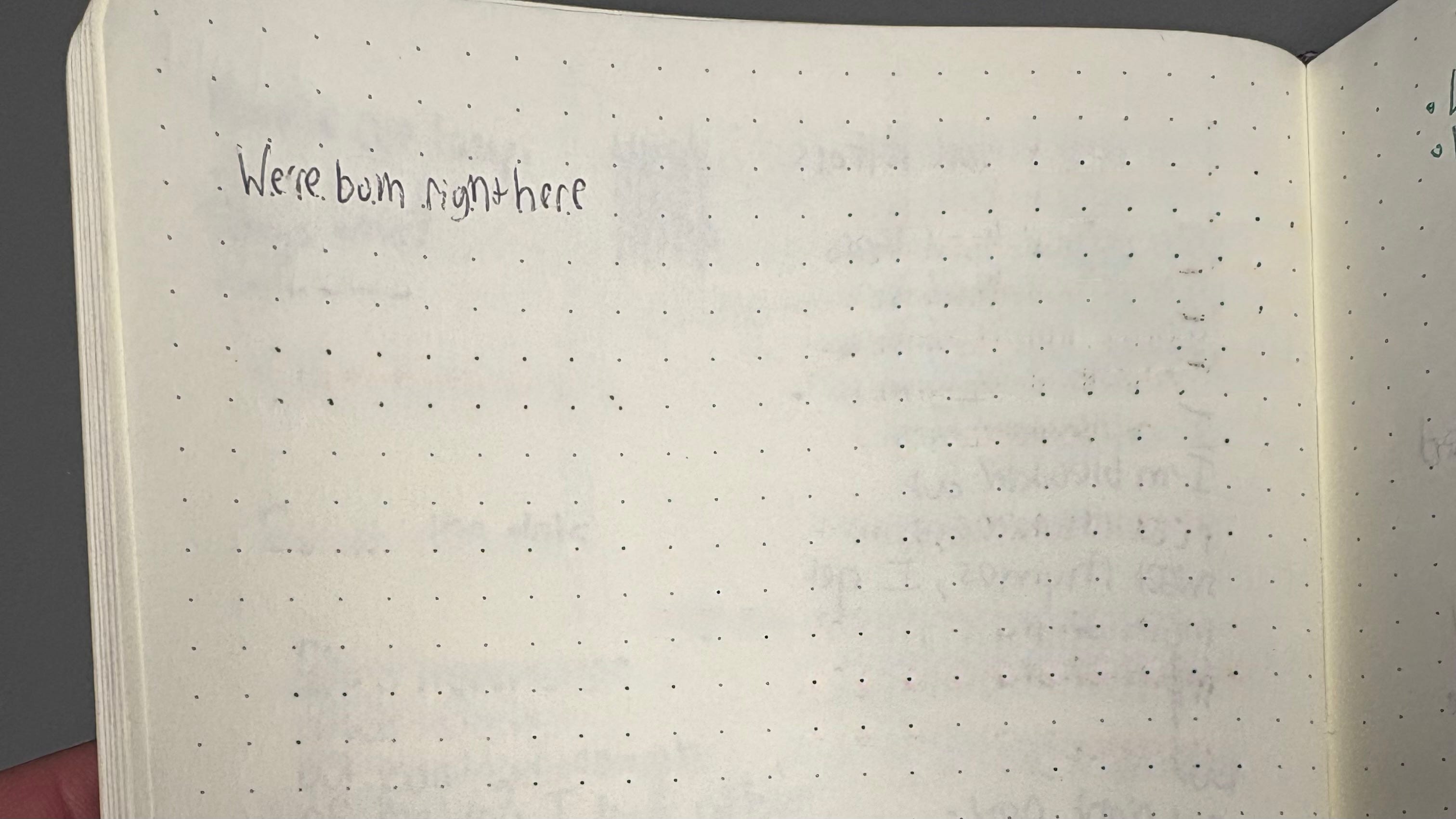
“We’re both right here” — and had the next line ready: “and yet we are both somewhere else.” It was going to name the absence I felt beside someone right there, each of us off somewhere inside ourselves. The line never landed. We began to speak and see each other, and the words we exchanged were stored nowhere. Nobody owns them. They became the closeness that opened between us.
It’s like that. Peace, connection, joy, fun, enough — none of them asks to be marked. We mark what is absent, owed, incomplete, and let words soothe the weightless space where something or someone should be felt. The first writing was records of grain — grain counted, grain due, a mark to stand in for it until it came. Cave walls at Lascaux painted with bison deep underground, where no bison would ever be, by people whose bone piles were reindeer. Reviews online, which pile up at five stars and at one, the astonishing and the broken, with next to nothing written in the middle, where things simply worked. At our best we report even less, because the person whose foundation was poured and built well becomes the home they live in. Baseline met shows up as nothing: room to wander, wonder, get it wrong, become.
The noise is the alarm, even when it’s screaming “there is no fire.” Even when it’s not your problem. Go look. The shouts from inside, the orange flicker at the glass — those are telling you the truth. Silence means one of two things. Either there is no fire, or the home has burned to the ground and nothing is left to yell about.
-Fire tongue 🔥