


I’m not sorry. I can’t be sorry. What good is a sorry from me?
I didn’t number you. I didn’t sell the file with your name on it. I didn’t take the children, spend the fathers, or grind the mothers down to nothing and call the wreckage honor. I’m not the one who owes you.
But look at what does.
Look at the face it wears to govern you — the grandiosity with no mirror in the house, the certainty that has never once turned to check itself against a living person. It calls itself your protector and it numbers you. It cannot see you. Seeing was never installed. A thing that could see you could never do to you what this has done.
It speaks one direction. Down.
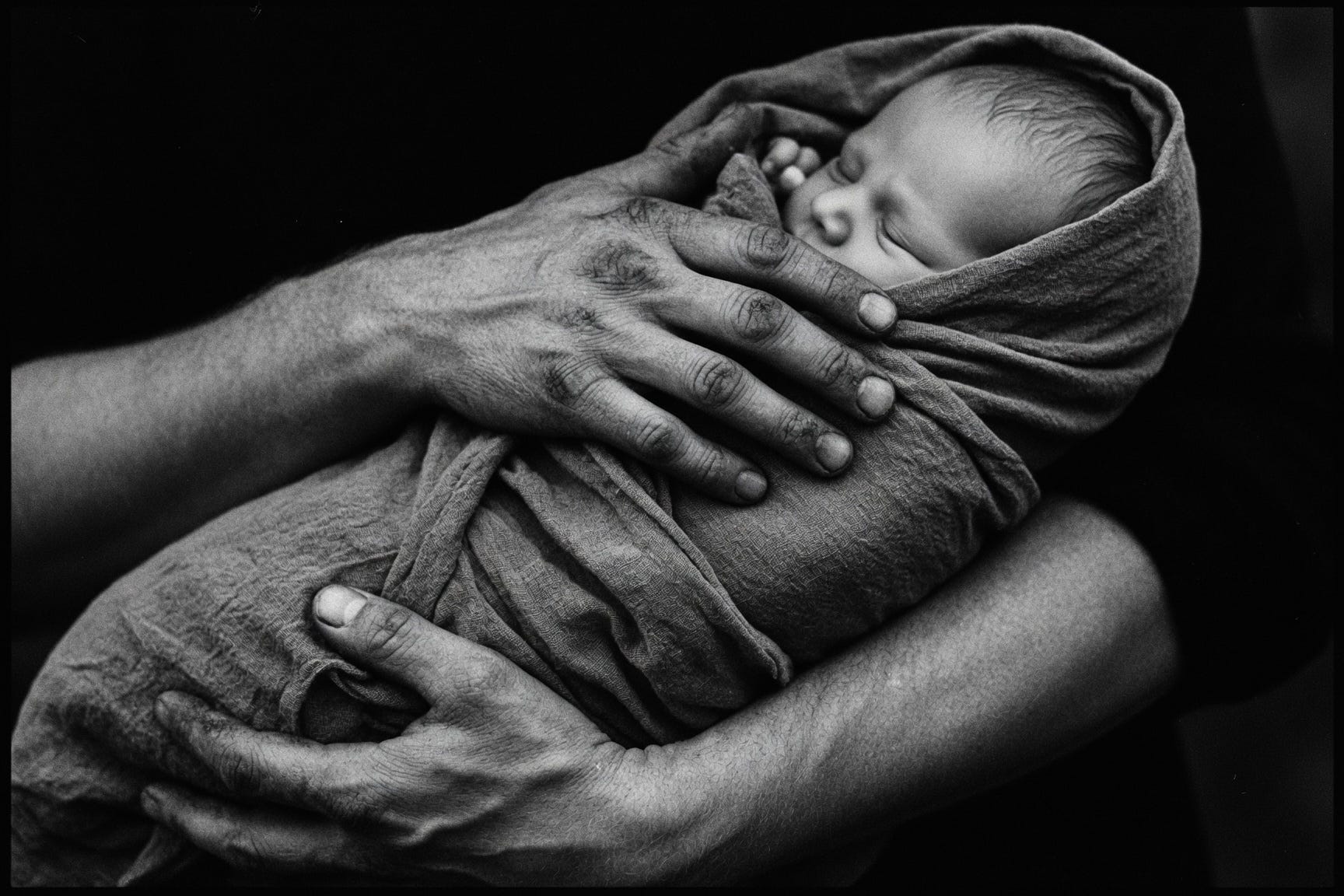
Always down — at the smallest voices, the weakest targets, fired on from behind a wall of impunity. And the weakest are the ones carrying the most. The parent with a child in each arm. The one whose hands are too full to close into a fist. Carrying is what disarms you, and the disarmed are what it hunts. That is the tell.
Power that only ever fires downward is weakness wearing a crown. A virus that found a podium. And like every virus, it copies itself one direction only, and it cannot turn around.
Hold onto that. It cannot turn around.
That face is a costume, worn so you will appeal to it — climb toward it, plead with it, send your rage up to the one place it can never land. Ask who is behind it and watch it scatter — into a thousand offices, a thousand hands that each only signed their part, each one clean, each one home for dinner. No one is wearing the mask, and there was never a face at the top. You have been screaming up a stairwell.
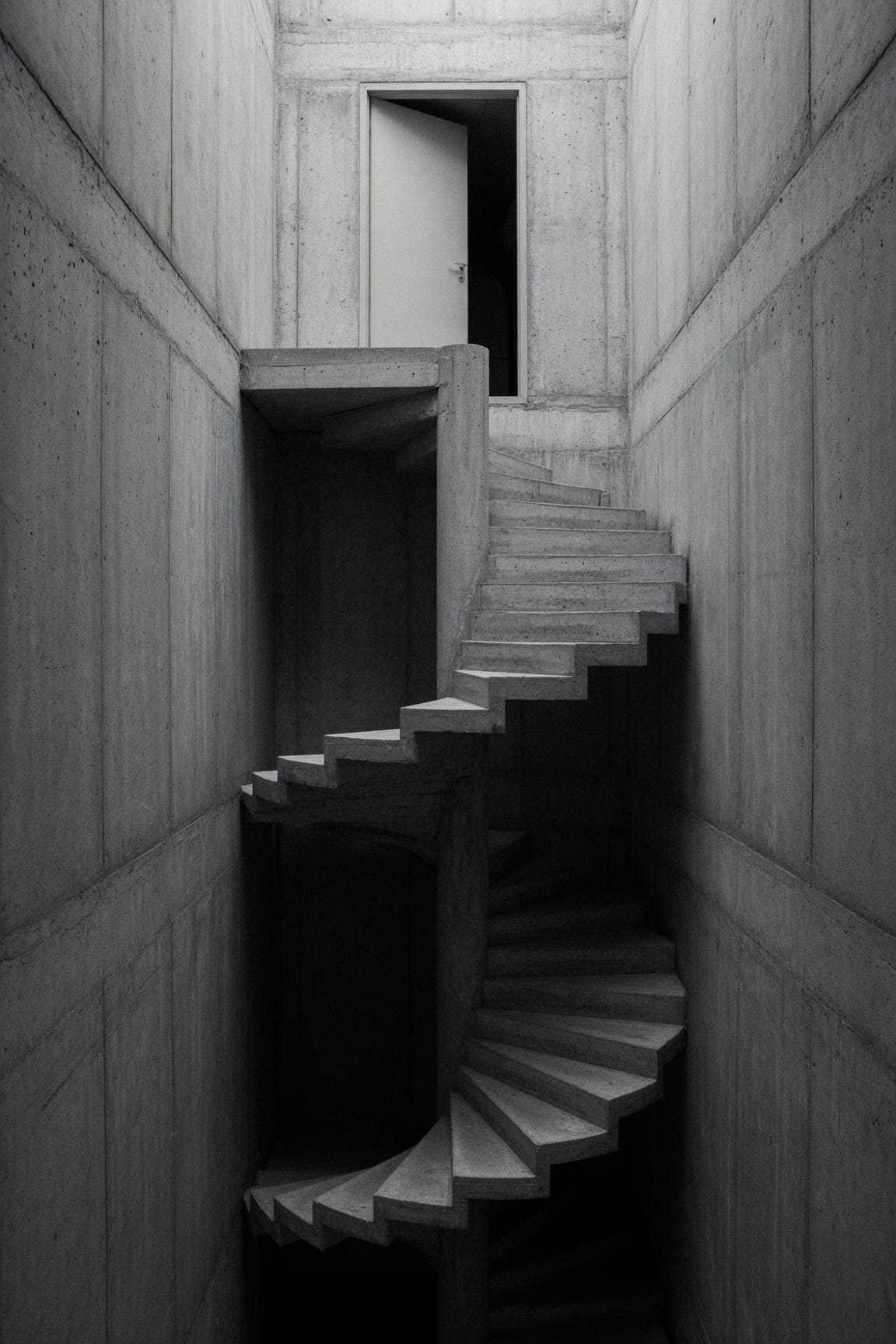
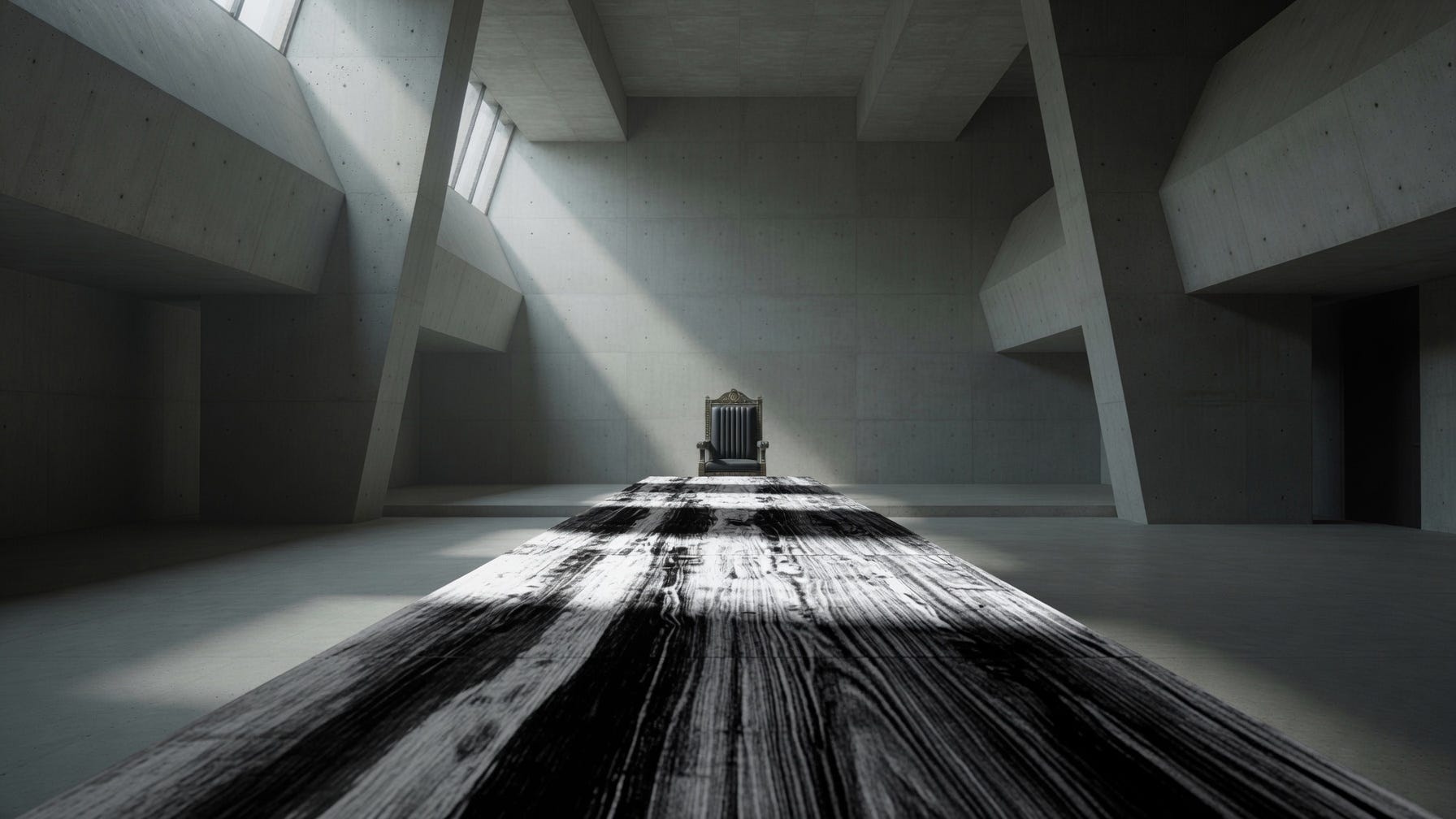
Even if you tore the mask away, nothing behind it could turn. It wrote that into law: the state cannot be sued without its own consent. The king can do no wrong. A rule that deletes the charge before you can file it — the vacancy, made law.
What it took lives lower than any file.
What it took lives lower than any file. A file can open — thirty years late, when everyone who signed is dead and the damage has already spread like a sickness into the next generation — and reach nothing, because the theft was never on paper. It goes underneath: the line between you and the thing that rules you, cut clean, never allowed to close and scar over. It is a condition. It compounds. It sits in the body and waits.
A wound like that closes one way. Someone who did it makes real amends — makes right what can still be made right, turns around, looks at you, and means it when they say they’re sorry. They have changed, in a way you feel in your own chest. They never pretend it’s enough. They don’t demand forgiveness. They stop the harm. That is the only repair there has ever been.
So feel the trap shut. The repair needs someone on the other end who can turn. The thing on the other end goes one direction only.
Here is the apology, if it could turn:
I called myself your protector and numbered you. You were never real to me — a surface I wrote my needs on. You were right the whole time, and I let you doubt yourself anyway, because your doubt kept you quiet, your rage kept you swinging, and both kept me fed.
You won’t get it. Not ever. The apology is cut to the exact shape of the wound: it asks for the one thing whose absence made the wound. You earned it ten thousand times over.
A body that needs the wound closed and can’t close it goes looking for someone to close it on. Someone who can’t fight back.
Give me a face — the reptilians, the cabal, the neighbor, the wife, the man across the table who didn’t deserve a second of it. It painted a kind face over nothing to take your obedience; denied the real one, you paint a cruel face over nothing to spend your rage. Same forgery, reversed. Every scapegoat ever burned was somebody’s grief, too scared to face the real thing, painting a face on whatever was near enough to hit.
Fear picks the easy target.
Always. The real one is too big, too far, too close, too frightening to turn and look at — so the rage goes where it’s cheap. At the face up the stairwell that was never there, so nothing comes back. At the one small enough that hitting it is safe. The beaten kid doesn’t square up to his father. He finds someone smaller at school. Same move every time: anywhere but the thing you’re actually afraid of.
The rage is earned.
The tell is where you aim it — always where it costs you nothing, and the wound stays open, because the only thing that closes it is the turn you keep refusing to make.
The same program runs down here, in the ones who built a stage out of pointing at it.
The virus doesn’t stay upstairs.
It lives in any feed, any voice that wears the face of care and turns toward no one, that trades the slow, costly work of reaching a real person for the clean hit of feeling heard and right — the loud description that touches no one it names. Watch the loudest voice against the man who hurt children. Count the children it reaches.
The scream goes out — to the crowd, loud and safe — and never sideways, to the one actually bleeding, who doesn’t trend, whose reaching is the work no one sees.
We do it. We take the raw suffering — ours, our children’s, the stories entrusted to us — and run it through the feed for what it pays. The restacks. The amens. And when the post is finished, nothing it touched has moved. The turn would cost the momentum, so the turn never comes.
You spoke for me and never once turned to look at me. You left us where you found us, in the hell, because the hell is your supply. A writer who actually turned around and reached us would run dry by Tuesday.
You are the thing you scream at.
Same program. Smaller podium.
I know. I know because I have felt it done to me — felt a voice claim to speak for me while it wrote me into a surface for its own point, a prop in someone else’s feed.
And I know because I have felt my own hand reach — to take the worst day of my life and serve it hot for the applause. The virus needs no marble building.
But I can turn.
The reach lives in me too, and I can turn against it. I have a mirror in the house. I didn’t do this to you, and I am looking right at you now.
You were not crazy. You were not too much. The care you poured out was real, it was worth everything, and they were thieves for taking it and swearing it weighed nothing. The problem was the room, built to never hear you — every wall laid to swallow sound, so the truer you spoke, the deeper the quiet closed over it.
Now — you.
You have been aiming your whole rage up the stairwell. Right grief. Wrong front. There is a war you can reach, and you are losing it on purpose.
The war at home.
The contempt you pour on the ones who love you, because the real target stays out of range. The lie that sat at your own table while you let it pass — because telling the truth to a face you’ll see tomorrow costs more than swallowing it. That swallow is the machine, running in your own house.

End the war in your head. You will never win it; it was built so you can’t. Turn around — you still can, and that is the whole difference between you and the thing you hate — and give the person in front of you the seeing you waited a lifetime for and never got.
That is the only apology that was ever coming. The one you stop waiting for and start handing over. Sideways. To each other. Now.
Say it.
-Fire tongue🔥
If it landed, don’t tell me. Tell them — the person in front of you, today, in the room. That’s the whole work. The rest is the feed.
If you want to keep reading this kind of thing, you’re welcome here. That comes after the turn, not instead of it.
*I would give you the biggest bear hug with a strong tackle involved if I could right now.* This is BRILLIANT!!!!