


The first piece in this series, The Costume, took a visitor — angel, alien, AI overlord — and traced it back to a disowned part of the person seeing it. This piece runs the same operation on a wider object: the screen you stand in front of and yell at. You don’t need the first piece to follow this one. Each stands on its own.
❧
Start with the clean case.
A person picks a team a few minutes before kickoff, having learned no roster and earned no stake, then rises and drops for three hours with men who will never know the seat exists — up when they score, sick when they don’t — handed whole to a game he has no part in. The state under the noise has a name: helpless.
The belief travels past the body. Watch a room during a game and some part of it comes to hold that the watching itself reaches the field. The jersey, the seat, the bar, the hat worn the night they last won — each gets loaded with causal weight.
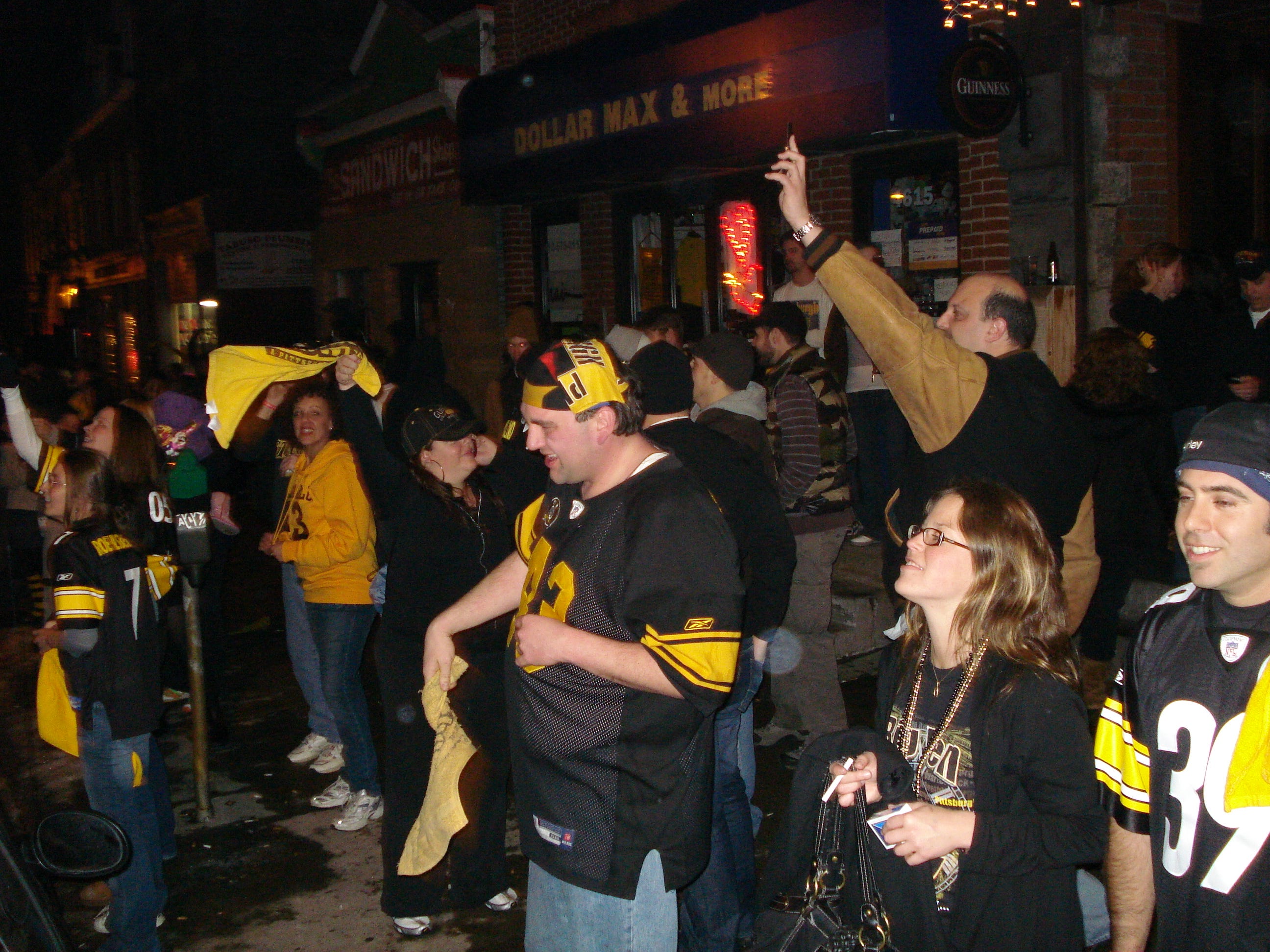
A man sat in real guilt after a playoff loss — heavy, quiet, ashamed — because he had watched from home instead of the stadium. He believed his absence had helped cost the game. Maybe it did. A live event runs once: no second pass, no way to isolate the one factor that mattered. The belief never meets a test it could fail, so it sets into certainty. The watching reached the field, and nothing ever came back to say it hadn’t.
Win, and the body issues a reason to stand tall over something it never touched.
Lose, and it issues rage, brooding, a reason to turn on whoever is closest.
All of it is real in the body; all of it is sourced from a performance behind glass.
Politics drops into that slot without resistance.
Two teams, head to head, the same shape and the same function. Whole channels of things you can do nothing about run day and night — a surface to stand in front of and feel alive. You can yell at it. You can post the verdict, argue it for hours, build an audience, turn the audience into a living, and never once stand on the field.
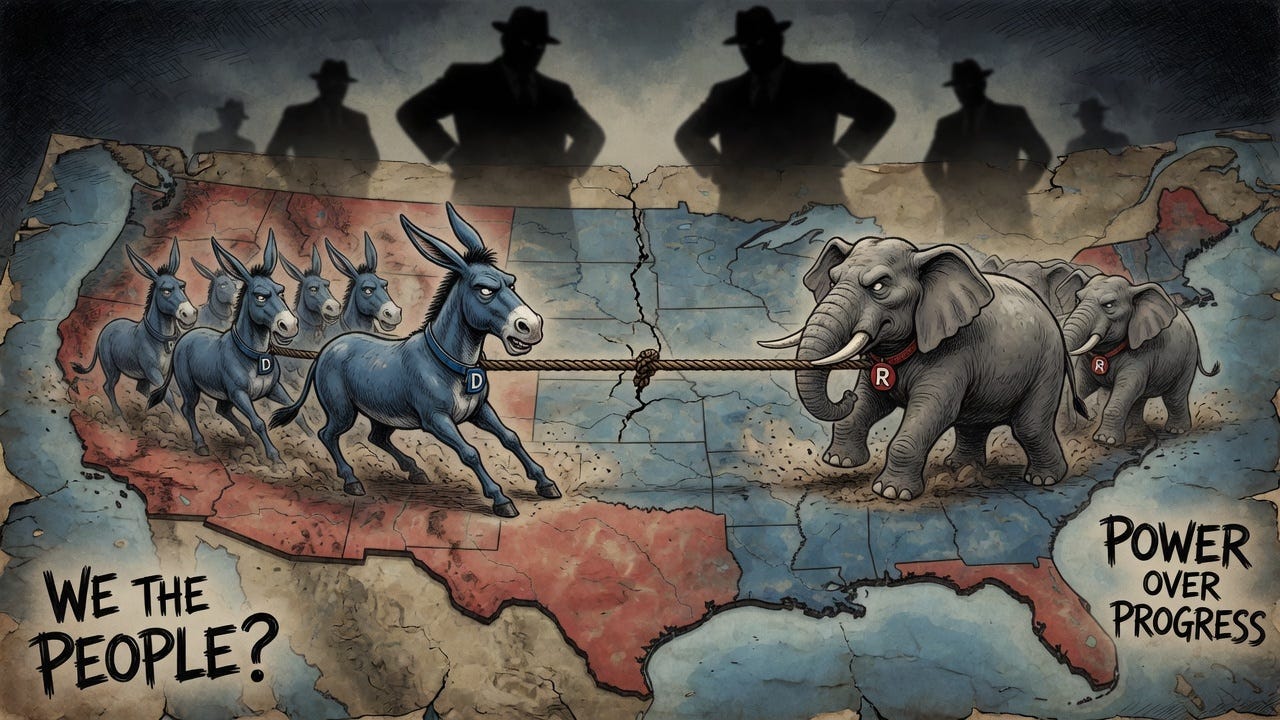
Take the strongest version of the case — either side — and grant it whole.
Grant accuracy all the way down. The reporting is right, whichever reporting you trust. The man on the screen has the data, the timeline, the names, the paper trail. The billionaires earned every dollar clean, by merit, no corner cut — or they dodge the tax, bleed the workers, and buy the law. The agency keeps its secrets to protect you and can be trusted with them — or it is captured and works for the people it was meant to watch. The debate is real and the stakes are real — or the whole show is theater. Pick the side. Grant it everything. Say every word is true.
So what?
It changes nothing.
Correct about the unreachable changes nothing. You sit in the stands with a verified program — every player named, every number real — for a game you will never enter. The accuracy is what holds you there. A wrong theory you can test, watch fail, and drop. A right one about the distant object keeps you certain, engaged, and seated for years. It reads as action and delivers none. The better the program, the longer you study it instead of walking out to a field of your own.
Distance is the design
— or does a design’s work, which is the same to you in the chair. The president, the rival state, the tech giant, the man with a hundred billion: each sits exactly where your vote runs unaudited. You will never stand on that field, so nothing comes back to correct the verdict. You can be as right as you like and never find out, because finding out means getting close, and close is the one thing the distant target can’t allow. The billionaire doesn’t answer. The screen doesn’t answer. The silence reads as winning. It is distance.
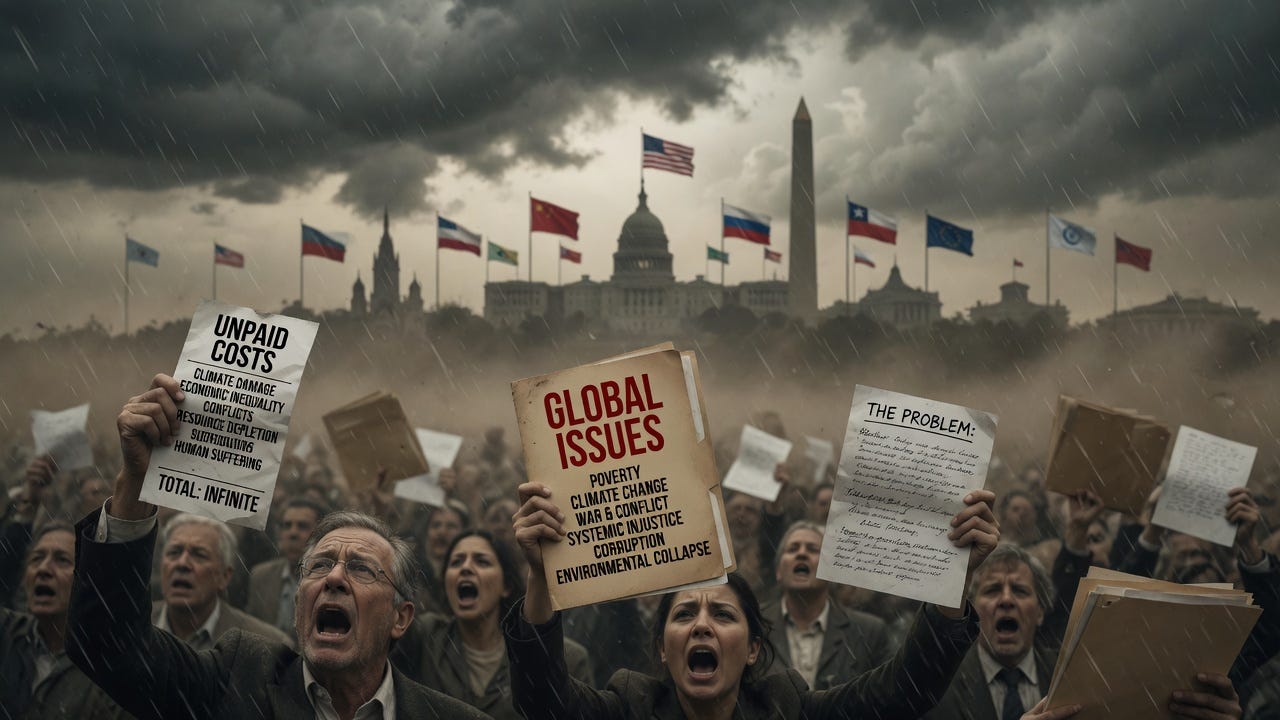
Send a first-year student to debate the assembled faculty of every Ivy League Institution at once. They lose. They were always going to lose. And the loss does work: it proves the faculty’s size, renews the heat, and sends the student home certain of the enemy and hungry for the next round. The losing is the engine. A win would end it. So the thing runs on the near-miss — the righteous defeat, clipped and posted, again and again.
❧
Stop looking at/for the top of the structure.
If the arrangement is inverted, the top can’t reach you directly. Everything it does to you arrives through layer on layer of people, each one choosing to pass it down or sit on it. The order is nothing until a hand carries it. The power gets made in that hand — close to you, every time, in someone you could name. What sits at the top holds its reach on loan: renewed at every hand that passes it down, gone the moment one hand won’t.
Look at the shape they chose. Hierarchy gets built in the one form that can’t fall over: the triangle. Push anywhere on it and the force runs down the sides into the base. The point carries almost nothing. The base carries all of it. Lift the point off and the base still stands. Pull the base out and there was never a structure.
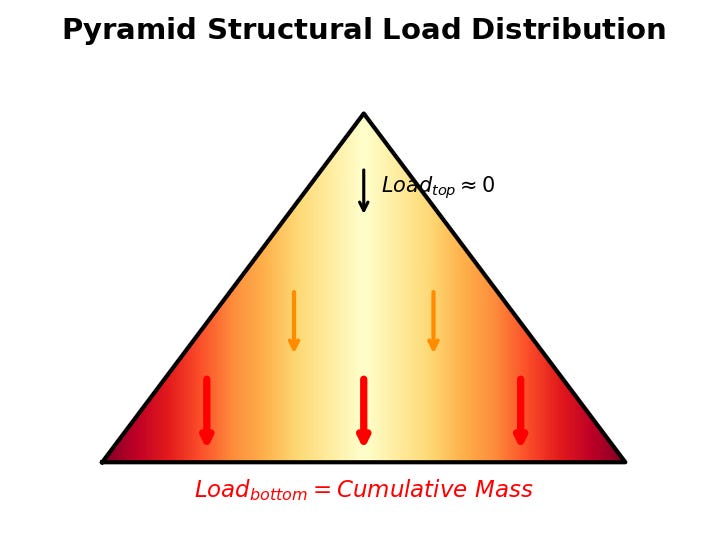
They named the fraud after it. A pyramid scheme pays the top out of the bottom and folds the moment the bottom stops paying in. Everyone understands this perfectly. We just decline to say it about the rest.
None of it is hidden. It’s in the geometry. It’s in the name. It’s printed on the dollar in your pocket. We agreed not to read it.
So the top is the one place where pushing matters least. Knock it off and the structure holds — because the structure was never the top. It was every hand that agreed to pass the weight down.
❧
Now the fight that got skipped.
It was winnable for one reason: it’s close. Close enough that the signal comes back. Close enough to lose your certainty in. Close enough that you’d have to find out whether you can do one real thing. A reachable fight can be lost — which is exactly why it gets avoided. The distant one is safe because it can never resolve. The near one is dangerous because it will.
Here is what close looks like.
They’ll tell you it’s about Trump, or Fink, or Thiel, or whatever name is on the screen this month. Watch how that framing seats you. Even the one you can vote on, you can’t reach — and the rest you were never going to. So you read about them and stay in the chair.
The data center is where that money has to touch the ground.
It can’t stay abstract. It needs acres of land, a town’s worth of power, millions of gallons of water a day, and a permit. The permit comes from a county board that meets Tuesday at six.
The deck is tilted before you arrive. Some builders move fast on purpose — filed late, noticed quietly, the review window closing before the neighborhood knows there was a window. Others show one plan, win the yes, and change it after, apologizing once the concrete is poured. Legal and rigged at the same time.
Then there’s your week.
Two jobs, the commute, the kids who need dinner and homework and a bath. You can’t read a noise study at eleven at night and stand at a podium at six. The people with the most riding on that room are the ones the week has already locked out of it.
And the ones who could make the meeting — the ones who can leave town if it goes bad — are the ones with the least riding on it. Mobility and stake run opposite. The more you stand to lose, the more you already carry, the less you can move.
So the fight lands on the people already at capacity, and the people with room to spare opt out, because room to spare is what lets them. This runs everywhere you look. The permit hearing is one place you can stand close enough to watch it happen.
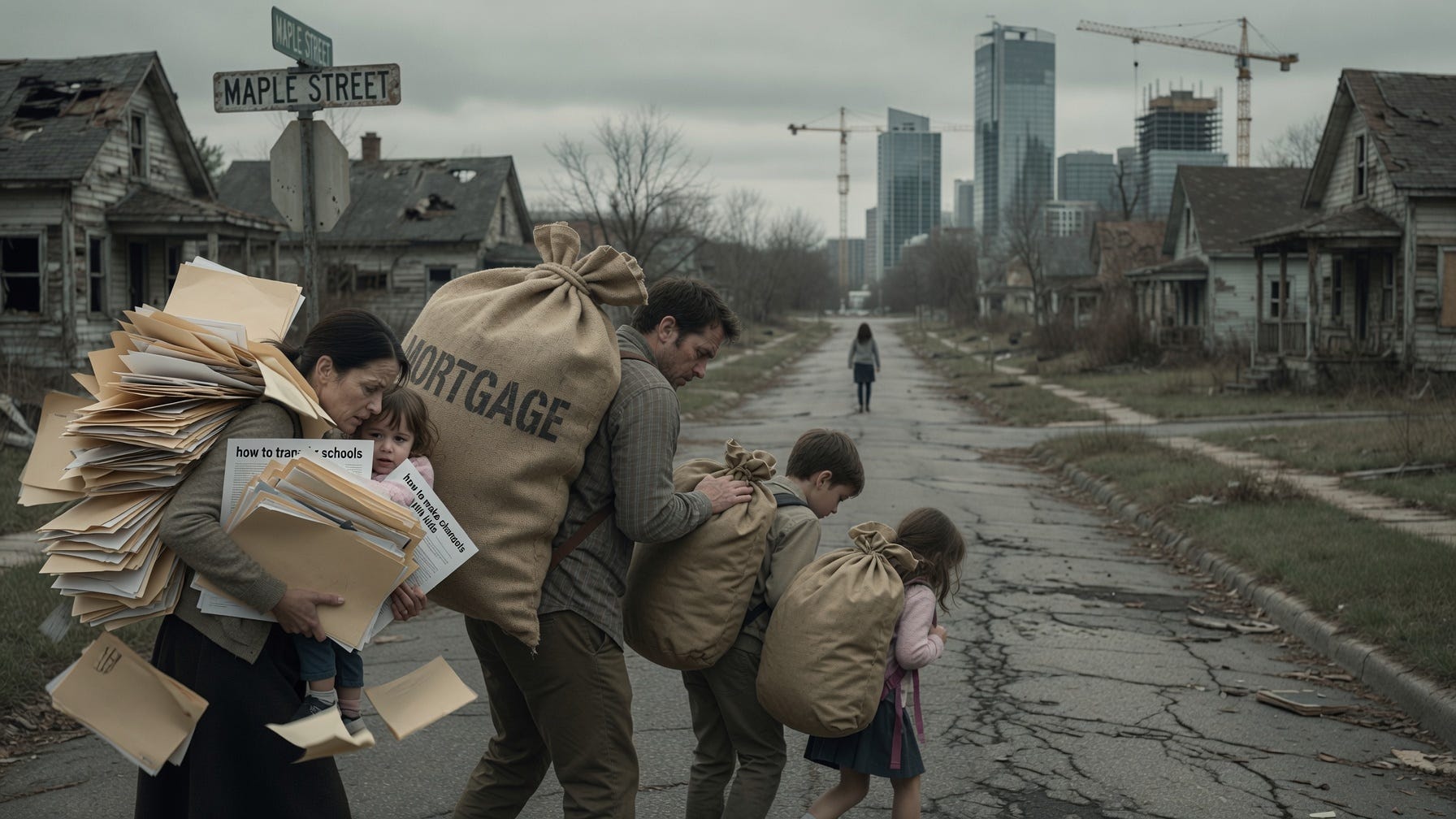
You don’t have the hours to make this a second job.
That’s the point. So the ask is for less: the one free evening you have, spent on the room three miles away instead of the man three thousand miles up. One Tuesday. One comment on the record. One neighbor told, who tells one more. It’s hard. The arrangement makes it hard. And it’s still the one fight that can be lost or won — because you’re the only one who can stand in your spot.
The data center is one room. There are others. The zoning board that meets on Wednesdays. The school district with three open seats. The landlord with your name on a lease. The budget line you could read and contest. The one bad actor whose name you already know, whose office you could walk into this week. People hear “local” and think “small.”
Turn it over. This is the larger fight — the only one where your vote lands and comes back. Where the cycle closes: feel, act, get met, rest.
Instead of running open forever on a screen.
One thing keeps this honest.
Some far fights are the right fight. Scale work is necessary — the union drive, the coalition, the ten-year win that finally lands. What decides it is resolution: whether you can act and get a result that changes your next move, or only a feeling that sends you back to the feed. A fight passes when the loop can close — when the act meets something and comes back. Scale is incidental to that. Distance is incidental to that.
❧
The closest fight is the one in the room you’ve been turning your back on to face the screen.
The brother. The father. The daughter who won’t look up. They are reachable. They are right there. They will answer you — which is what makes them hard, and what makes them real. You can lose that fight. You can also win it. What you can’t do is win it while you stand in the stands roaring at a man who will never learn your name.
So here is the instruction, and it’s small enough to carry out this week.
Step out of the stands — you were never going to play in that game, and watching it only kept you still. Pick the one room three miles away. Go Tuesday. Put one thing on the record. Tell one neighbor, who tells one more. Then turn to the person across the table — the brother, the father, the daughter — and give them the seeing you’ve been spending on the screen. A win close enough to be felt is the only kind that was ever yours to take. Stand on the one ground that answers back.
-Fire tongue 🔥
C O L O P H O N
Spine Accuracy is anesthesia; distance is the safety that guarantees no result. Power is every hand that passes the weight down, not the figure on the screen. Turn from the fortress to the field under your feet.
Evidence The watcher who believes his watching reached the field; the live event that runs once and can’t be tested; the triangle’s load path; the pyramid scheme; the permit hearing, where the abstraction has to touch ground.
Cross-ref One Direction Only: The Costume · One Direction Only: The Form( to be published next week)
Register Firetongue. Cool diagnostic; structure named, intent unclaimed; specimen before abstraction.