


Sunday.
My grandmother’s house, the house my father built for her at the peak of his career, the house I live in now because I cannot afford one of my own. My grandmother in the corner of the living room, a hired care worker beside her, the television on. Most days my grandmother does not know who I am, or who anyone is.
We sit at the table in the kitchen which is an open design so the living room is in full view. My aunt lives here and helps care for my grandmother too. My mother. My father across from me, visiting. My kids weren’t there; their mother had picked them up a few hours before. Three generations in one room over one meal.
It started over my children’s school. My father brought up an article he’d read: one of the best public schools in the county. Then I told him what I’d found. The county has proposed cutting the immersion programs — two and a half million dollars — in the same budget that puts four and a third million into security technology. Same deficit, same book. I’d spent weeks reading the documents.
Then it went where it always goes.
I said, “I can’t tell where the government ends and the corporations start.”
He said, “The fault is the government’s, the government makes the final call, we don’t vote for corporations.”
“Exactly,” I responded. “That is why they have so much power over us. No one chose them.”
That is the smallest version of what I have been writing about for a year.
My father’s model has a door in every room. Vote them out. Move. Leave. Mine says there are rooms without doors. That was the whole disagreement, everything else that night was that disagreement in different clothes.
My aunt backed me — she’s a nurse. We talked about the way OxyContin was pushed, and about things she has watched happen in medicine that run the same way. I brought up the Meta case — what they knew, what they told parents, and the settlement they paid to keep operating. The safety features they promoted were mostly unavailable or ineffective.
He answered with big tobacco. This is how it has always worked. He meant it as a correction.
Then the blame moved to parents. They should be watching their children better. The controls he was pointing to are the ones in the complaint.
Then he asked what I would do about Meta. I’d been writing about this for a year, so the answer was already there. “Pierce the corporate veil, and revoke the charter. A fine is a line item. It gets priced in, budgeted, and paid, and nothing about the business changes.”
What came back after that were the phrases. I know where they come from — the television runs all day in the room my grandmother sits in, and I hear it from the kitchen while I cook, the same phrases, close to word for word.
Then the label. “You haven’t suffered. We’ll grant you the addiction — but even then you were trying to live cushily.”
He meant a night fifteen years ago.
I was working in a factory a state away, months sober, sharing a room with three other men in a recovery house, barely making rent. A year before that I’d been studying illustration at a school I worked hard to get into. That was gone. I relapsed, and relapse meant eviction from the house that night. I knew the hospital was next and did not know what came after. On the way there I sat down in a pub and ordered a steak and some good beer, the first good meal I could remember, and I knew I couldn’t cover it. I was drunk and homeless and I wanted one hour of being a person instead of a fuck-up before it ended. The bar kept my license. My father paid the tab — a hundred and six dollars — after I’d been in treatment for thirty days, and he has brought it up ever since. I have been sober ten years. The tab is still open.
Read from outside, that night is a receipt for an indulgence by a man with options. There was no such man in that pub. The label only holds if the inside of that night stays unavailable.
I said: “Stop. You don’t get it.”
He escalated, which is what happens when you refuse a label somebody needs you to take. The label is load-bearing for the way he keeps the world in order. If I am that, then what I am describing is not happening. Refuse it and the world has to move, so the label comes back harder.
I wasn’t calm. I said what I meant.
“I’m very angry at you. You don’t get what it’s like. I hate this country, I think it’s disgusting, and I hate that you can’t see it. It’s hell for me.”
True in the moment, and too wide. What I hate is institutions that have atrophied into self-preserving machines, running on dead men’s words.
He took the sentence. Look how out of control you are — and he held it there. I have thought since about which sentence would have held. Calm, sourced, a number on the spot. I had given him the budget an hour before, and the remedy when he asked for it. The label came anyway. The standard rises to whatever you cannot produce in the moment, a shifting goal post.
That is what pointing at the anger does. It takes the state the harm produced and makes it the reason to dismiss the report.
For the record on the state I was in: ten days of work in a row, two hours of daily commute sitting in traffic, straight from that into a full weekend of full time caregiving for my two kids, eight and five. What I meant by the sentence is that I am tired in a way sleep does not reach, that the tiredness has a source, and that he did not build it. He holds the door shut on naming it. Those are different things, and I needed him to know I could tell them apart.
Then the reply that comes whenever someone names the thing. “Then why don’t you leave. Go.”
My aunt started crying and said to her brother: “Not in front of your mother. She doesn’t need to hear this. Stop.”
I lowered my voice. “I’d leave if I could. Custody. My kids. I can’t leave, and you know that.”
My ability to see my own children is held inside a border I did not draw, on a schedule I did not write, by a court whose reach I cannot decline. I have read its reasoning. Nothing in it measures whether my children are safer or better off under the arrangement it assigned.
That is the room I had been trying to describe all evening — the one without a door — and it had just been used to close the argument about itself.
Move, they said — somewhere cheaper, like your brother. Away from my mother, who does the school pickups multiple days a week. Away from their cousins, their grandparents, their friends. Away from the only care in my life that doesn’t carry a price. That was the remedy on offer for a life that costs too much: leave the one part of it that’s free.
“The area is too expensive,” he said. I was born into a cheap county. Houses here cost three times what they did the year I was born and twice what they did when I was twenty-two. The people telling me to leave are the ones who got here when it was cheap.
He’s leaving, he said, when he retires. Taxes are too high.
My mother and my aunt had had enough. I stopped because they asked. He stopped after that.
Later, calmer, away from the kitchen table, he told me why he didn’t like what I was saying. He gave his kids a good life. We didn’t suffer. We got vacations. We went to Hawaii in high school. What I was saying dismissed that.
I acknowledged that he did give those things, and they were appreciated, and that what I’m talking about has nothing to do with that. What is happening now has been hurting all of us. Him included.
He wouldn’t take it.
He told me about 1990.
He was young and rising in a company and there was politics — he calls it politics; the way I heard it, he took the fall for someone else. They cut him loose a few months before my mother gave birth to twins. My brother and I. It wasn’t his performance that lost him the job. They knew she was well along. He worked manual labor and every job he could find to make enough. He brought it up to show me I don’t know what suffering means. I had a job when my daughter was born and have a job now.
“Dad, they shouldn’t have fired you. That wasn’t right. That was cruel.”
“That’s the world and business,” he said.
“Everywhere I look, success seems to require not caring about people. I don’t want it,”I replied.
He brought up Friedman. “Who was more successful, him or you?”
“At what cost? That’s not success to me. The higher you go, the ones who make it are the ones who can say acceptable casualties and mean it.”
“That’s what responsibility is. That’s what men do. Sometimes you have to cut the freeloaders.”
“Those are all people. Individual people. I won’t do that. I can’t know that about them.”
He walked away. I said to my mother: “That’s a label they sell so you don’t have to feel guilty for your actions.”
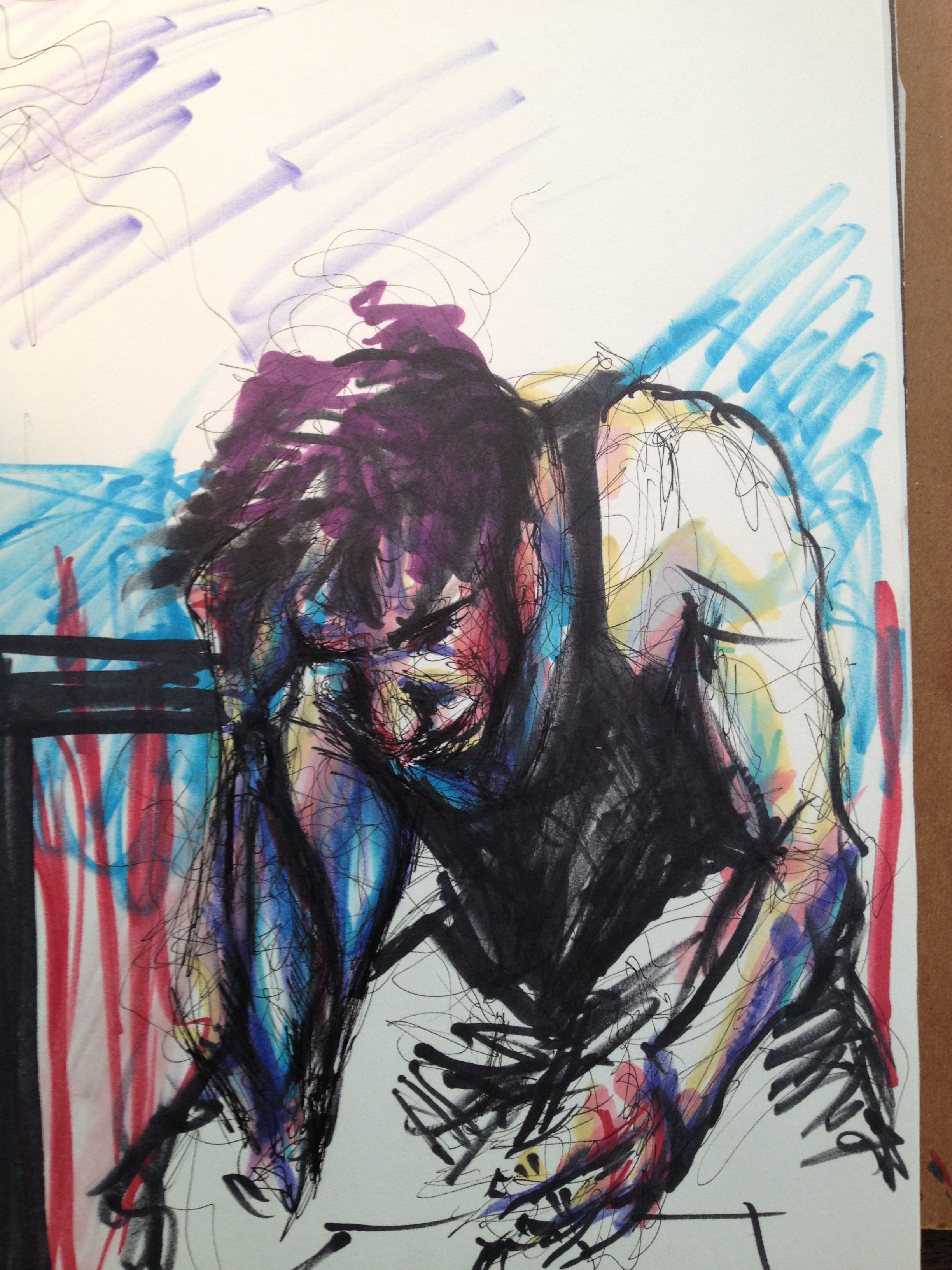
I wrote most of this the same night.
I wanted to post it right away, but I’ve learned there is a difference between intensity and urgency. So I sat with it a few days and took the night apart piece by piece. That’s when I heard what he said before he walked away. Sometimes you have to cut the freeloaders. That is the sentence that was said about him in 1990. A young man on the way up, pregnant wife, twins due, politically inconvenient — someone in that company said acceptable casualty and meant it, and he was the casualty. He learned the word from underneath. He says it now from above and calls it responsibility. He became their sentence. That’s how he outlasted them.
And it’s the sentence he used on me. Freeloader is living cushily is the son in the house he built. Then why don’t you leave is the cut. He did to me, in his mother’s dining room, what was done to him, and he calls it what men do.
What he did in 1990 to get out of that room was decide it had no door because it was the weather. That’s the world. If it’s weather, then surviving it is character, and the man who survived it is the man he became — the one who provided for his wife and children and built his mother a house. If it was cruelty done by people who knew his wife was pregnant, then he was the harmed party, and he has spent thirty-six years building the proof that he wasn’t. I live in the proof.
So when I said they shouldn’t have fired you, I was filing his report for him — the one he never filed because filing it meant being the harmed party. Or maybe he filed it once and his own father told him it was the weather. Either way, he returned mine unread. His own too. I hold the only firsthand copy of my life, and he holds the only copy of his — I can’t read it for him. I can tell him what I see from here. A company let a man go with twins on the way and called it business, and everyone agreed. That agreement is the thing.
And the label works at both ends. I said it’s sold so the cutter doesn’t have to feel guilty. It’s also bought by the cut, so that what happened to him can be filed as order. If freeloaders exist and cutting them is what men do, then the men who cut him were doing what men do, and what happened to him was just the weather that year. He bought that label in 1990, about himself. That is what he was defending across the table, and the people he was defending are the ones who did it to him.
The position worth naming is the one you cannot check and cannot refuse. You did not pick who sits there, you cannot audit what they do, and you cannot walk away from them. The unreachable thing works as a seat. It works the same whoever fills it. It needs no conspiracy — only that the two people it sits above stay busy with each other.
He sat under the seat, decided it was the sky, and raised his sons to do the same — and one of them is telling him it was a chair. There’s no cruelty needed anywhere in that, and I’ve looked.
By the end I said the true thing, the one I’d come with.
“I am suffering. That’s the point. It’s painful to live inside this.”
He said what people imply and rarely say out loud: “You are talking about your suffering. You can suffer. Not your kids.”
I’m your kid, Dad.
My mother said, “Stop, both of you, please.”
I stopped. We cleaned up, did the dishes, had dessert, and talked as though a grenade hadn’t just gone off in the dining room — hearts going, blood up, a vague guilt and a silence that held for the rest of their visit.
The next morning my aunt said, “I’m sorry your father was so cruel to you last night. He just doesn’t get it.”
She does not say things like that to me. When I say I’m overwhelmed, she is usually the one telling me it isn’t that bad. She was in the room the whole time, and the next morning she said it anyway.
You can suffer, not your kids.
He made that rule in 1990, with twins coming. I am one of the twins. He absorbed that year so the two of us wouldn’t, and the absorption is the meaning of his life. Then the child it was for sits across from him and says it’s hell. That’s what you didn’t suffer is guarding — the one thing he did with his life, which was to suffer so that sentence would stay true.
So I’ll repeat what I said at the table. If you won’t listen to my own words about myself — what it’s like to live my life, something you cannot access and can only receive secondhand — then you don’t understand it. Yours was refused too: in 1990 by them, and every day since by you. I’d really like you to hear both.
-Fire tongue 🔥
To quote Radiohead, there are doors that do not open. As in the illusion of choice where none exists in all actuality. F fasçism, we live in a police state.
I'm feeling that; people rationalize their commitment to the lowest standard rather than investing in a better plan. Meanwhile, we are targeted for both regular and random financial abuse to fund such while they look away, claiming it has been earned, is deserved and that it should be enough. 🔨Today is ours either way.