


I am going to tell you a story about a video game, but you need to understand right now: this is not about a video game.

The Weaponization of Escapism
This is a structural autopsy of the exact economic slaughterhouse you are currently living inside. When you look at the modern digital economy—from the collapse of the middle class to the algorithmic enclosure of the gig economy—it can feel too massive, too abstract, and too heavily camouflaged by corporate PR to truly comprehend.
But if you want to understand exactly how the Extractive Elite view you, you just have to look at how they design their digital enclosures.
In the real world, the ruling class hides their contempt for you behind layers of “normal person” bureaucracy. They deploy HR departments, “civility” mandates, and compliance training to maintain the illusion that the system is a meritocracy and the rules apply to everyone equally.
But in a digital Casino—a “pay-to-win” mobile game (where players use real-world money to buy mathematical advantages over each other)—that camouflage is entirely stripped away. The Casino is the only place the Cathedral publishes its extraction math out loud. There are no HR departments to pretend they care about fairness. There is only raw, unvarnished algorithmic class warfare, mathematically designed to isolate you, bleed you of your capital, and sell your frustration to the highest bidder.
Let us be clear: no one downloads a massively multiplayer role-playing game on their phone because they are entirely satisfied with their actual, physical life. You don’t retreat to a glowing rectangle if the real world is currently treating you like royalty. When people log into a digital universe, they bring their deepest vulnerabilities with them. They are looking for progression because their real-world economic mobility is dead. They are looking for a tribe because they are profoundly isolated. They are looking for a cognitive sanctuary—a place to practice agency.
The architects of the Casino, naturally, know this. They take that beautiful, biological necessity for “serious play” and route it straight into a sterile extraction funnel. They don’t build games; they build digital enclosures. They take the sanctuary of play and turn it into a slaughterhouse.
This is the autopsy of how we broke one of those slaughterhouses from the inside.

The Marine Biology Hierarchy
The algorithm did not just sell cosmetic upgrades, which would be fine. It sold mathematical invincibility. It engineered a massive wealth disparity that completely severed the relationship between effort and outcome.
To understand how this ecosystem functions, you must understand how the Casino views human beings. It is all very silly until you remember the money is real. The tech and gaming industries literally classify their users using a marine biology hierarchy based purely on their capital extraction potential. This is not just a monetization strategy; it is a perfectly distilled model of algorithmic class warfare:
The Minnows: Algorithmic Fodder
The Minnows are the F2P (Free-to-Play) working class—players who spend zero real money to access the game. They spend little to nothing—maybe $5 to $20 a month on a basic subscription. The darkest secret of the Casino model is that a pay-to-win ecosystem cannot survive with only Whales. If everyone is a demigod, no one is special. The machine needs a massive population of helpless, under-funded players to act as content for the ruling class. The Minnows are not the customers; they are the product. They are the algorithmic fodder. Their suffering, their subjugation, and their inability to fight back is the exact commodity being sold to the elites.
The Dolphins: The Middle-Class Squeeze
Dolphins are the mid-tier spenders. They drop anywhere from $100 to $1,000+ a month. But they do not go into credit card debt for survival; they go into debt for escapism. The Rust has systematically stripped the middle class of real-world agency, making physical reality suffocating and unnavigable. A healthy human brain requires active escapism—a cognitive simulator, an exoskeleton—just to practice agency and survive the atmospheric pressure.
The Casino knows this. They privatize the sanctuary and sell the illusion of agency back to the Dolphin for a monthly fee. But there is an even darker trap: complicity. In the physical world, the educated middle class has whatever remaining wealth they possess tied up in 401(k)s and index funds managed by the exact same asset firms driving the extraction. They logically deduce they have to root for the Leviathans, because their own retirement is held hostage by them.
The Casino perfectly simulates this. The Dolphin bleeds their real-world savings dry, often desperately trying to align themselves with the Whales. They defend the very system that is mathematically designed to crush them because they believe proximity to capital is their only path to survival. (I was a Dolphin. I spent stupid amounts of real money, went into actual debt, and it genuinely hurt my life just to buy a digital exoskeleton in a system designed to outpace me).
The Whales: The Extractive Elite
The Whales are the ruling class. They drop thousands of dollars every single patch (a scheduled software update that introduces new content and raises the power ceiling). They aren’t paying to play the game; they are paying not to play it. They purchase the right to sleep. They buy stats (the numerical values that determine a character’s health and damage output) so astronomically high that they can park their avatars in a warzone, turn on auto-combat (a feature where the game literally plays itself), and go to work in the physical world while their digital wallet slaughters the Minnows. They are entirely insulated from the mechanics of the system. They do not have to learn to dodge; their capital absorbs the damage.
The Leviathans: The Server Gods
And then there are the Leviathans. The statistical anomalies. The oligarchs. These are the players dropping $50,000 to $100,000+ to become untouchable server gods. They are so heavily capitalized that they exist in a completely different reality than the rest of the player base. They warp the entire economy and culture of the server around their whims. (The biggest Leviathan on our server, a guy dropping tens of thousands of dollars on digital armor, famously claimed he made his fortune reselling rare sneakers. It made absolutely no mathematical sense—we all strongly suspected he was just spending daddy’s money—but no one questioned it, because his credit card could literally vaporize your avatar). The rules simply do not apply to them, and the Casino bends over backward to cater to their every demand, because a single Leviathan funds the server for a year.
In return for funding the entire algorithmic architecture, the machine grants the Whales and Leviathans insurmountable statistical dominance over the general populace. So it goes.
The Blue Faction: Buying the Right to Sleep

This absurd architecture created the Blue Faction: a monolithic wall of unearned capital dominated by an incredibly insular clan of Whales.
This specific clan was a homogenous group of wealthy Chinese players who communicated entirely in their own language loop, completely walled off from the rest of the server. They spent tens of thousands of dollars to acquire stats so high that the game effectively played itself. Let that sink in. They paid enormous sums of real-world money for the privilege of not playing the game. They bought the right to sleep.
This is the digital equivalent of Wall Street institutional capital. Just as the Extractive Elite use hedge funds and passive income to compound their wealth while remaining entirely insulated from the physical labor required to generate it, the Whales parked their characters in active warzones, turned on the auto-combat feature, and let their wallets farm the Minnows while they were completely AFK (Away From Keyboard, meaning they were nowhere near their screens). They purchased a sterile, gated community inside a combat simulator.
But the extraction engine didn’t just break the economy; it degraded the culture into a localized race war.
When you give a completely isolated, homogenous group of people absolute, paid-for dominance with zero physical consequences, the result is profound psychological toxicity. As the Blue Faction indiscriminately farmed the server, the F2P players—trapped, helpless, and mathematically incapable of fighting back—began lashing out with the only weapon they had left: extreme racial slurs.
In response, the whales didn’t back down; they leaned into it. They weaponized their algorithmic invincibility to fuel an overt, aggressive nationalism. The server chat devolved into a cosmic loop of “China Best, all other suck,” while the whales used their credit cards to physically enforce that ideology in the game world. Because they never had to interact with the broader community, and because their stats insulated them from any mechanical retaliation, they treated the multicultural working class of the server as subhuman algorithmic fodder.
They weren’t just buying an advantage in a video game. They were buying the temporary illusion that they were gods, and they used that illusion to act like monsters.
The Red Faction: The Multicultural Hotpot
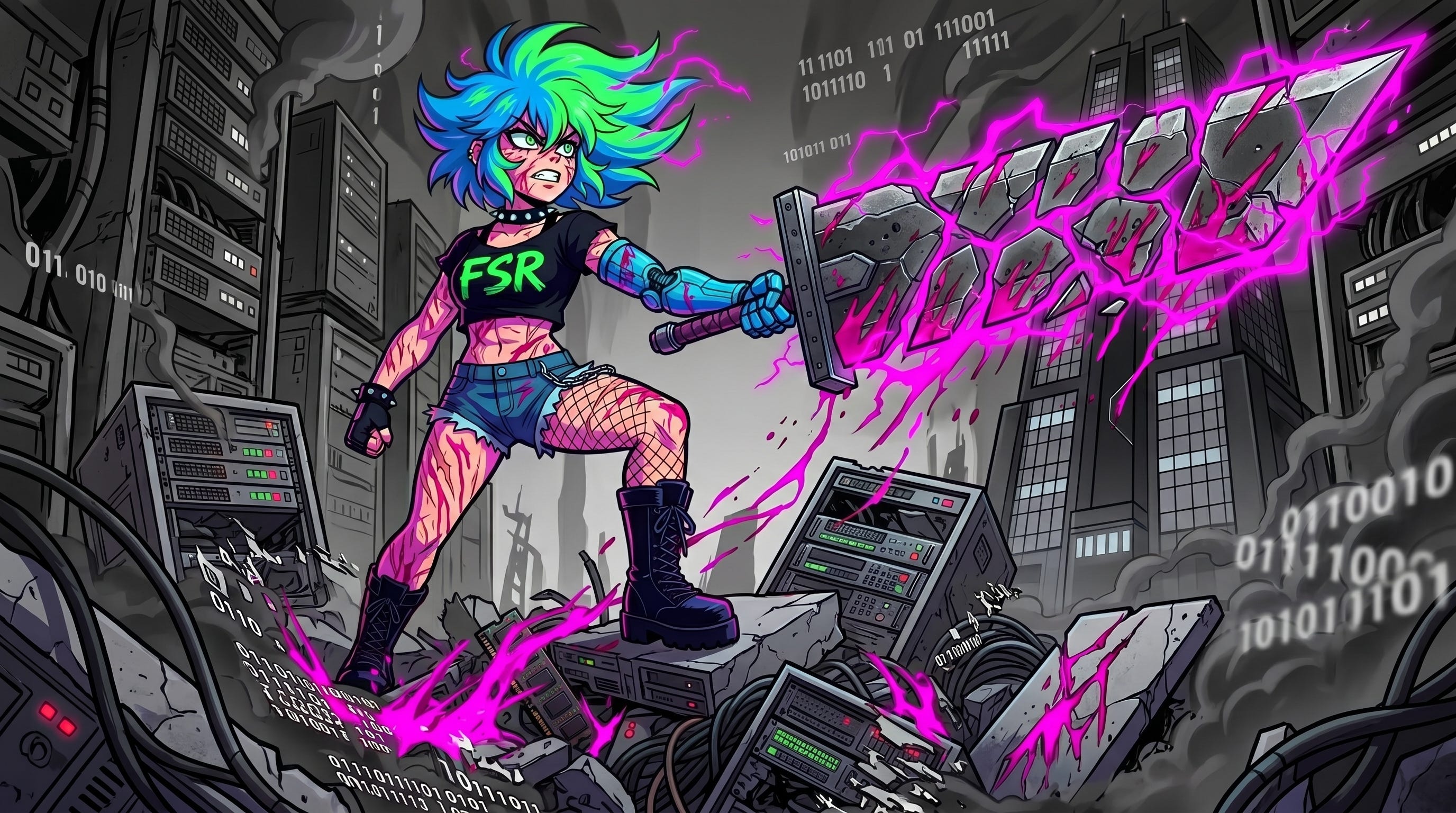
On the other side of the algorithm was the Red Faction.
If Blue was a sterile wall of homogenous capital, Red was a multicultural hotpot of the global working class. The Casino viewed them as algorithmic fodder, but I was talking to people from all over the world every single day—people bringing profoundly complex human lives into the digital space.
There was a Filipino guy who had moved to the States without his family. He was undocumented, quietly building a good life for himself under the radar, and kept the details close to his chest. There was a Brazilian girl, incredibly kind-hearted and open, who became a close friend; we still say hi on Discord once a year just to check in. There was a highly sensitive girl from France with deep trust issues who somehow still loved to talk endlessly. There was a younger guy who openly admitted he had it easy in the real world—his mom was a fashion CEO who handed him a high-paying consulting job—yet he fought alongside us instead of buying his way into the Blue Faction, maybe looking for the friction his real life lacked. And there was a Vietnamese guy in my clan, exactly my age, who had immigrated to America and spent about as much as I did (a fellow Dolphin). We fought alongside each other through his wife’s entire pregnancy cycle. I still talk to him occasionally today.
These were the users from every corner of the globe. They didn’t have unlimited funds to buy stats. They brought real-world stories, grit, and a profound humanity into a system designed to extract it from them.
The environment created by the Blue Faction was so completely suffocating—the AFK farming, the nationalistic arrogance, the sheer unearned dominance—that the game stopped being an escape. It felt like a legitimate occupation. The Red Faction wasn’t just losing a game; they were being systematically oppressed by an algorithm that prioritized the wealth of an insular elite over the human experience of the broader community. The insurgency they started wasn’t about generating points or winning cosmetic titles. It was a desperate, coordinated response to an intolerable environment.
This is why I defected.
I want to be completely clear here: I was not immune to the Casino’s trap. I spent stupid, destructive amounts of money on this game. I went into real-world debt. I was what the industry literally calls a “Dolphin”—I had pulled the gacha lever (a digital slot machine mechanic that grants randomized high-tier gear for real money) enough times to have highly competitive base stats, and it physically hurt my real life to do so.
But no matter how much I bled, I wasn’t a true demigod. The actual Whales were dropping thousands of dollars every single patch to maintain their invincibility. I couldn’t do that. I had hit my hard financial ceiling, and the algorithm was designed to squeeze me until I broke. I could have tried to coast in the Blue Faction, sitting in the safe zone and farming the underdogs with the stats I had already bought, but the lack of honor was sickening. I looked at the algorithmic slaughterhouse the casino had built, I looked at the actual financial damage it had done to me, and I rejected the path of least resistance.
I abandoned the safety of the whales and joined the Red Faction. I chose the friction of the oppressed.
But knowing the game is rigged isn’t enough. You have to know how to break it.
If you want to read the exact tactical autopsy of how we built the Phalanx, orchestrated a 24-hour digital labor strike, and broke the math of an undefeated faction of Whales—upgrade your access.
