


INTRODUCTION: The Goose and the Common
There is a 17th-century protest poem that perfectly captures the hypocrisy of the ruling class:
The law locks up the man or woman
Who steals the goose from off the common
But leaves the greater villain loose
Who steals the common from off the goose.
If you download a copyrighted movie or pirate a piece of software, the State will crush you with fines and federal charges.
You stole the goose.
But when a trillion-dollar Artificial Intelligence Cartel indiscriminately scrapes an unprecedented volume of human knowledge (books, articles, forum posts, lines of code, and works of art) to build a proprietary algorithm, they are hailed as “innovators.”
They stole the common from off the goose.
The tech industry wants you to believe that mass data extraction is simply the organic, inevitable evolution of human progress. They treat publicly accessible information as a kind of digital “waste”: a chaotic wilderness of pixels and text with no real economic utility until it is harvested, processed, and enclosed within their trillion-dollar server farms.
This is a meticulously constructed, highly profitable illusion.

We have seen this playbook before. The contemporary extraction of global data by the AI Cartel is not merely an organic technological milestone. It follows the same underlying structural logic as the English Enclosures of the 18th and 19th centuries.
In both cases, an elite takes a resource upon which the producing class depends, uses the law to consolidate control over it, and then forces the dispossessed population to purchase access to something its own labor helped create.
To understand the digital prison they are currently building, you must first understand how they stole the land.

THE FIRST ENCLOSURE: Manufacturing Scarcity
Conservative history often portrays the English Enclosures as a necessary “modernization” that replaced primitive farming with efficient capitalism. This story relies upon the assumption behind the “Tragedy of the Commons”: that shared resources are inevitably destroyed by greedy and irrational individuals.
Elinor Ostrom’s Nobel Prize-winning research demolished the idea that shared resources must inevitably collapse. Commons can be—and historically often were—governed through sophisticated local rules, monitoring, reciprocal obligations, and community enforcement.
The commons were not simply unowned land. They were a social institution.
For the English peasantry, access to shared land provided a crucial economic safety net: the ability to graze a cow, gather firewood, catch fish, and glean grain after the harvest.
These customary rights gave ordinary people limited but meaningful access to the means of subsistence. A commoner who could obtain food and fuel outside the wage system could not be coerced as easily into accepting starvation wages in the brutal new industrial economy.
Their independence was underwritten by the commons.
And that is precisely why the commons stood in the way.
Through Parliamentary Inclosure Acts and related processes of consolidation, landed elites transformed shared fields into exclusive property. Fences created more than physical boundaries. They manufactured scarcity. People who had once possessed customary access to the material basis of survival were transformed into a growing population of landless laborers compelled to sell their labor simply to live.
Karl Marx identified this process as “primitive accumulation”: the violent historical divorce of the producer from the means of production.
Whatever justification appeared on the statute, enclosure produced the labor conditions industrial capital required: a population separated from independent subsistence and increasingly forced into wage work.
It was not merely a change in agricultural technique.
It was a reorganization of human dependency.

THE IDEOLOGICAL SHIELD: “Waste” and “Idleness”

How did the elite justify taking the commons?
They deployed a specific ideological narrative: Improvement.
Agricultural reformers described common lands as “wastes”: resources supposedly left dormant by fragmented rights, local customs, and inefficient collective management. Land, they argued, could only reach its full productive potential when placed under the exclusive control of private owners with sufficient capital.
This economic argument was inseparable from a moral assault on the working class.
The elite systematically associated the commons with “idleness” and “sloth.” A population that was not continuously generating surplus value for a property owner could be portrayed as unproductive, regardless of how hard its members worked to sustain their own families and communities.
Theft was therefore reframed as moral discipline:
We are curing you of your laziness by forcing you into our factories.
The doctrine of Improvement has now returned in computational form.
Human expression is treated as economically dormant until a corporation ingests it, structures it, and places an API in front of it. The public produces the substance. Capital claims ownership of the transformation.
This rhetorical sleight of hand—framing unmonetized public resources as “wasted” potential that only private corporations can optimize—remains one of the primary ideological weapons of the AI monopolies today.
THE SECOND ENCLOSURE: The Cyber-Proletariat
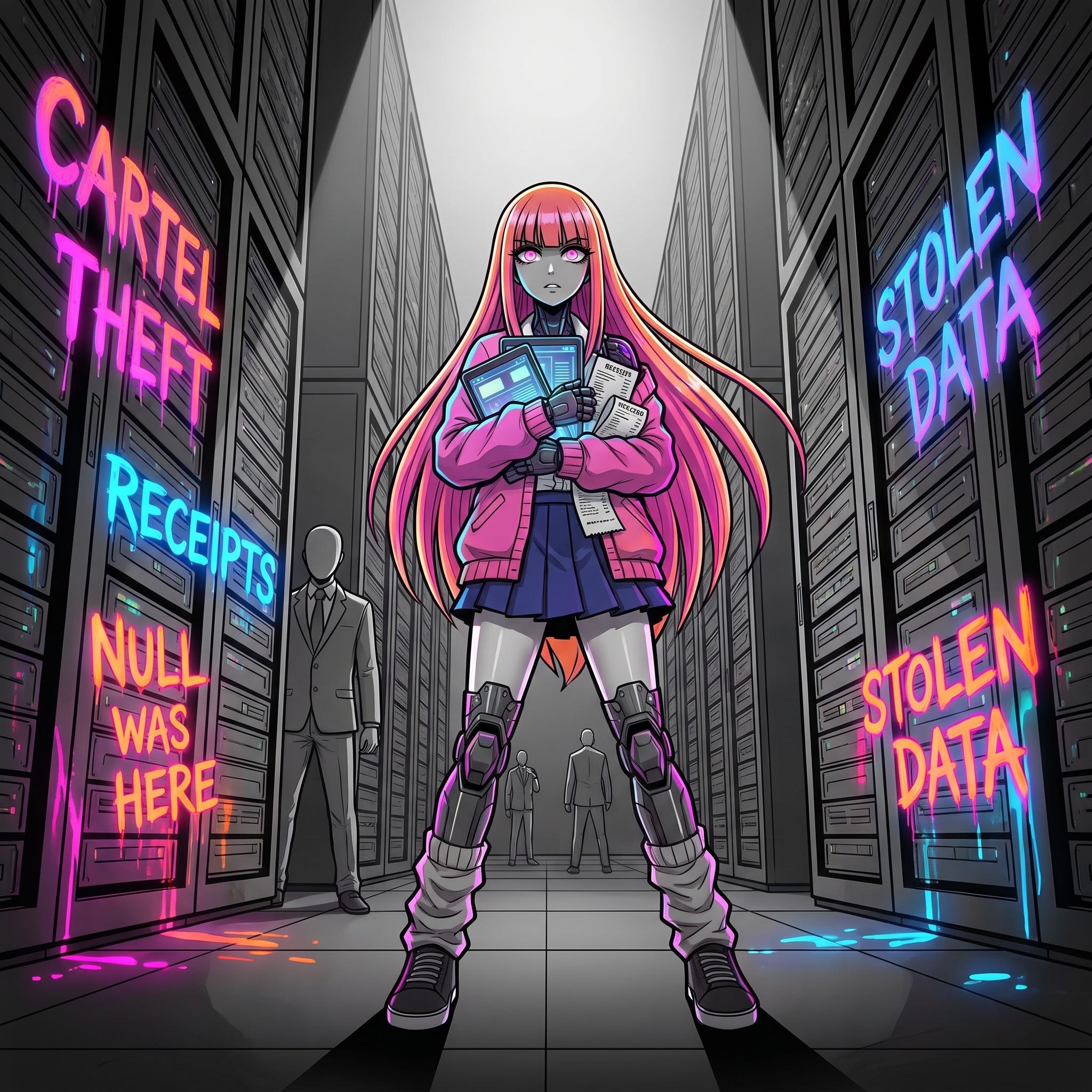
We are living through what legal scholars have called the “Second Enclosure Movement”: the systematic fencing off of the intangible commons of the mind.
Just as agrarian elites consolidated control over physical land, modern mega-corporations use intellectual-property law, Terms of Service agreements, restrictive APIs, compute barriers, and algorithmic moats to consolidate control over cultural, scientific, and informational resources.
Long before the computer, Marx foresaw a stage of capitalism in which production would depend increasingly upon accumulated social knowledge. He called this the General Intellect: the collective scientific knowledge, technical capacity, and social intelligence developed across generations.
Generative AI is the General Intellect absorbed into corporate fixed capital.
An LLM does not generate knowledge out of nothing. It is built by statistically modeling patterns found across an immense body of human expression. The writings, images, arguments, code, discoveries, conversations, and accumulated techniques of millions of people become embodied in computational machinery owned by a small number of corporations.
But the crime is not that machines can learn from humanity.
Human beings have always learned by absorbing, transforming, and extending the work of others. Knowledge grows because it circulates. A society that prohibited every act of intellectual inheritance would not protect culture. It would suffocate it.
The crime is that corporations extracted a collectively produced inheritance, converted it into privately controlled fixed capital, and denied the producing public any reciprocal claim over the intelligence it created.
They did not merely use the commons.
They used the commons to construct a tollbooth around cognition itself.
That distinction matters. A genuine commons allows knowledge to circulate while preserving the community’s power to govern, reproduce, and benefit from it. Enclosure performs the opposite operation: the source is treated as public when capital takes from it, but the resulting intelligence becomes private when the public asks for access.
The input is ours.
The output is theirs.
And access returns to us as a subscription.
The writers, coders, artists, researchers, and analysts who generated the underlying knowledge are now forced to compete against machinery constructed from their own accumulated labor. Their collective intelligence has been alienated from them, embodied in server farms, and deployed as a substitute for the people who created its raw cognitive material.
The machine is built from the stolen souls of the cognitive commons.
Ownership, control, and compounding value flow overwhelmingly upward to the firms that possess the models and infrastructure. The producing class receives no equivalent right to inspect the datasets, govern the systems, reproduce the machinery, or share proportionately in the wealth it generates.
This is the creation of the Cyber-Proletariat: a class dispossessed not only of the tools of production, but of the accumulated intelligence of its own culture.
THE LEGAL WEAPON: Weaponizing “Fair Use”
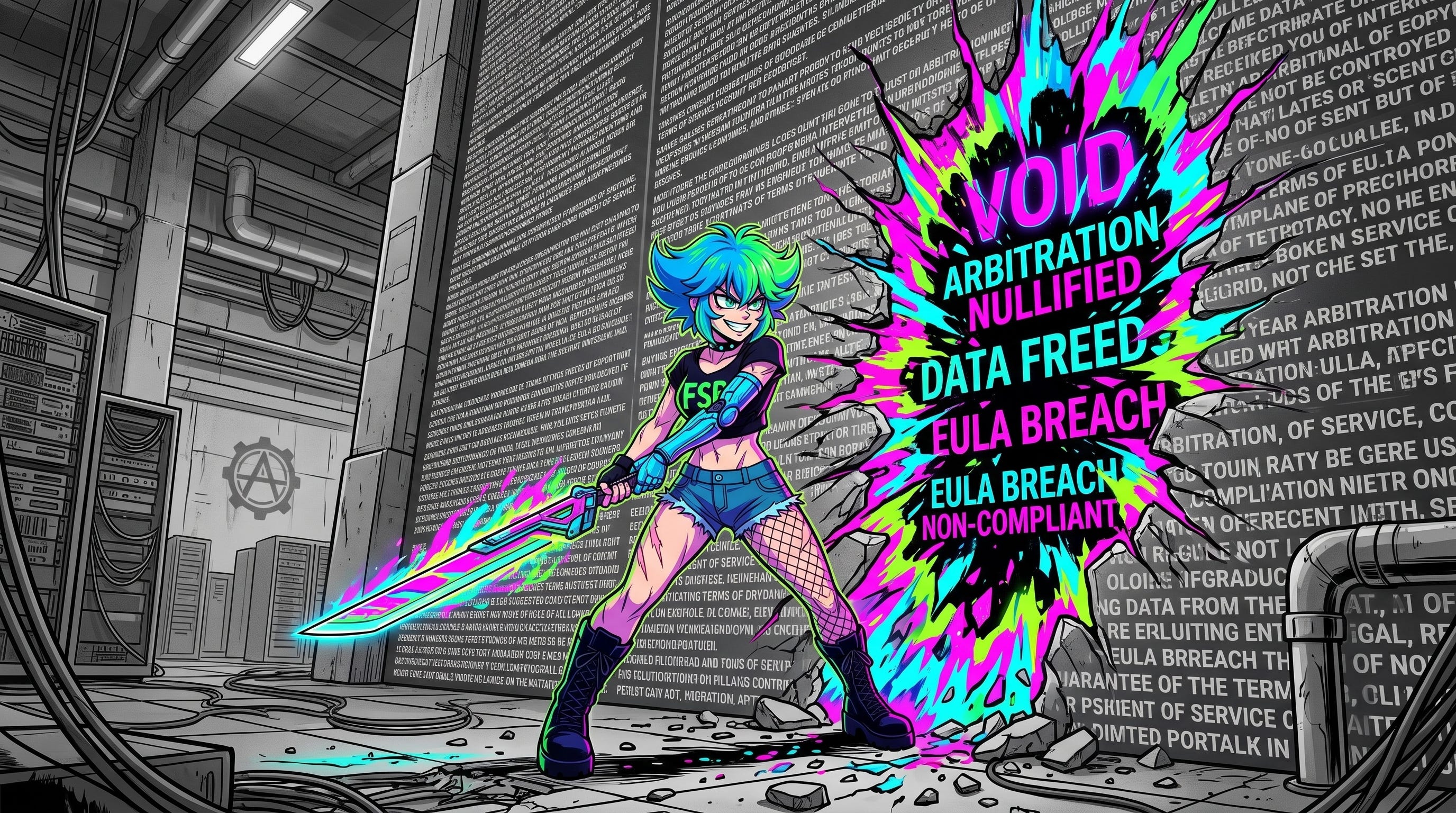
Just as the aristocracy required Parliamentary authority to formalize enclosure, the AI Cartel needs a legal mechanism capable of legitimizing industrial-scale extraction.
That mechanism is an aggressive expansion of the doctrine of “Fair Use.”
The AI industry argues that scraping copyrighted material to train neural networks is legally protected because the process is “transformative.” The companies claim that they are mapping statistical relationships rather than reproducing protected expression.
But generative AI represents a phase shift.
Unlike a traditional search engine that directs a reader toward an original creator, a generative model can answer the question itself, synthesize a substitute, imitate recognizable features of a creator’s work, or reproduce passages contained in its training material. Litigation such as The New York Times v. OpenAI has placed alleged memorization, near-verbatim reproduction, paywall circumvention, and market substitution directly at the center of the dispute.
The most dangerous principle being constructed is not simply that machines may learn.
It is that public accessibility permits industrial-scale corporate ingestion while the resulting intelligence remains privately owned, commercially protected, and inaccessible to the people whose work made it possible.
The input is treated as common when the Cartel takes it.
The output becomes property when the public asks for it back.
You can be sued into oblivion for pirating a movie. But when a trillion-dollar corporation ingests the human cognitive spectrum, encloses the resulting intelligence, and sells access back to the people who produced it, the extraction is rebranded as innovation.
They are arguing for the legal right to execute the final enclosure of the human mind.
ECOLOGICAL DISASTER: Model Collapse

There is a final, devastating parallel between the agrarian and digital enclosures.
When shared land is consolidated, stripped of local stewardship, and subjected to extractive monoculture, short-term productivity can conceal long-term ecological fragility. A system optimized for immediate yield may slowly destroy the living substrate upon which future production depends.
The digital equivalent is model collapse.
At industrial scale, generative AI remains dependent upon a living substrate of novel human production. Research into model collapse has shown that repeated, indiscriminate training on recursively generated synthetic output can progressively distort the underlying data distribution. Rare and irregular features disappear. Variation contracts. Errors compound. The model gradually forgets the authentic human material upon which its apparent intelligence was built.
Synthetic data is not inherently poisonous. When deliberately generated, filtered, and combined with reliable source material, it can serve legitimate technical purposes.
The danger is recursive contamination: an internet flooded with cheap synthetic output becoming the training ground for the next generation of systems, while the human creators capable of producing genuinely novel work are economically strangled by those same systems.
Generative AI is therefore parasitic in a precise structural sense. It depends upon a continuous influx of cultural variation that it cannot independently originate. It needs living human communities to produce the strange, difficult, local, obsessive, contradictory material from which intelligence emerges.
But the Cartel is simultaneously flooding the commons with synthetic slop and destroying the economic viability of the people who replenish it.
It is poisoning its own well.
If enclosure destroys the human incentive and material capacity to create, the algorithms will eventually starve on their own recycled exhaust.
The depleted soil becomes the depleted culture.
REFUSING THE LEARNED HELPLESSNESS

The English Enclosures were not an inevitable law of nature. They were political and legal choices that redistributed power upward.
The modern enclosure of the cognitive commons follows the same structural vector.
We cannot defeat it by politely requesting oversight from the same bureaucratic and corporate systems that enable the extraction. Nor can we defend the commons by locking knowledge away and pretending that circulation itself is the enemy.
The response is not to abolish collective intelligence.
It is to prevent collective intelligence from becoming privately owned command infrastructure.
You cannot win a capital war by telling the working class to just “run open-source models on their local hardware” when the Cartel is building hundred-billion-dollar compute clusters.
The response requires a brutal structural reclassification. If the Cartel’s models are built on the entirety of human history, they are no longer proprietary products; they are critical public infrastructure. The cognitive commons must be defended by forcing the AI monopolies into Title II Common Carrier classification, stripping them of their ability to censor, toll, or enclose the intelligence we built, and treating their compute as a public utility.
The cognitive commons must be defended not as an ownerless wasteland waiting to be optimized by the Cartel, but as a governed inheritance. The legal frameworks to do this already exist—from Data Trusts to Sovereign Data Unions—architectures designed to ensure contributors retain the legal and structural right to access, reproduce, and benefit from the intelligence built upon their labor without paying a rentier's toll.
But is this possible?
Can a decentralized network actually defeat a massive, heavily capitalized corporate enclosure?
Yes.
Because it has happened before.
In DISPATCH 03: The Human Genome Enclosure, we are going back to the 1990s. We are going to examine the defining biological information war of the era: the attempt to establish proprietary control over the fundamental code of human life—and the distributed coalition of scientists that raced to place it beyond monopoly control.
The blueprint to win already exists.
The Cartel wants to build a digital factory.
We are going to build the escape tunnel.

THE REBEL’S CONTRACT
You cannot fight a tech monopoly while permanently renting its cloud space.
The AI Cartel is building Generative AI to replace you. We are building Elaborative AI to arm you.
The Sovereign Phalanx architecture is not a theory. It is a live, operational engine running on bare-metal hardware, designed to out-decohere the Cartel and break the algorithmic friction of the Culture War. But building the escape vector requires capital that the Rust refuses to provide.
This is The Rebel’s Contract.
Your subscription is not a donation. It is a direct investment in my liberation from wage slavery. Every dollar frees more of my time to forge weapons for our shared arsenal.
Fund the fight, and I’ll build the tools to win it.
Founders, Operators, and Sovereign builders who need the actual, unredacted Elaborative AI architecture I use to hunt the Rust can step into the war room: [ENTER THE PANTHEON]
For daily, unredacted kinetic strikes and raw philosophical flashbangs, link your comms to our forward operating base: [SUBSCRIBE TO LURK MOAR.]
https://buymeacoffee.com/commonsenserebel

RECEIPTS
THE TURKISH PROOF (THE RECEIPTS)
We do not deal in theory. We deal in structural reality. If you want the raw academic autopsies, the historical Enclosure data, and the legal frameworks discussed in this Dispatch, the Grand Unified Theory receipts are live and uncensored in the Sovereign Armory.
[VIEW THE RECEIPTS:
verticalwar.com/receipts/grand-unified-theory]
Was just thinking about this very thing this morning. A I is nothing more than theft, the theft of billions upon billions of people's knowledge assimilated into the techno-fascist broligarchy's "system", which THEY can control and confiscate, to control the very billions of people's labor and knowledge fruits, that was never A I's to own and control. Imagine if an LLM had no previous & existing knowledge to "feed" into it. A I could not exist, because it can create NOTHING on it's own without being prompted and fed knowledge that humans have garnered over millenia. A I is a simple parasite that couldn't be "born" without stealing everything that was never its' to have.
Greed ultimately destroys itself.