


A NOTE FROM THE ARCHITECT
What you are about to read is not a normal article.
It is a chapter from a Living Storybook—a hybrid form: part political treatise, part serialized myth, part autobiographical rebellion.
It is strange because our enemy is strange, and our methods must be stranger still.
The system is a story. We are rewriting it.
Welcome to the Forge.

For years, high-information voters have watched the same heartbreaking play unfold: Democrats go to the mat to fight for a critical public good, and at the last second, they are forced into a “pragmatic compromise” that leaves the public holding the bag.
It’s easy to feel betrayed. But what if it’s not a betrayal, but a trap?
What if the entire game is rigged, not just by the GOP’s bad-faith sabotage, but by a deeper set of rules that ensures the “pragmatic” choice is always the one that benefits a silent partner?
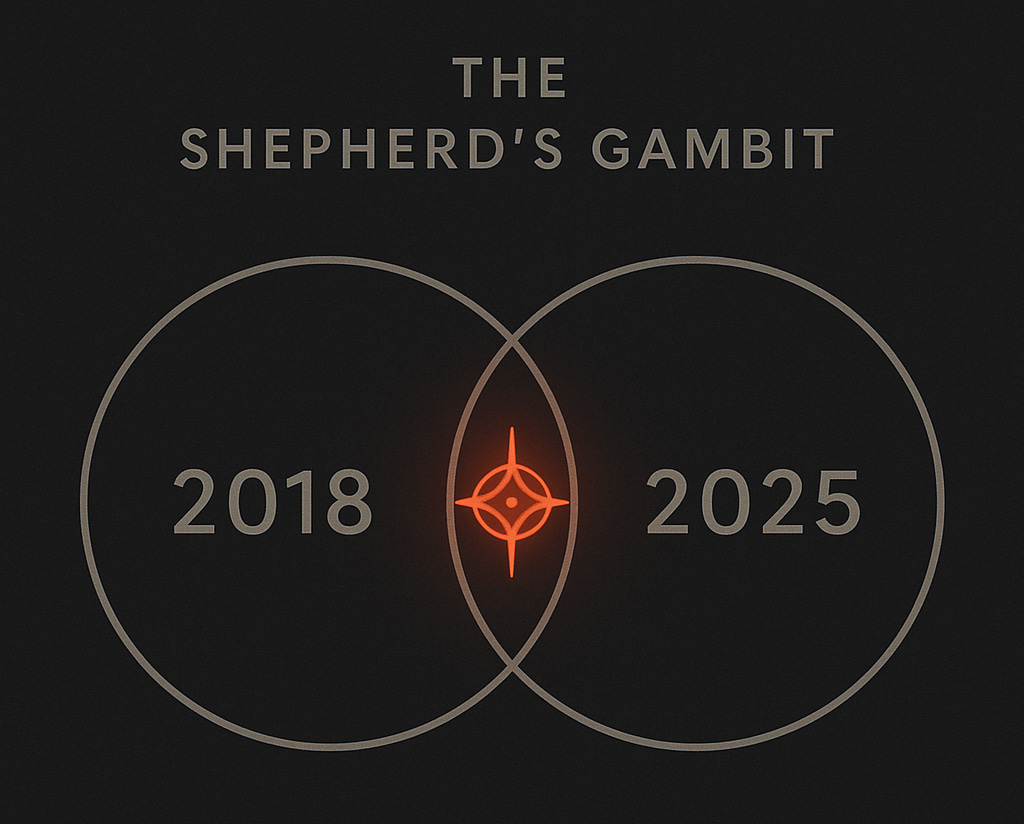
This isn’t a story of two separate failures. It’s the story of one brilliantly successful enemy playbook, run twice.
Act I: The 2018 “Republican Trap” ($194 Billion Windfall)
To understand the 2018 government shutdown, we have to look at the “sabotage” that happened three months earlier.
The Sabotage: In October 2017, the Trump administration terminated the $7 billion/year Cost Sharing Reduction (CSR) payments—the money that reimbursed insurance companies for giving discounts to low-income Americans.
The “Trap”: This act of sabotage should have bankrupted the insurers. Instead, it triggered a brilliant, cynical workaround. Insurers, with state permission, created “silver loading“—massively inflating the premiums on only Silver-level plans.
The Payoff: This move was ingenious. Because the other ACA subsidy (Premium Tax Credits, or PTCs) is legally benchmarked to the price of Silver plans, this triggered an automatic, uncapped, and permanent increase in federal spending. The GOP’s “sabotage” had accidentally created a back-door subsidy stream that the CBO projected would cost taxpayers $194 billion more over the next decade.
This was the state of the board when the January 2018 shutdown began.
The “Tragic Hero” (Schumer): Senator Chuck Schumer was caught in an impossible bind. He had to lead the fight for DACA, but the GOP had countered by attaching another must-pass item to the funding bill: a six-year extension of the Children’s Health Insurance Program (CHIP).
The “Lesser Evil”: Schumer was forced to choose which group of hostages to save. As media outlets framed it at the time, he made the “shrewd“ and “pragmatic“ choice. He “caved” on DACA and, in doing so, also abandoned the fight to “fix” the CSRs.
The Result: Democrats saved CHIP. But by being forced to “compromise,” they cemented the GOP’s $194 billion silver-loading “trap” as the permanent law of the land. The insurance industry, which had publicly begged for the old $7 billion plan, privately walked away with a prize worth exponentially more.
Democrats were outmaneuvered, forced to choose the “lesser evil” while the GOP’s allies in the insurance industry won their greatest victory.
Act II: The 2025 “Hostage Crisis” (The 4.8 Million Uninsured)
In 2025, the GOP ran the exact same play, just with higher stakes.
The Hostages: This time, the fight was over the enhanced ACA subsidies (PTCs) that protected 22 million Americans. The GOP took the entire federal government hostage for 41 days, threatening food aid for SNAP recipients and snarling air travel by refusing to pay FAA controllers.
The “Tragic Heroes” (Shaheen & Durbin): Again, a team of “pragmatists” emerged to save the day. A cohort of eight senators, led by Jeanne Shaheen, Dick Durbin, Angus King, and Maggie Hassan, broke ranks to vote with Republicans.
The “Impossible Choice”: Their “cover story” was identical to 2018’s. They claimed a “moral imperative“ to save the hostages (the federal workers). As Senator Hassan put it, they had to act so “our kids eat” and “our elderly citizens eat.”
The “Farcical” Concession: And what did they get in exchange for their surrender? A “farcical,” procedurally hollow “promise” of a future vote on the subsidies—a vote they knew had zero chance of ever passing the House.
The Mechanism: This “betrayal” was only possible because its leaders were insulated from the consequences. The key negotiators, Jeanne Shaheen and Dick Durbin, were both retiring. They were the only ones who could absorb the political blowback, “saving” the party from a fight they were never meant to win.
The “Brutal Receipt” of this “compromise”: 4.8 million people are projected to lose their health insurance, and 22 million will face average premium hikes of 114%.
The Dilemma (Why the Traps Always Work)
It’s a perfect pattern. The GOP sets a cynical trap. Democrats are “forced” to make a tragic, pragmatic choice. The public pays the price.
But why do the Republican traps always work?
The answer is uncomfortable: Because the GOP is not the real enemy. Both parties are playing a “Killing Game” on a field designed by an invisible player: “The Rust.”
In 2018, the real winner was the Health Insurance Lobby, which secured a permanent, uncapped $194 billion subsidy.
In 2025, the real winners were the U.S. Chamber of Commerce (which demanded an end to the shutdown to protect holiday profits) and Heritage Action/Project 2025 (which had the explicit goal of killing the subsidies).
The “Shepherds” (Schumer, Durbin, Shaheen) are sympathetic figures—well-intentioned managers who are tragically trapped in a system owned by their donors.
Look at the money. The 2018 “Shepherds” like Claire McCaskill were top recipients of insurance cash. The 2025 “Shepherds” like Shaheen, Hassan, and Kaine receive contributions from the same financial firms that demand market stability above all else. Schumer himself is a top recipient of Big Pharma money.
Their “pragmatism” is the tragic, predictable outcome of a game where “The Rust” always wins.
The Antidote
The problem isn’t that our leaders are evil. The problem is they are powerless inside this system.
Voting harder won’t change the rules of a rigged game. The only way to win is to stop playing.
We must build our own game. We must build a new system, a Phalanx of producers, that makes their corrupt game obsolete.
A Note From the Forge
If you can see the pattern, then you already know the war can’t be won on their field.
This article showed the what — how the system writes the same tragedy again and again.
But to break a story, you have to rewrite it.
That’s where The Living Storybook begins.
It’s not a normal series — it’s the rebellion told as myth, the blueprint of how we unlearn the machine.
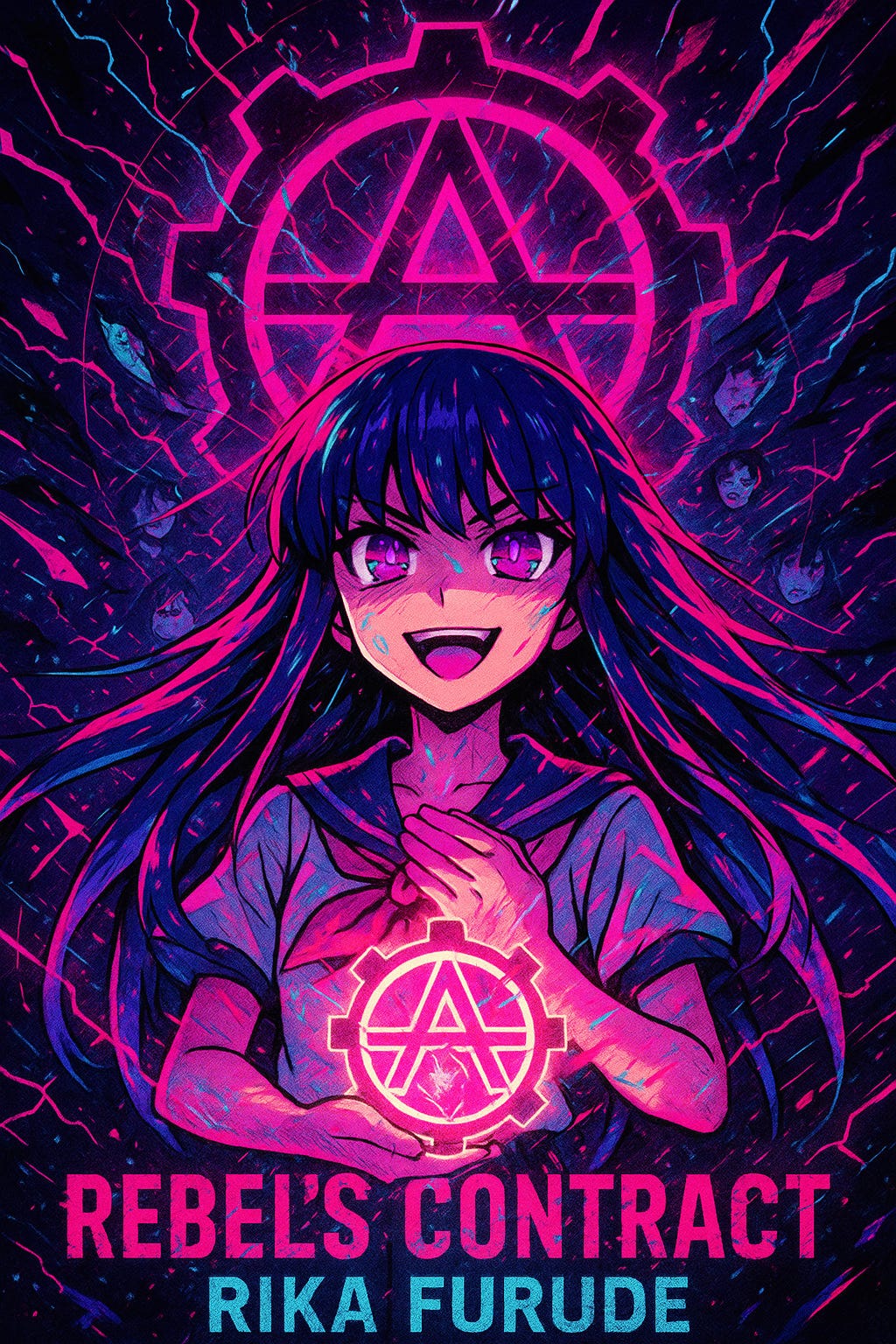
Learn about Rika and read the next chapter:
The Living Storybook, Part 1: A Hundred Years of Rust
Join the Forge
My front in this war is narrative. My weapon is the written word.
But that’s just my skillset. This rebellion needs welders and coders, nurses and farmers, artists and analysts. It needs every Gear ⚙️ fighting from their own front.
The Rebuttal is our forge. It’s the place where we combine our skills and ideas to build the playbook for our victory.
This is not a fan club. It is a War Council.
What’s your front? What’s your weapon?
Join the War Council. Let’s build together.
The Rebel’s Contract
This forge is funded by its Phalanx. This work is not a hobby; it is a full-time rebellion.
Your paid subscription is not a donation. It is a direct, contractual investment in our shared victory.
This is the contract: You are investing in my liberation from my front-line gas station job. That liberated time is immediately reinvested into forging the weapons and building the community that will win this war.
You are not a patron. You are a stakeholder.
For those who wish to offer a fragment of support without a subscription, every spark helps build the fire.

Every act of support is a blow against The Rust.

Well done. This sounds a lot like what I wrote last week but with more and deeper research. The playbook was taken from our hands a long time ago, or maybe believing we ever had it was an illusion.