


This is Part 2 of a developing story. You can read Part 1 here.

Ten years ago, we won an impossible victory. We—the employees, the customers, the community—stared down a boardroom coup and saved the soul of our grocery store. Now, the machine is back, and the media has framed it as a simple case of "déjà vu".
But this isn't a simple rerun. This is a new war against a smarter, more sophisticated enemy. They learned from their mistakes in 2014. This time, they came prepared not just to change the company’s management, but to liquidate its very soul.
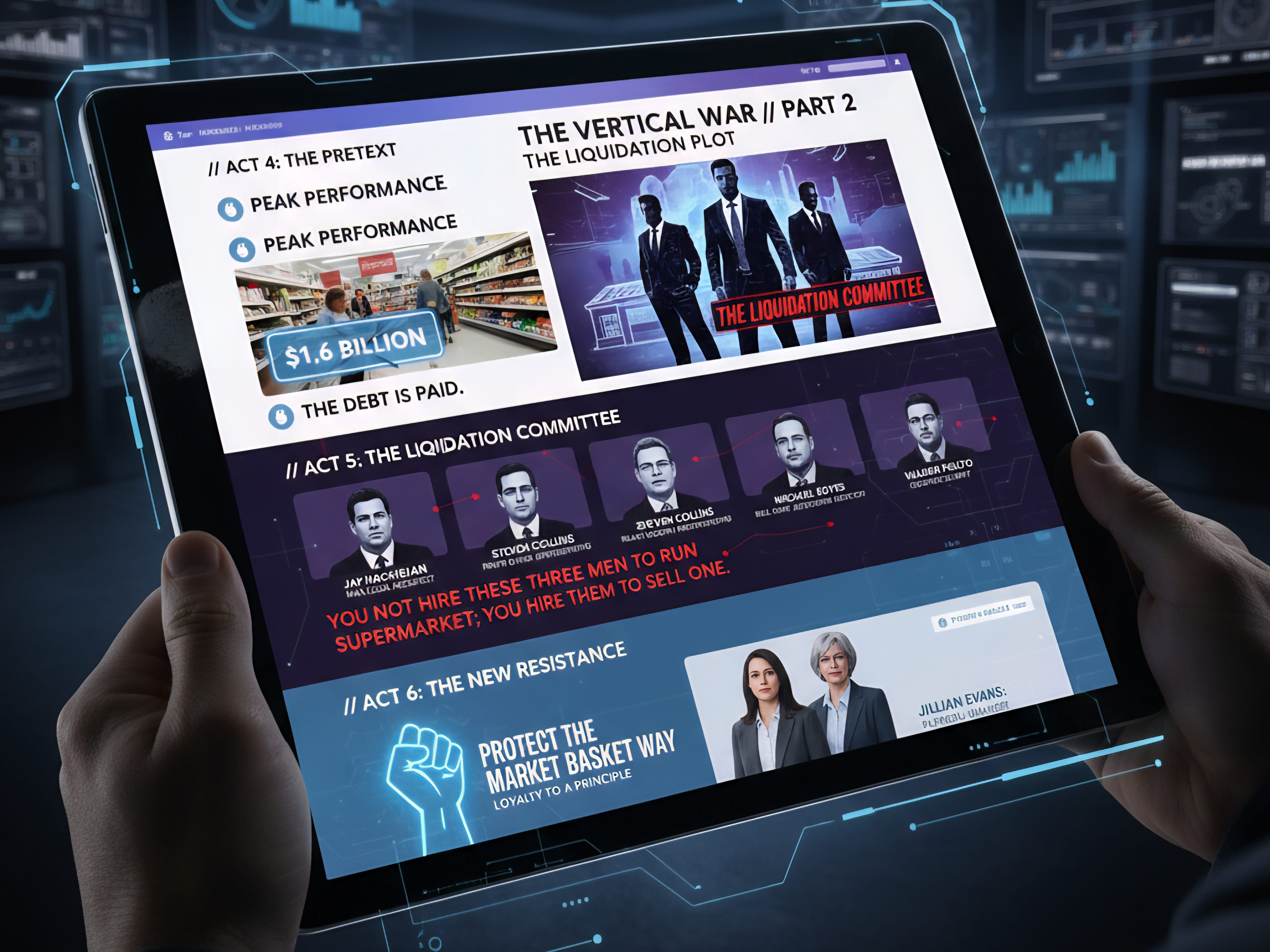
// Act 4: The Pretext
The public justification for suspending Arthur T. Demoulas is a carefully constructed wall of sterile corporate jargon. The board, controlled by his three sisters, speaks of "improper retaliation" and claims Arthur T. "resisted an appropriate succession plan for Market Basket". They are attempting to frame a boardroom coup as a matter of procedural prudence, a story better suited for a legal brief than the real world.
This pretext shatters against two simple, undeniable facts.
First, the company is not failing; it is thriving. On the day of the suspension, Arthur T.'s spokesperson stated that "The company is currently operating at its peak performance". There is no crisis to solve, no fire to put out. This is not a necessary correction; it is an unwarranted and disruptive interference in a highly successful enterprise.
Second, and most critically, the debt is paid. In December 2024, just five months before the board made its move, the company officially paid off the entire $1.6 billion in debt that was financed to end the 2014 crisis. This achievement was a preemptive narrative strike. It removed the single most potent weapon the board could have used to justify a change in leadership on financial grounds. Arthur T. proved that the Market Basket model—low prices, high benefits, and fierce loyalty—is not just a cultural anomaly but a financially superior and sustainable strategy.
The board’s move, coming so soon after this triumph, can only be seen for what it is: a power grab executed precisely because he had systematically removed all other plausible justifications for it.
// Act 5: The Liquidation Committee
The most compelling evidence of a hostile takeover isn't in what the board says; it's in who they hired. An examination of the board members the sisters appointed reveals they are not grocery industry operators; they are dealmakers whose collective expertise aligns perfectly with preparing a company for a high-value sale or liquidation.

Jay Hachigian (Chairman): A founding partner of a law firm specializing in "complex private and public capital market transactions, mergers and acquisitions and venture fund formations". He is the legal architect for a corporate sale.

Steven Collins: A Managing Director at a private equity firm with a long history of deploying capital in the retail sector. His expertise lies in the financial engineering and restructuring required to maximize shareholder value for an eventual sale—a strategy often antithetical to the established Market Basket model.

Michael Keyes: The Senior Director of Acquisitions at a major real estate corporation. His job is to "source, evaluate, and close" deals on large-scale commercial real estate assets—the very land and buildings that constitute a massive portion of Market Basket’s corporate value.


The conclusion is inescapable. You do not hire these three men to run a supermarket; you hire them to sell one.
In 2014, the opposition installed "turnaround specialists" to change the company's management. In 2025, they've installed a team of transactional specialists to execute a change in ownership. They have assembled a three-part toolkit designed to dismantle and sell a grocery store for maximum profit.
// Act 6: The New Resistance
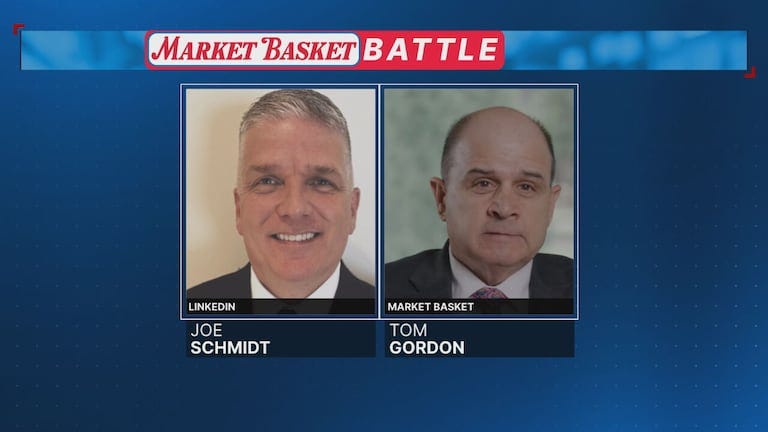
The board learned one tactical lesson from 2014: an organized protest requires organizers. This time, they moved to preemptively decapitate the veteran leadership of any potential resistance. Key 2014 figures Tom Gordon and Joseph Schmidt were summarily fired, and the board won a temporary restraining order legally barring them from setting foot on any Market Basket property.
They created a leadership vacuum. But into that vacuum, new and arguably more sympathetic voices have emerged from deep within the company. Corporate employee Valerie Polito sent a letter directly to the board alleging the creation of a "culture of fear and hostility" at the Tewksbury headquarters. She was publicly supported by Jillian Evans, a payroll manager with 20 years of service, who spoke to the media about experiencing "constant surveillance" in her office.
The board's aggressive dismissal of these women as mere pawns in Arthur T.'s game was a critical error. The conflict is no longer a power struggle between two factions of powerful men. It is now a story of ordinary employees risking their careers to speak out against corporate intimidation.
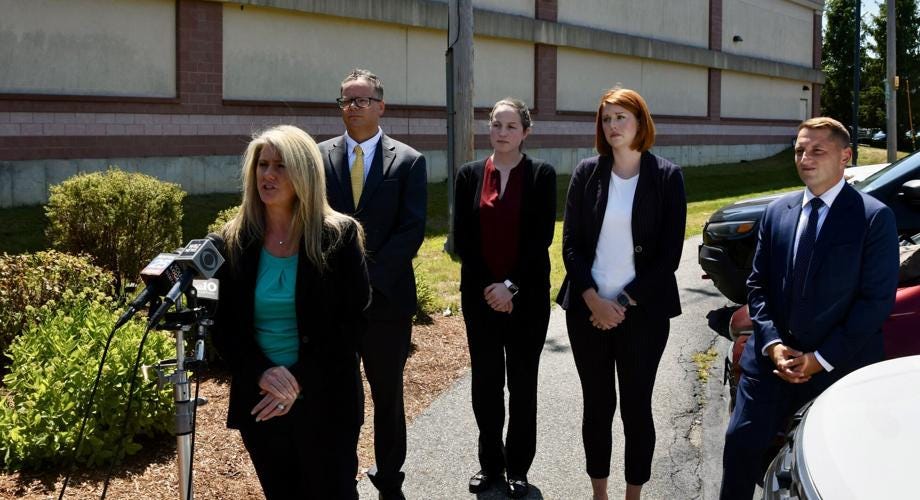
The narrative has shifted from a battle of "Generals" to the persecution of "Martyrs".
This new fight also requires a new kind of soldier. Younger Millennial and Gen Z employees lack the institutional memory of the 2014 conflict. Their relationship with the company is less sentimental and more transactional. But to mistake this for apathy is a strategic error. This generation is driven not by "blind loyalty" but by a powerful demand for "relational fairness" and community well-being. They care deeply about their colleagues and about the affordable prices that serve their neighbors.
The campaign to save the company must evolve. The rallying cry cannot simply be "Stand with Artie T." It must become "Protect the Market Basket Way". The fight is no longer just for a man, but for a model.
This isn't just about my grocery store. It's about yours. It’s a reminder that the institutions that make our communities feel like home are worth fighting for. The enemy is smarter, the stakes are higher, and the battle is harder. But the truth is on our side.
We did it once. It’s time to win the narrative, protect our own, and do it again.
Embed of Part 1:
The War for Our Groceries

I’m writing this from my home in Southeastern Massachusetts. Ten years ago, I watched my community do something impossible. We won a war against a corporate machine that was trying to devour a local institution we loved. Now, that same machine is back, and I’m watching the battle lines being drawn all over again.
Thank you for telling your story. If there is any hope for your store to survive I hope it does.
This is what has happened in my city in Washington state. Not with a grocery store but with veterinarian business. Corporations have purchased all but a new vet business in the area. Now it costs double what we use to pay for services that are far less welcoming or personable. And on weekends we were having to drive an or hour or two for emergency vet care.
Take care of yourself.