
I usually send you essays. This time a scene came and I traced it in words.
It costs too much to be real, he thought.
Name what you want and watch it be withheld or used to take more from you. It can be reasonable as hell, you want a job that pays for a life if it’s going to demand the majority of yours.
His name was Nem.
He’d been sitting at this particular bench for only a few minutes and he still heard the words his boss had said to him when he asked for a raise, “You’re not worth that much yet.” He pushed, knowing full well he’d far outgrown the position he’d been hired for, secretary. He was estimating full projects now and winning jobs. He’d asked to be paid for the work he was already doing, and even that was still below the pay of the estimator who had just quit (something he knew because he reviewed the payroll as secretary). Of course he didn’t admit that. His boss finally laughed in his face and said “No.” And Nem’s first child was on the way. The boss knew this; Nem had shared the news a few weeks back.
He hadn’t come here to replay that afternoon or to sit . Now he sat there thinking. Thinking about the unfairness of it, thinking about what he could do about it, what other job might be available to him. He kept thinking about what would make him stop thinking about all of it, even if just for a few hours. And then he saw something he hadn’t noticed before: at a bench across the street, a little further down, a man sitting.
The man just sat there, counting nickels and pennies, or at least that’s what it looked like from where Nem sat. He hadn’t even realized he was staring, staring at this man in well-worn clothes that were too big and layered. The man was old, as old as Nem’s grandfather in looks, and his grandfather was in his late eighties. He hadn’t asked this man his age, of course. That, he’d been taught, was a rude thing to do. The man’s face was lined and his skin rough, like leather but suede that had hardened and become closer to high-grit sandpaper. He felt bothered by the man and relieved by the distraction simultaneously.
Fuck. Everything’s so goddamn serious. It’s why some trash rap feels like freedom and these thoughts and calculations like a wine tasting with yuppies who ask the violinist to please lower his volume, the vibrations are distracting from the sensitivity of their tongue and nose. “I can’t hear a damn taste,” they complain. And no, that wasn’t a joke. They meant it.
Back to the man. Let’s cut to the chase: all that thinking, and what Nem really saw, plain and simple, was a homeless man counting coins. He never asked if the man had a home either, also generally considered a rude question. But if he’d gotten closer he would have noticed that the man’s nails were surprisingly clean and trimmed, and that his fingers moved nimbly, turning each coin over and setting it so its date sat the same way up under his eye. One pile was messy, no neat stacks of ten coins, but sorted, pennies to one side, nickels the other. The second pile wasn’t really a pile at all. One nickel sat apart.
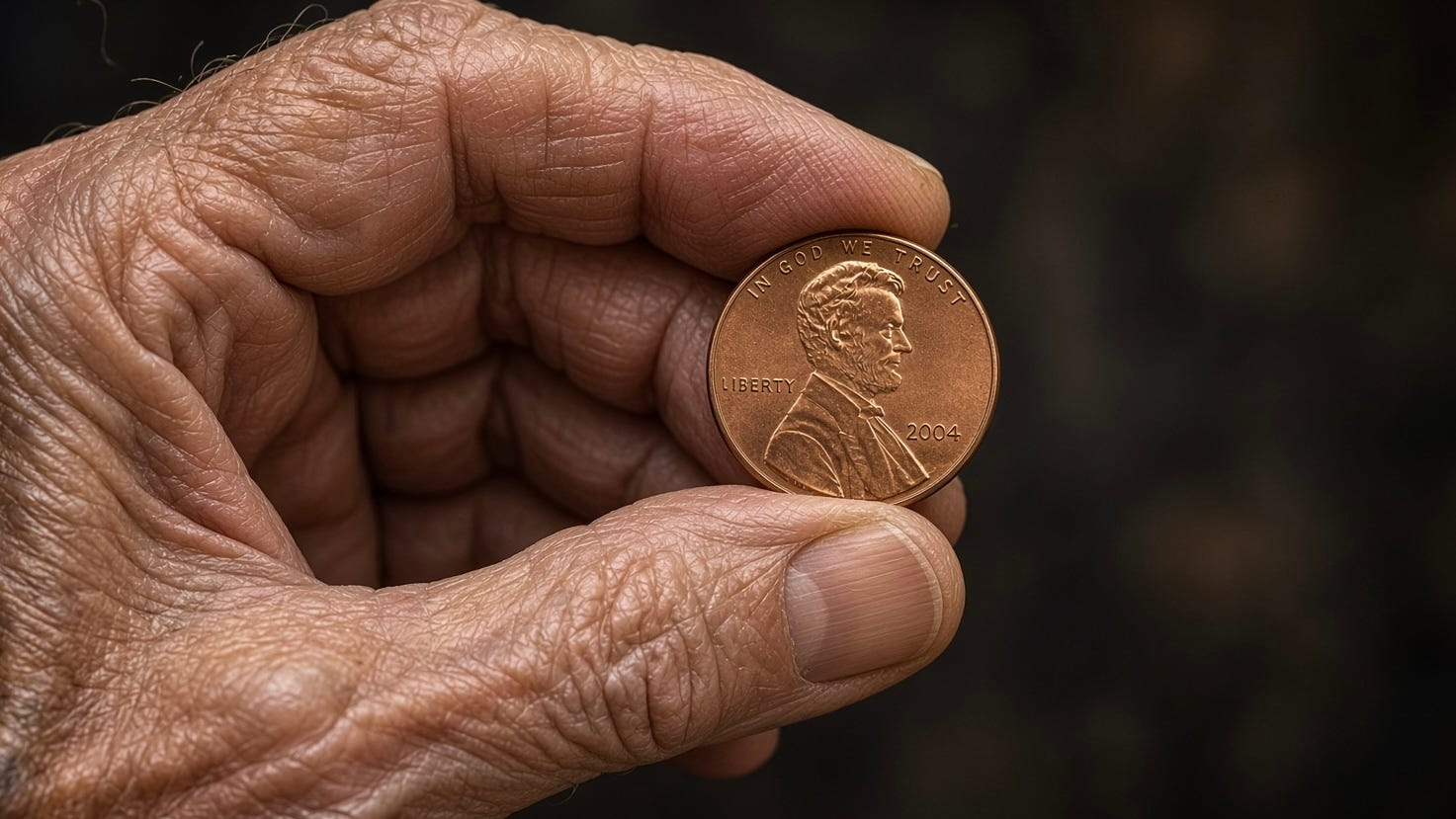
Even if the man wasn’t counting, Nem was. He watched at least two nickels lifted and placed; he stopped counting the pennies after they reached two hundred and seventy-five. Call it three dollars over the last five minutes, and the sun had nearly set; there wouldn’t be any more added to his pot today. The people who had money to spare for panhandlers wouldn’t even drive through this neighborhood after dark.
During the daylight, suits drove through on their way across the city. Sometimes kids from the suburbs swung by during the day, skipping class. They assumed no one here would bother to report them and they were right. The people were poor, or old, or different. And the kids had money that kept the drug trade steady: cash their parents paid, no, gave in place of their presence. Even when a report was filed or an anonymous call was made, however accurate, it went nowhere. Boys from the suburbs had even filmed themselves beating homeless men on the sidewalks; the charges were dropped and the men were arrested for panhandling. Nem thought it disgusting. Say so in the wrong room and the rumors could cost you work. He pushed the thought away. The anger had nowhere useful to go. What the kids came here to buy, he understood better than he liked: a few hours of feeling special, or seen, or important.
He stood and walked over to the man instead of continuing his train of thought. “Hey, how’s it going?”, Nem asked.
The man seemed not to hear him, or maybe didn’t realize Nem had been addressing him; he just kept turning the coins, adding them to the pile. Nem reached in his pocket and pulled out one of the fives he’d brought, straightened it, running it between his thumb and pointer finger pressed together, then held it out and said, “In case you’re short.”
The man stopped counting and slowly looked up at the money dangled in front of him, fear and wanting alternating quickly in his face, almost unnoticeably, almost looking like an odd tic.
“Hey, I’m just someone who knows what it’s like to be counting coins to get by. Take it, please.”
The man paused. The tic stopped. He became still, distant, his gaze drifting somewhere else. Then, after a few seconds, right as Nem was about to leave, the man said, “Do you have any change? Coins, like these?” He held out a nickel pinched between his fingers.
“Sure, let me see… It looks like I have about seventy-nine cents. You can have that and the five, how’s that sound?”
“Keep the paper. Thank you for the coins.”
Nem was shocked. What was this man doing, refusing good money unless it was coin? Couldn’t he just ask a store for change? Okay, there was no rule about asking why he wouldn’t take paper, only coins, so he did.
“I got a question, and it’s a real question, but I understand if you don’t want to answer…” The man was already sorting the seventy-nine cents, so he went on: “Why only coins? Why not the bill?”
The man didn’t look up but answered, “It’s worthless paper, a dying god. But metal. Metal has value, and always has. And coins, nickels, some of them are a third silver, the war years. That’s real value.”
“And the pennies?”
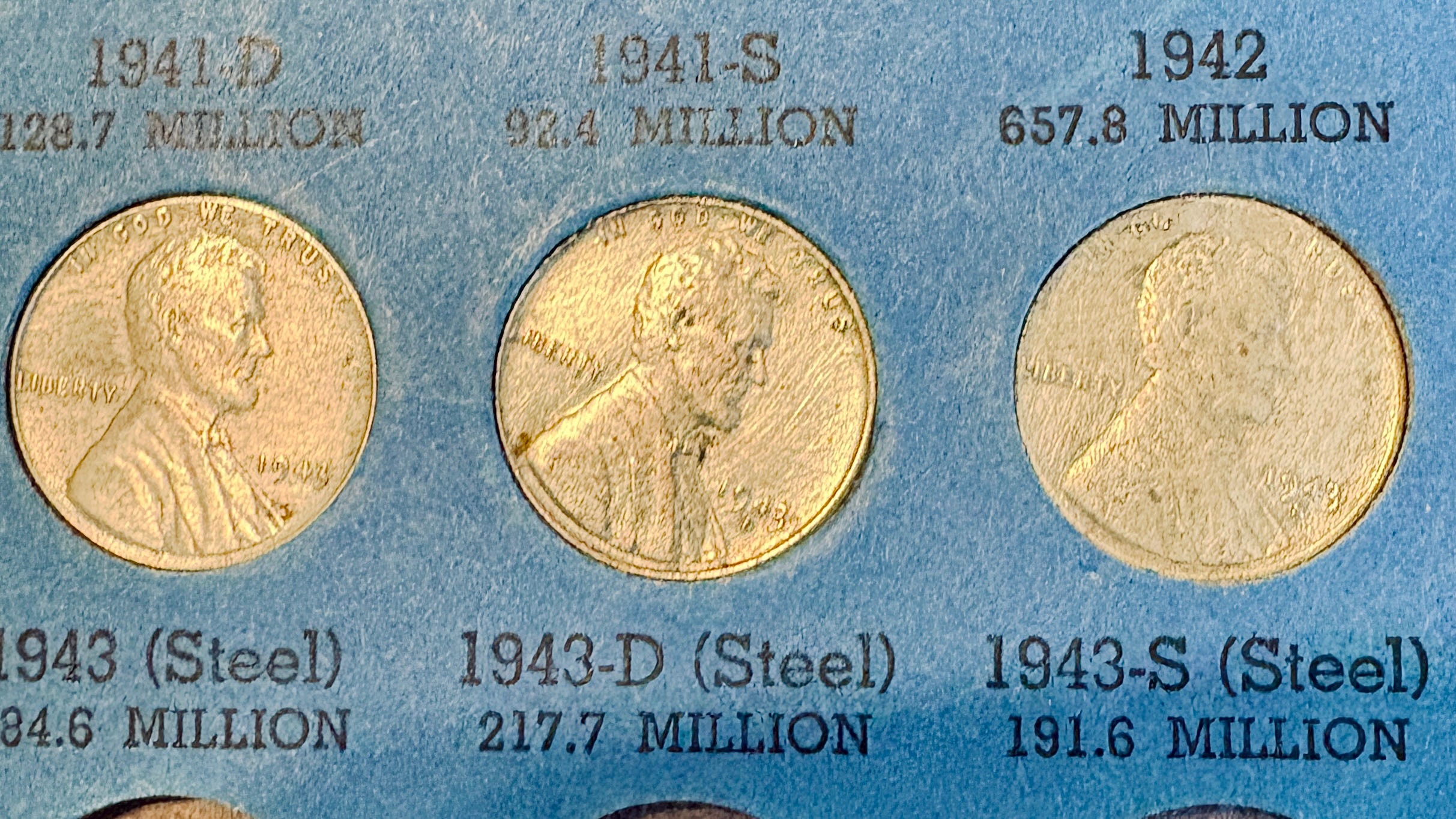
“Oh, that’s my lottery ticket.” The man almost smiled as he said it, almost. “I don’t expect to find it. A 1943-D copper. They say one is known to exist. One, out of over a billion struck that year. The war years… the pennies were steel in ’43, plated with zinc. The copper went to the killing. And what survived… the one or maybe more… that’s worth… even more precious than gold…“
“I didn’t know that… Fascinating. You could ask for change for the five, you know, though.”
“No. You could ask for change. I walk in with a five, they’ll have me in cuffs, assume I stole it. If they don’t bother, the cashier will pretend they’re out of change while muttering under their breath about a waste of time.”
“Oh…Where’d you go to ask for change and have them do that?” Nem finally asked.
“Bah! Ha ha ha!” The man laughed with an aliveness that hadn’t been there until this very moment. Once he caught his breath he went back to his task, and in the same weathered, flat voice as before (with a note of contempt now? Or anger? Maybe both) he said, “Which stores do you think?”
Nem didn’t know what to say, and frankly felt a little put off. Here he was trying to help this poor man, showing interest, and the response was laughter and a question answered with a question. He almost walked away again. His jaw had started biting, trying to crush something that wasn’t there, maybe the fire he was trying to hold in, and in that moment he wanted to insult the man, to hurt him right back. But as quickly as the feeling rose, so did the familiarity of it, and with the familiarity (he had worked hard to know it) came just enough presence to pause, breathe in deep, and let the jaw go.
He had asked a genuine question. No, genuine is vague, and worthless. Be honest with yourself, Nem thought. What had he actually asked? A question that feigned interest while searching for an exception. It had already replaced what this man had just said clearly. He hated that type of question too.
He was trapped now. He had to answer to get back anywhere worth getting back to. “The 7-Eleven around the corner? The pharmacy? The grocery store? Hell, the bank a few blocks away?”
“Every single store with a cash register within a mile of here. Some stores are cashless now, can you believe it? Numbers on screens the only record of anything being exchanged. Can you believe it? Do you know how easy it is to change a number on a screen? And you can do it from anywhere in the world! I know. I used to be in IT myself, and I was damn good at it. Started out working on the actual hardware, the chips, and those, those are where the metal is. Gold, platinum, palladium, rare earths, you name it. I understood metal. It was knowable; it was structure; it could be measured, predicted, organized. I don’t even need to check the dates on these coins. I do it to see if I still got it, to stay sharp. Never skip the check when a thing can be checked apart from your own best guess. I can tell by the feel, the weight, the color, the sheen. They get as distinct as opposite colors on the color wheel, once you’ve seen enough of them…”
Nem was mesmerized. What had he asked the man again? Did it matter?
“Wait, slow down, please. You used to work in IT?”
“Oh yes. You wouldn’t believe me if I told you who I worked with, so I won’t bother; it’s probably best you don’t know anyway. But yes, that thing in your pocket, the one that’s been buzzing every thirty seconds, that you keep reaching for and stopping short of, trying to be polite, I presume, that thing wouldn’t exist without what I knew about the metals and the minerals and the language of energy and atoms. I didn’t know that’s what they’d make with it. I imagine that’s what Einstein felt when he heard about the bomb. He’d signed the letter that got it started. Betrayal of the worst kind: your creation, born of love, of curiosity, of promised better futures, used to erode and vaporize the world around you. That destruction was immediate, horror so plain no one denied its wrongness, but mine? Mine kills more than a hundred times that bomb and it’s still going off. It radiates for lifetimes. It’s destroyed entire countries, and the damage keeps getting more precise and more hidden… I had to leave. I tried to take what I’d discovered with me, but they told me it had been disposed of already… and I believed them.”
“What did you discover?” Nem said. “What was it they… who’s they? The company? Was it the…”
“Slow down.” The man didn’t look up, he was already picking up another coin. A penny turned, date up. “You want the rest.”
“Yes.”
“Tell you what. Go get me change for that five. Coins. Pennies and nickels, nothing else. Bring it back here and I’ll tell you the rest.”
Let’s skip the part where he decided. He went.
The 7-Eleven was around the corner, like he’d said. “Can I get this in coins? Nickels and pennies.” The girl at the register sighed in response but did it: two rolls of nickels, two of pennies, pushed across the counter without a word. Nobody reached for a phone. Nobody muttered about a waste of time. He kept his eyes on the counter and counted the seconds it took, forty-one. The counting demanded his full attention, and meant he wouldn’t have to see whether she was giving him the same look the man had described, or the warmer one she saved for people who didn’t look like they lived outside. He didn’t want either version.
He was back before the sun was gone. He set the rolls down by the man’s knee, all four, and stood there.
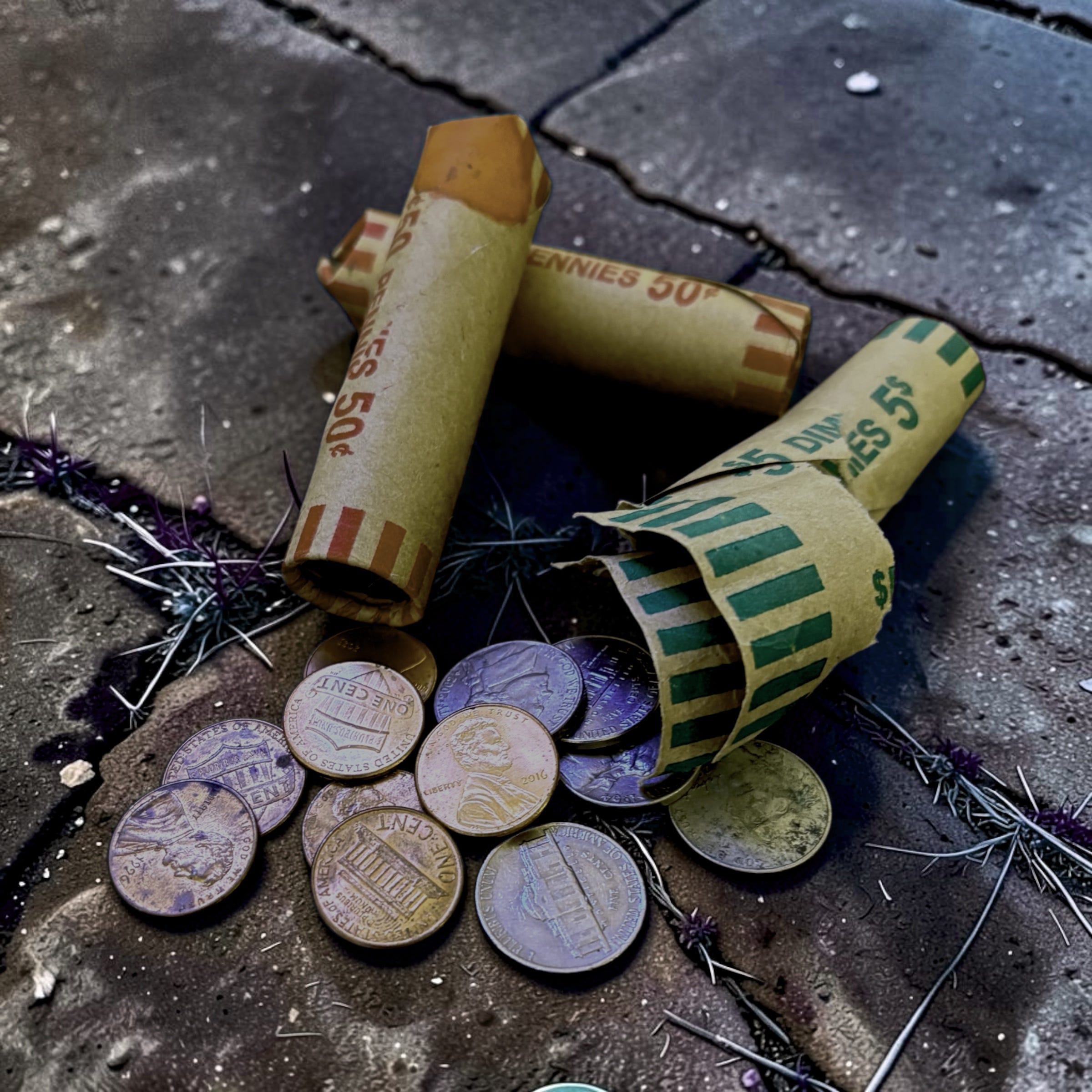
The man picked up the nickels first. He cracked one roll on the concrete the way you’d crack an egg and tipped them out and began, each one turned, date up, the same way, faster than before. He didn’t say anything. He cracked the second roll.
Nem waited. His pocket buzzed and he let it. He waited long enough to feel impatient, angry even, that the old man seemed to have forgotten he was there.
“Okay,” he said. “Well. There’s your change. Can you answer the questions now?”
“What questions?”
“You know, about the people you worked with, what you discovered—“
“Bah! Ha ha ha!” The same laugh as before, followed by the same while to get his breath back. “I made that up so you’d get me the change. The coins are true. What I’m doing with them, and why I can’t walk in there, true. The rest? No. That was just having fun with words.”
“I thought…”
Nothing came after it. His mouth stayed open around the place a word should have been, and then it closed.
The man had a penny between two fingers. He looked at it, and then at Nem, the first time he’d looked at him at all.
“What’s your name? I hadn’t asked.”
“Nem.”
“Listen, Nem. If there’s anything I can give you back for the walk and the coin, it’s this. Anyone can say anything about anything they want. Especially about what’s not right here, happening right now.”
He went back to the coins. They clicked against each other as he turned one, checked the date, and dropped it onto the pile.
“What’s your name?” Nem said. “I hadn’t asked either.”
“Same as yours,” the man muttered, not looking up.
Nem’s mouth opened. His pocket buzzed again, and this time he didn’t let it. He looked at the screen. He had to take this. He answered and walked away from the man.
The single nickel still sat where it had sat, apart.
A reasonable ask
I’ve said I’ll admit when I’m wrong, and change. Here’s one.
I was wrong to write here without asking for your support. I was wrong to leave unsaid what it means to me and what it allows.
Today it takes my children places I couldn’t otherwise afford.
It lets me hold even where I’d otherwise add debt. My baseline expenses outrun my hourly wages.
In time, it buys more hours for what matters most and what I’m best at.
Thank you, if you already are paying for a subscription or have donated to this publication.
For everyone else, I’m asking. If this work is worth something to you, become a paid subscriber.
I take paper and coins, and even those numbers on screens.
Always check older coins, it is worth it.