


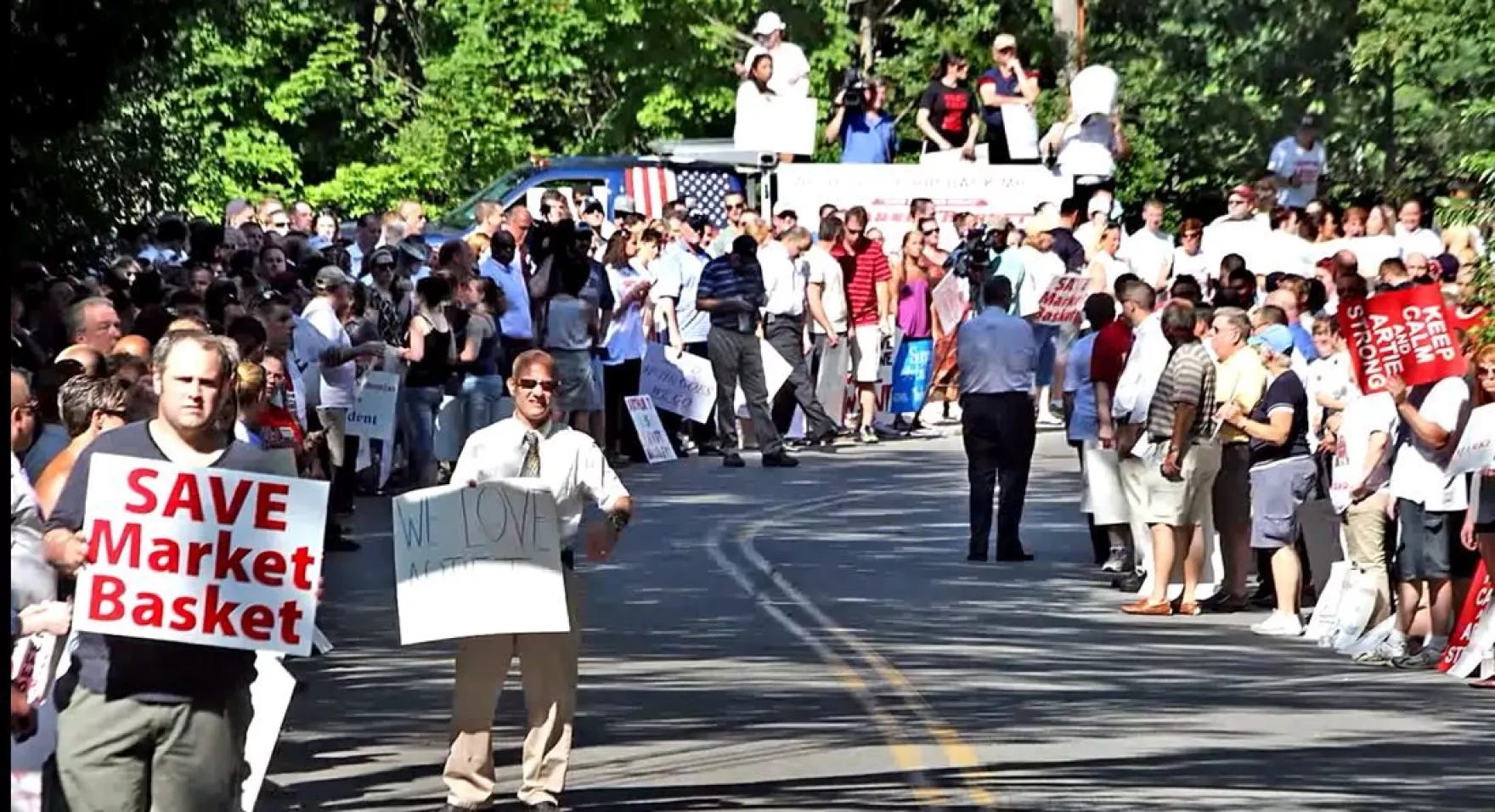
I’m writing this from my home in Southeastern Massachusetts. Ten years ago, I watched my community do something impossible. We won a war against a corporate machine that was trying to devour a local institution we loved. Now, that same machine is back, and I’m watching the battle lines being drawn all over again.
This is a story about my grocery store.
It’s also the most important story in America.
// Act 1: The Betrayal
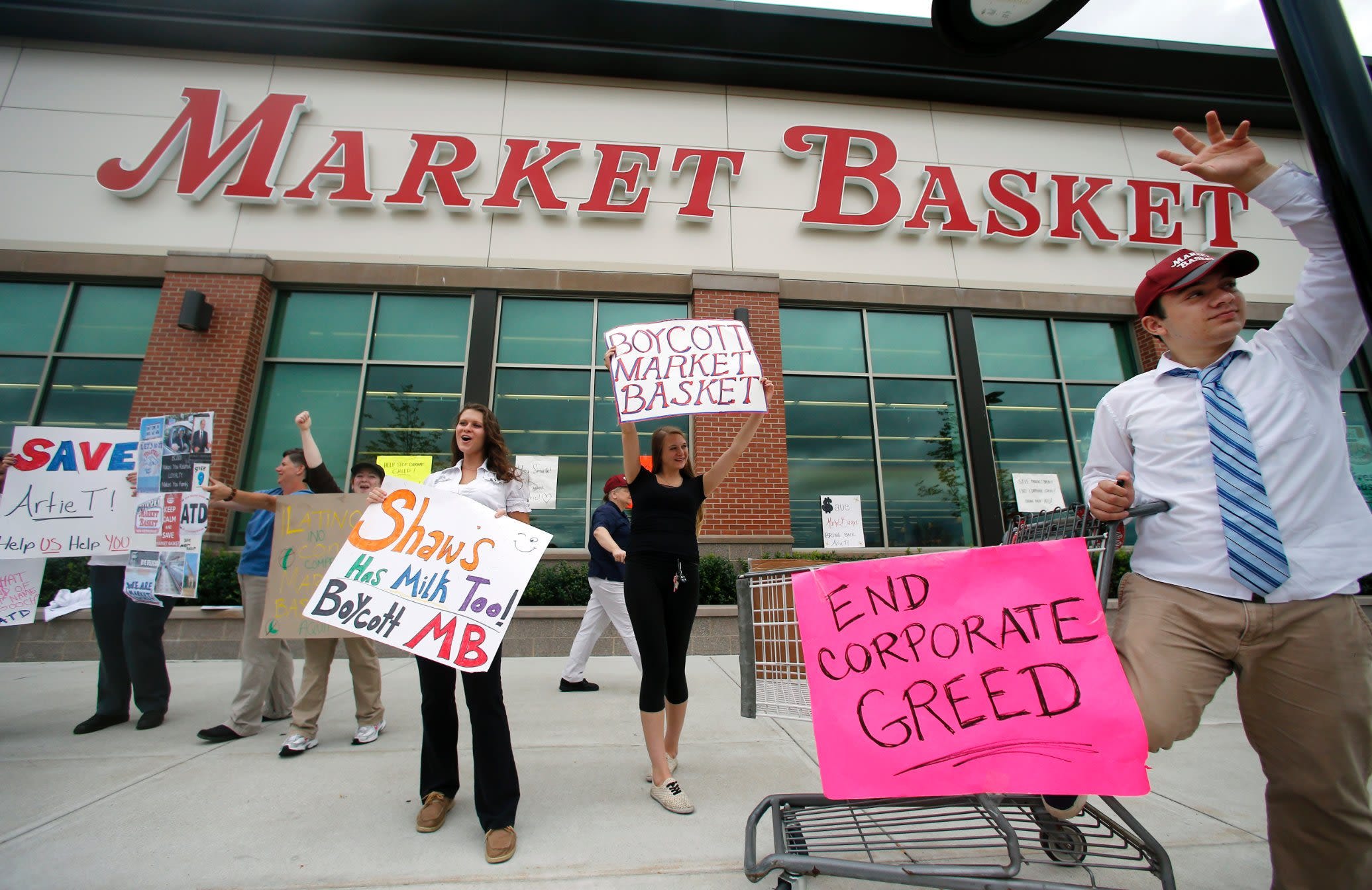
For people around here, Market Basket isn't just a store; it’s a social contract. It’s a place built on a foundation of reciprocal loyalty. The CEO, Arthur T. Demoulas, was known for remembering employees’ names and attending their weddings and funerals. In return, he got a level of loyalty so fierce that his employees—who call themselves "associates"—would later say, "I would run through a wall for" him.
That contract was broken in June 2014.
A rival faction of the family, led by his cousin Arthur S. Demoulas, finally secured a controlling majority on the board. Their motivation was simple: they believed Arthur T. was "much too generous in profit-sharing with employees, while cheating the owners". They saw the company’s soul as a bug, not a feature.
Their plan was an "ideological transplant". They fired Arthur T. and, to signal their intent, brought in outside "turnaround specialists" to run the company. The new co-CEOs were Felicia Thornton, who had been CFO of Albertsons during a period of mass layoffs and 165 store closures, and James Gooch, the former President and CEO of RadioShack.
The message was clear. The Rust had seized the machine. The betrayal was complete.
// Act 2: The Uprising
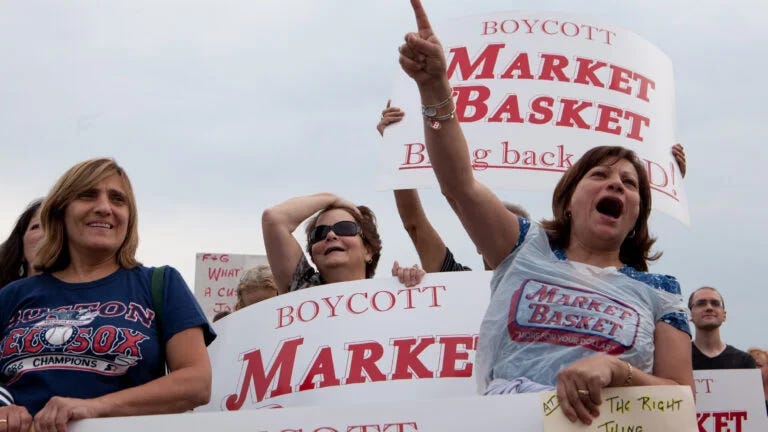
But then, something incredible happened. The "Gears"—the employees and the community—fought back. This wasn't a top-down order or a grassroots riot; it was a "middle-out" organization led by a "highly credible and experienced cadre of middle and senior managers".
They became heroes overnight. Men like Tom Trainor, a district supervisor with 41 years of service, and Steve Paulenka, a 40-year veteran of facilities and operations, were among the "Fired Eight"—senior managers who were terminated for organizing the resistance. Their firing was meant to decapitate the movement; instead, it backfired spectacularly, turning the men into martyrs.
The tactics were brilliant and devastating:
The Strategic Strike: The single most important escalation of the entire conflict was the walkout of 300 warehouse workers and 68 truck drivers, which paralyzed the company’s supply chain.
The People's Propaganda: The most powerful visual wasn't created by an ad agency. It was the ingenious and decentralized act of customers taping their receipts from competitor stores onto the windows of empty Market Basket locations. It was a perfect piece of user-generated propaganda.
The Moral High Ground: They won the narrative war decisively by framing the conflict as a moral struggle of "People vs. Profits".
For six weeks, we lived this. We saw the empty shelves, we joined the rallies that were described as having a "rock festival" atmosphere, and we watched as an entire community collectively flexed a muscle it forgot it had.
Act 3: The Victory
The board, with its M&A experts and corporate strategists, was completely overwhelmed. Their plan was a catastrophic business failure. They lost control of their workforce, presided over daily financial losses estimated at nearly $10 million, and became national symbols of managerial incompetence.
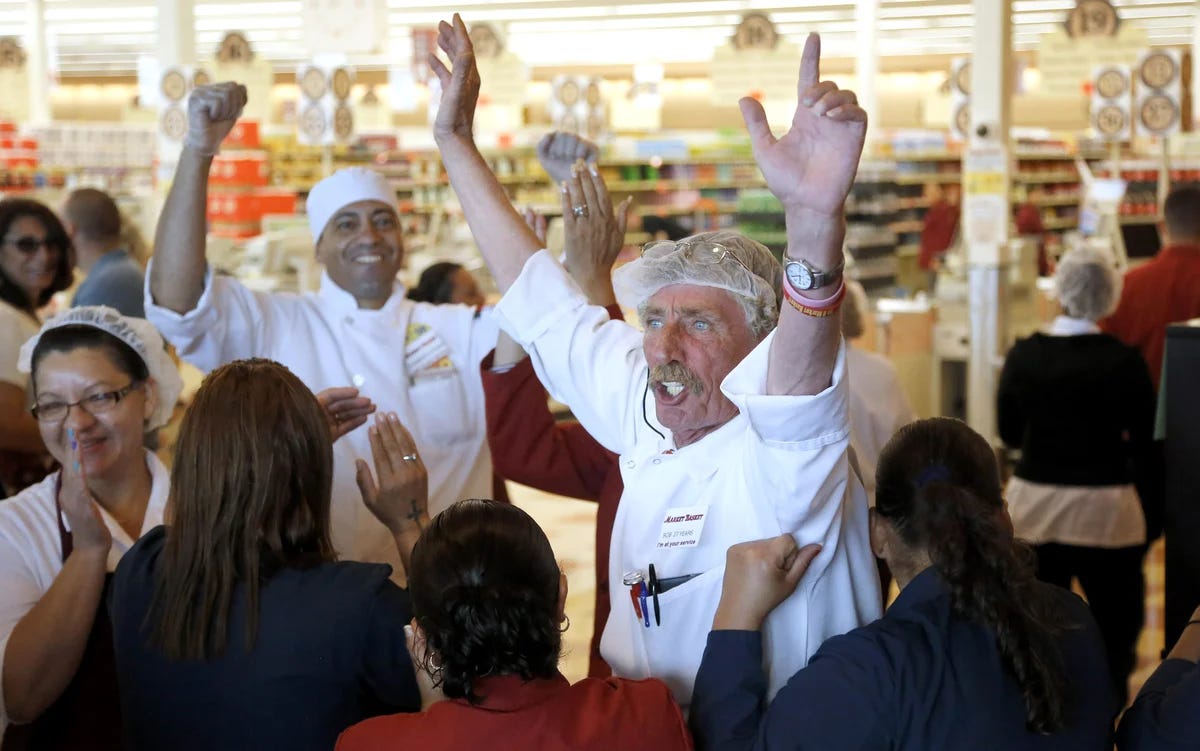
Facing imminent financial annihilation and total political isolation, they were forced to capitulate. On August 27, 2014, a deal was announced: Arthur T. would buy the remaining shares and return to power. The Gears had won.
(“NO KINGS IS COMMON SENSE” sale 25% off all new paid subscriptions. Coupon applied automatically at checkout. Offer stands until 11:59PM Saturday, October 18th. Be vigilant!)
This is the story I tell because it provides a blueprint of hope. It proves that a united community is more powerful than a boardroom. Now, ten years later, a new fight is brewing. The same arguments about "corporate governance" are being used as a cover for the same old greed.
I'm telling you this story because this isn't just about my grocery store. It’s about yours. It's a reminder that the institutions that make our communities feel like home are worth fighting for. We did it once. And I, for one, am ready to do it again.

Ethan Faulkner
Always invigorating to read about people coming together and felling a Goliath. The merger mania only feeds the $$$ hoarders of the world. The purpose of a neighborhood store is providing goods, but also establishing a feeling of community. I am so happy you were able to bring “community” back. It would be even better if that insatiable need for “more” is addressed by all the “masters of the universe.”
Congratulations!
I love this idea and we need to use a similar model to fight this regime. Taping the receipts for the public and press to see was a great idea. I have said over and over we need a think tank of experts including our allied countries to send experts from all areas of expertise to fight this regime by doing what these people did, which was bringing experts together and brainstorming and then implementing the plans!