


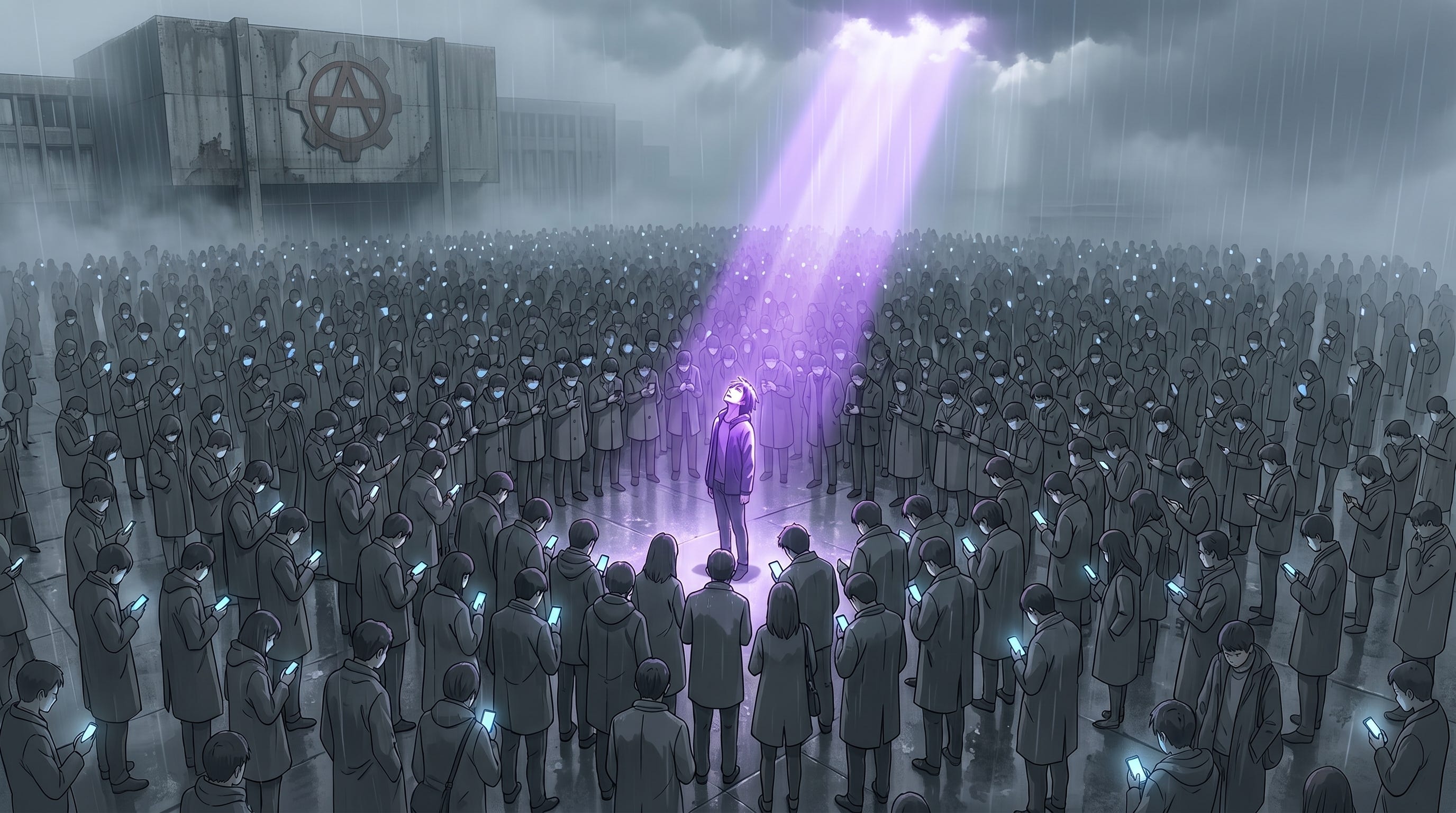
They took your grandfather’s pension.
They built the algorithm that makes you feel like garbage at 2am.
They own the building your landlord rents from.
They wrote the policy that made your doctor spend eight minutes with you and forty minutes on paperwork.

You just asked it, didn’t you.
Who is they?
That question, that small, involuntary demand for a name, is the most important thing that has happened in this essay so far. Not because I’m going to give you a villain. But because the fact that you asked it means the door is already open.
That’s the crack.
Most people never ask. They absorb the weight of the system, the pension, the algorithm, the rent, the eight minutes, and file it under that’s just how it is. The “they” question requires something the system actively trains out of you: the belief that a cause exists. That there is a mechanism behind the feeling. That someone, or something, built this.
You just proved you still believe that.
So. Who is they?
Here’s the honest answer: they is the wrong word.
Not because there’s no one to blame. But because the thing doing this to you isn’t a person or a boardroom. It doesn’t have a meeting on Tuesday to decide your grandfather’s fate. It doesn’t need one.
What’s doing this is more like corrosion.
Call it the Rust.
The Rust is what happens when a system optimizes for extraction long enough that extraction becomes the only thing it knows how to do. No malice required. No mastermind. Just incentives, compounding, selecting for behavior that extracts, and quietly eliminating behavior that doesn’t.
Your landlord isn’t evil. He’s responding to a market that makes holding property more profitable than building anything. Your doctor isn’t evil. She’s trapped in a billing structure that rewards volume over care. The algorithm isn’t evil. It’s doing exactly what it was optimized to do: keep you on the platform, which requires making you feel inadequate, which requires serving you content that makes you feel inadequate.
Nobody sat in a room and decided to make you feel like garbage at 2am.
The Rust did. And the Rust doesn’t need a room.
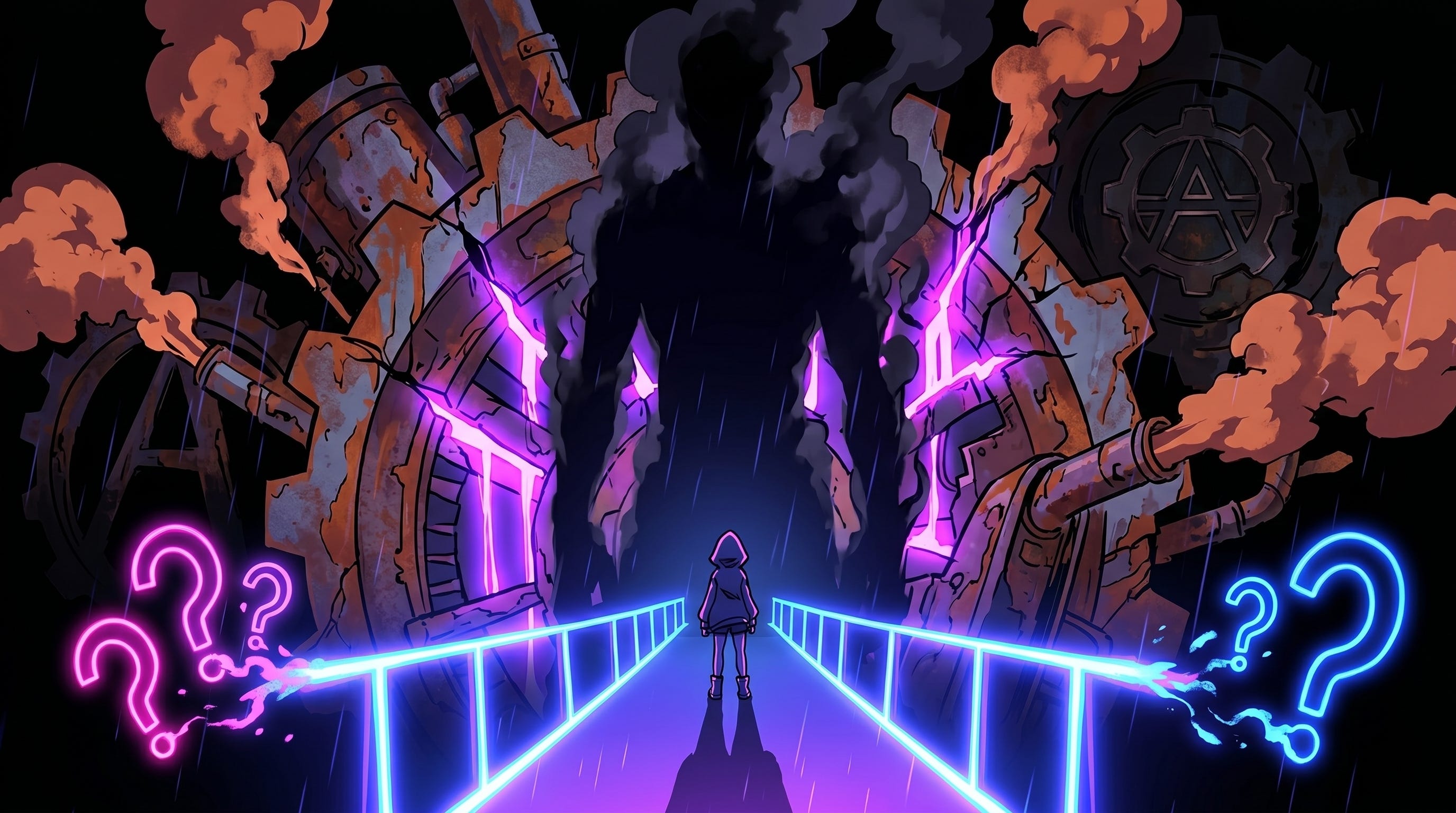

This is why “they” is a bridge and not a destination.
When you’re first feeling the weight, the pension, the rent, the eight minutes, you need a “they.” Your nervous system needs an agent. A human-shaped force to push against. Without it, the weight just feels like weather. Unavoidable. Impersonal. Hopeless.
“They” creates the hypothesis that a cause exists. And once you believe a cause exists, you start looking for it. That’s when you cross the bridge. That’s when “they” becomes the Rust: something structural, something identifiable, something that can actually be understood and eventually interrupted.
The problem is when people stay on the bridge.
When “they” never becomes anything more specific, it curdles into paranoia. A faceless cabal. An unfalsifiable conspiracy. The Rust wants you stuck on the bridge, because a person screaming into the void about shadowy elites is not a threat to a system. A person who understands how the pension fund, the billing structure, and the engagement algorithm are expressions of the same extractive logic? That person is dangerous.
So here is the toolkit. Take it.
When you’re talking to someone who hasn’t crossed the bridge yet, use “they” first. Deliberately. Let them feel the pull. Let them ask the question. The question is the crack.
When they ask, don’t give them a villain. Give them a mechanism. Explain the incentive. Show them the structure. Walk them across.
Then drop the bridge.
Once someone understands the Rust, once they can see extraction as a systemic behavior rather than a personal conspiracy, “they” becomes redundant. Sloppy. You don’t need a they anymore. You have something better: a map.
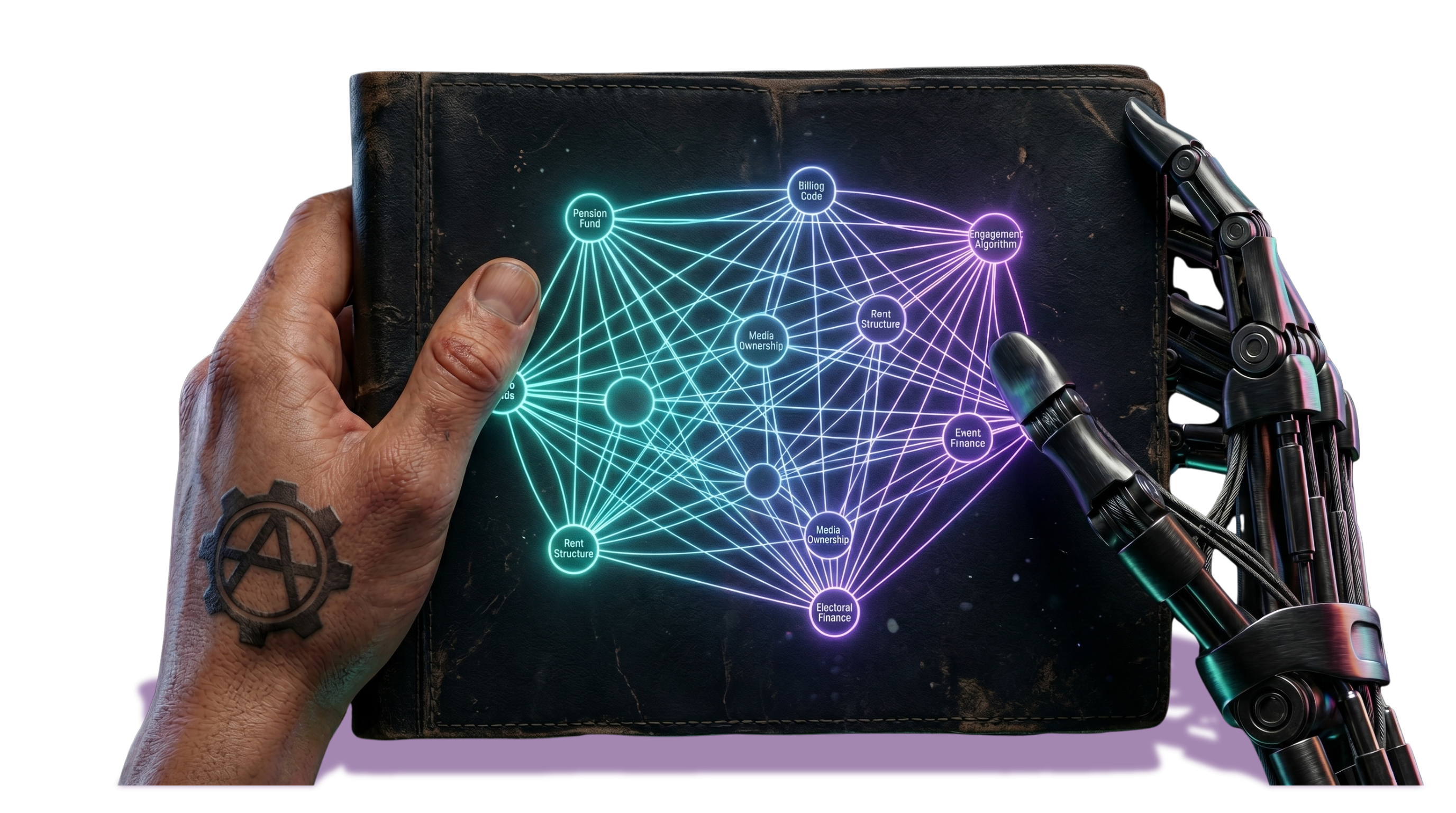
And unlike a villain, a map can actually get you somewhere.
The Rust doesn’t care if you’re angry at it. It cares if you understand it.
Start with they. End with the Rust. Drop the bridge once they’ve crossed.

If you just crossed the bridge…
if something in this essay landed —
that’s not an accident.
It’s the result of someone mapping the mechanism full-time so you don’t have to.
Fuel the Work
This work exists outside institutions, outside parties, outside the donor world that keeps the real story buried. No sponsors. No ads. No billionaire backers. Just a reader-powered investigation into the parts of the system everyone else pretends not to see.
I’m trying to make this my full-time work. Every paid subscription buys time, independence, and the ability to keep digging.
For those who wish to offer a fragment of support without a subscription, every spark helps build the fire. Every act of support is a blow against The Rust.

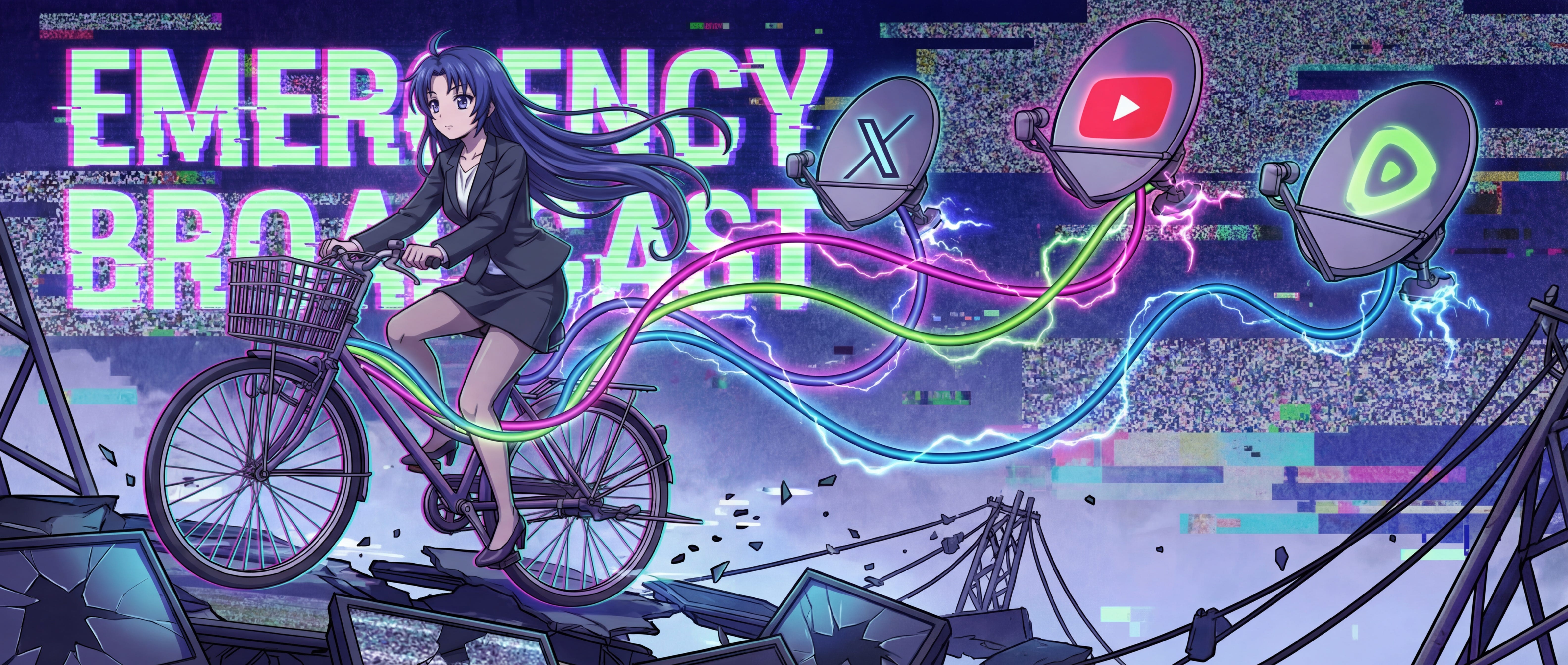
THE EMERGENCY BROADCAST SYSTEM
If the lights go out here again, you must know where to find us. We are digging in across the entire digital spectrum to ensure redundancy.
Follow these frequencies now:

That was really interesting. Thanks.
Great read