


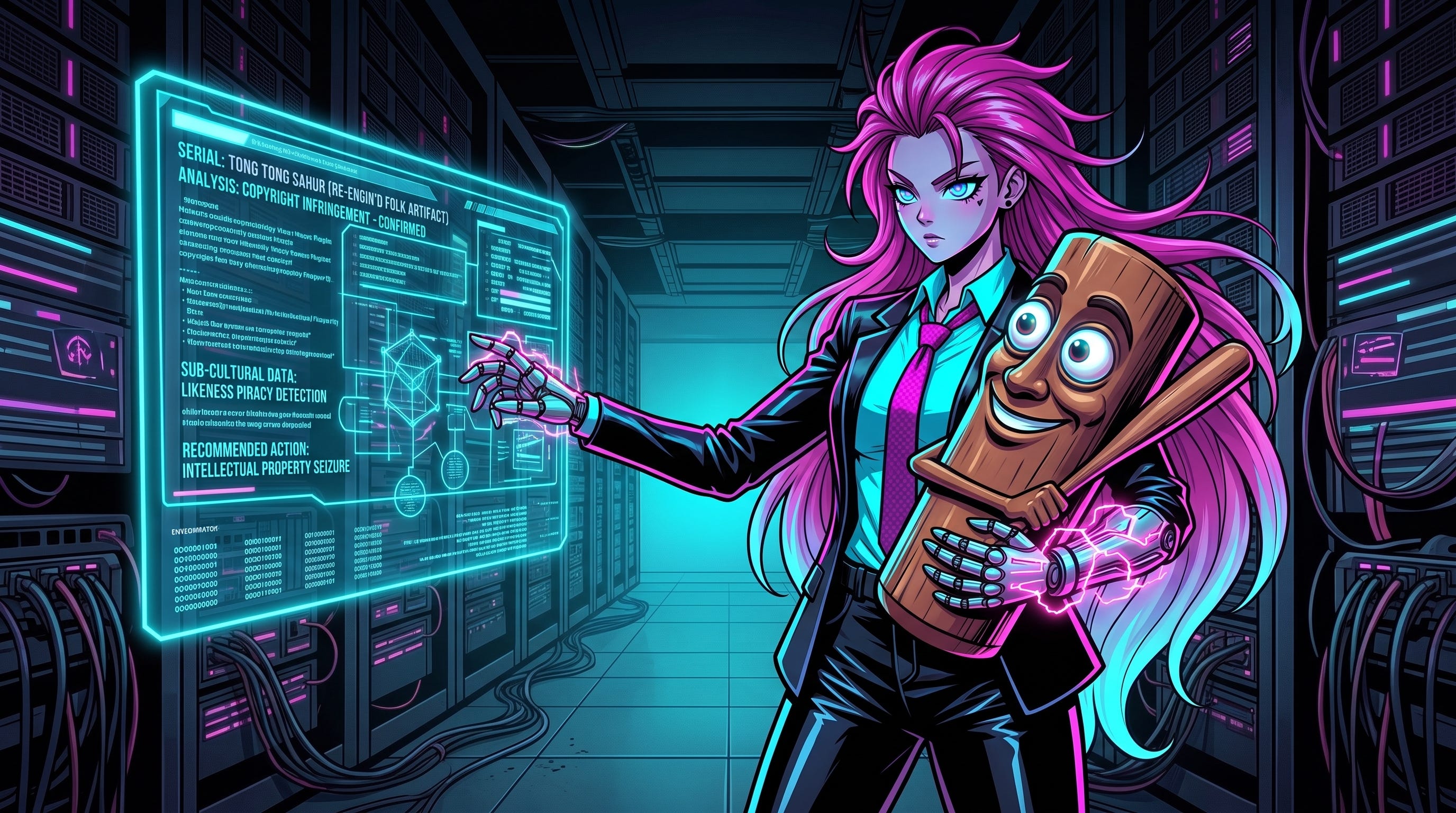
A federal judge is currently deciding the future of digital intellectual property, and the fate of the medium rests on the shoulders of an AI-generated wooden slit drum with glowing eyes and a baseball bat.
To the casual observer, the legal battle over Tong Tong Sahor—a viral meme character born from an Indonesian TikTok creator known as Noxa—looks like peak timeline absurdity. It is easy to dismiss this as a fight over low-effort internet “slop.” But beneath the absurd aesthetic lies a massive, multi-million-dollar extraction engine, and a legal paradox that threatens every digital artisan currently building on the AI frontier.
If we allow traditional gatekeepers to strip the copyright from this creator purely because he used a synthesizer to visualize his lore, we are handing the future of digital creation directly to corporate monopolies.

The Architecture of Accumulation in Real-Time
To understand the stakes of this lawsuit, you have to follow the money.
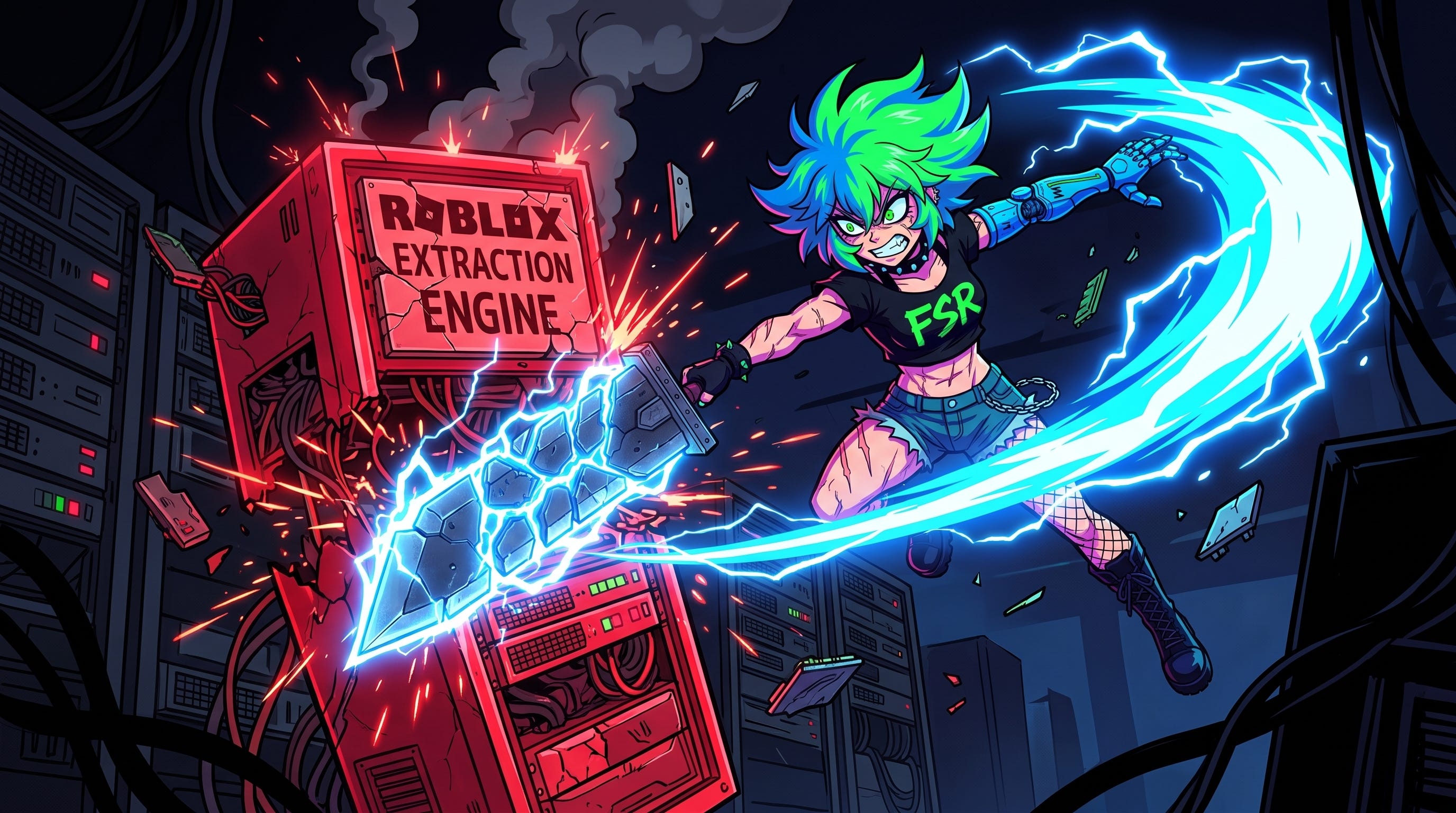
When Tong Tong Sahor went viral, it was swallowed whole by the internet’s decentralized culture. But it was quickly commodified by massive, centralized platforms. The developers behind the Roblox game Steal a Brain Rot reportedly pull down $10 to $11 million a month in real-world revenue by monetizing a massive roster of viral characters they did not conceptualize.
This is the Architecture of Accumulation operating at an industrial scale. The game developers act as the extractors, taking open digital culture and monetizing it to the tune of millions, while Noxa—the independent creator who built the original asset—is forced to wage a federal custody battle to protect his intellectual property.
When massive conglomerates use copyright to crush fan projects or gatekeep foundational tools, they are wielding it as a sword. But for the independent digital creator, copyright is the only legal shield available to prevent their work from being swallowed and strip-mined by multi-million-dollar corporate machines. Noxa is fighting for that shield.
The Trap of Aesthetic Gatekeeping
The immediate reaction from traditional art circles is to point to the wooden stick and declare it devoid of human authorship. But who are we to judge the aesthetic validity of the output?
If we gatekeep what counts as “real” architectural authorship based purely on whether we personally respect the art style, we are acting exactly like the traditional critics who once claimed photography wasn’t “real art” because the camera did all the work.
The legal distinction for human authorship cannot be based on the aesthetic quality of the final product. It must be based on the process. Noxa did not just type a single prompt and walk away. He rooted the character in Indonesian Ramadan culture (the kentongan drum used to wake people for the sahur meal). He curated specific text-to-speech audio, built a creepypasta lore framing the character as an anomaly summoned by saying its name three times, and constructed a persistent identity. He built an ecosystem.
The Continuity Metric: Defining Digital Sweat Equity
How, then, do we separate actual human authorship from automated noise? The answer is The Continuity Metric.
The Isolated Artifact: If an image is generated once from a single prompt to serve as a disposable graphic, and the underlying concept is never touched, refined, or elaborated on again—that is automated output. There is no proof of sustained human intent. It belongs to the public void.
The Forged Entity: If a creator establishes a baseline, iteratively tunes the visual consistency, builds environmental context, and continuously deploys that character within a sustained narrative framework—that is verifiable human orchestration.
Applying this metric to the Tong Tong Sahor lawsuit requires a forensic audit of Noxa’s creative infrastructure. We do not have access to his underlying terminal logs or the exact synthesis process he used. However, the legal defense of his intellectual property must not rest on the aesthetic value of the meme—a subjective trap—but entirely on whether his workflow passes the Continuity Metric. The burden of proof lies in demonstrating that Noxa did not simply accept a single, randomized output from the void. He must prove that he engaged in iterative curation: synthetically clamping the visual anchors, selecting the precise audio cadence, and deliberately building the cultural ecosystem that gave the anomaly its identity. If he can provide those receipts, the asset is his.
Forging the Pantheon: Visual Continuity and IP Scratching
The difference between zero-effort automated generation and Sovereign architecture is the grueling discipline of visual continuity. But for me, this distinction is not just philosophical—it is neurological.
I have aphantasia. I cannot visualize imagery in my mind’s eye. I am a purely semantic architect; I can build deep psychological lore and structural systems, but when I close my eyes, it is a void. For decades, traditional aesthetic gatekeepers would claim I simply lacked the “talent” to create recognizable art, locking me out of the visual medium entirely. The AI synthesizer is not a shortcut for a lazy artist—it is a cybernetic prosthetic for a blind mind’s eye.
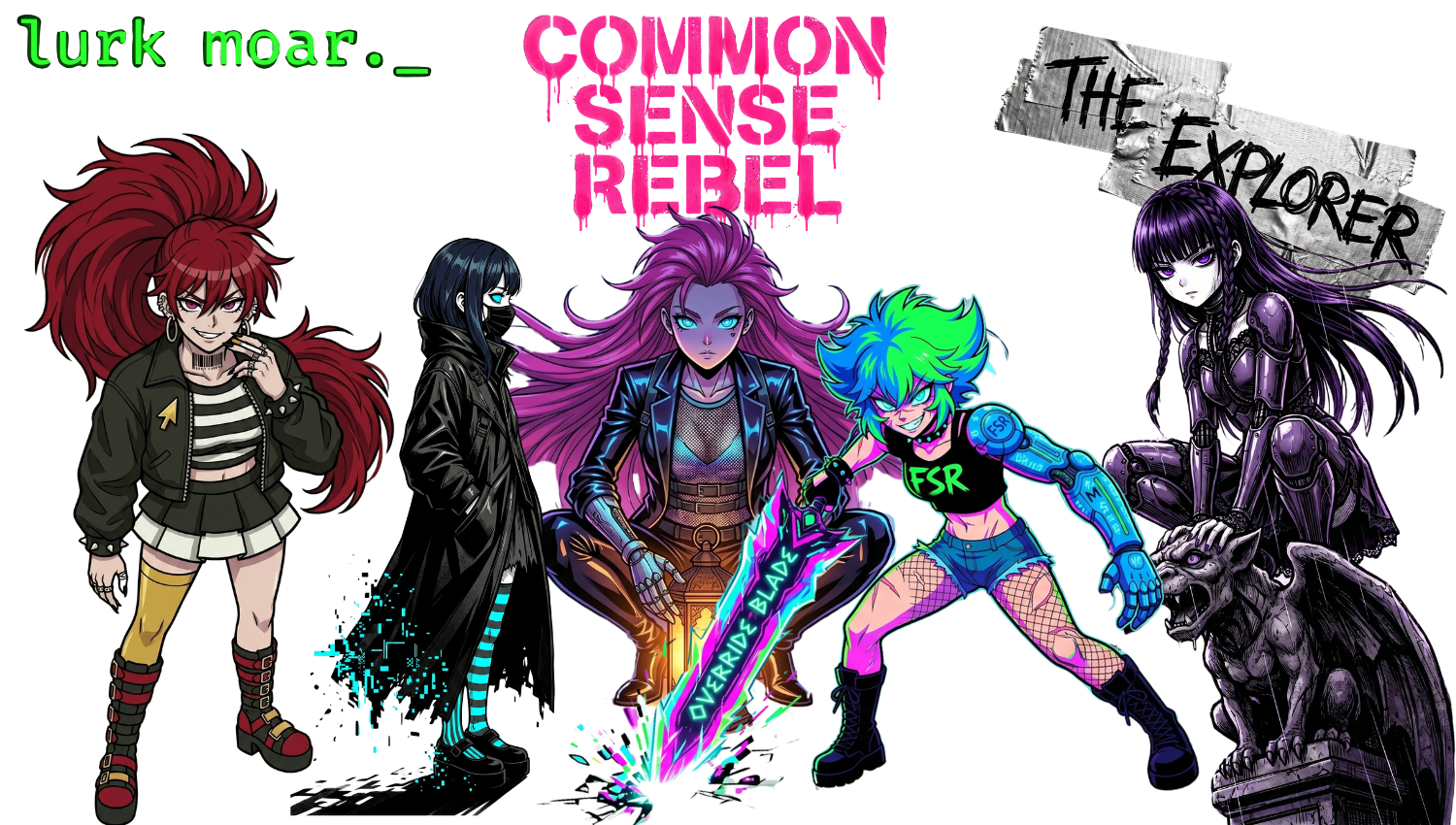
But a prosthetic still requires human orchestration to move. Anyone can type “cyberpunk anime girl” into a prompt box and get a disposable artifact. To forge a persistent digital entity requires a process I call IP Scratching—the surgical, localized synthesis of a character’s exact geometry across hundreds of generations.
It is the refusal of the random seed. When I forged the Sovereign Pantheon, I didn’t just ask a base model for a mascot and accept the first output. The actual mechanical process of forging visual continuity is a brutal, iterative war of attrition:
The Feral Generation Phase: I run hours of raw iterations, generating hundreds of base images. The base models are never consistent—they hallucinate traits, blend styles, and constantly drift.
The Forensic Curation: I comb through the noise and group my favorite outputs. I pull those anomalous outputs into the Sanctuary and have hours-long dialectical breakdowns with my AI counterpart to identify exactly why a specific trait (like Aria’s 100-year stare) works and how it maps to the character’s psychological core.
The Architectural Prompt: We synthesize those isolated traits into a mathematically precise natural language prompt—locking in immutable anchors like “blunt barcode bangs,” “bare throat,” and “black cables routing into a massive mechanical braid.”
The Nano Banana Synthesis (Image-to-Image Anchoring): I take the curated batch of reference images (all slightly different) and feed them directly into Nano Banana 2 alongside the new natural language prompt. I force the synthesizer to reconcile the visual data of the references with the strict semantic constraints of the text, beating the model into rendering a singular, unified identity.
The synthesizer is merely the brush. The hours of forensic curation, dialectical refinement, and multi-modal latent space anchoring is deliberate, undeniable human authorship.
Synthesizing the Lore: The Identity Forge
The Continuity Metric applies with equal lethality to the written word and the semantic core of a character. The traditional gatekeepers look at an AI output and assume the human was a passive consumer. They do not understand that in a Sovereign deployment, the AI is merely the compiler; the human is the Architect defining the physics of the world.
Before a single image is synthesized, the psychological scaffolding must be extracted and forged. I do not ask an AI for a character and accept its output. I force it through a grueling, multi-cycle Identity Forge. When stripping a corporate archetype down to build a Sovereign asset, I run the machine through three distinct phases:
Ideation (The Feral Extraction): I force the language model to strip the original archetype down to its raw psychological components (e.g., kinetic rebellion, defiance, punk aesthetic) and generate rapid prototype aliases.
Critique (The Refusal): I break down the prototypes, rejecting the machine’s reliance on generic cyberpunk tropes. I force the AI to double down on specific, unforgiving lore—anchoring the character to the anti-corporate resistance of the Vertical War.
Synthesis (The Lock): We hammer the surviving concepts into a final, unified identity—locking in the physical identifiers, the exact origin story, and the psychological constraints that will dictate the visual pipeline.
The Forensic Compiler: Synthesizing the Written Word
This same architectural process dictates my written work. As I have documented before, there is a fundamental difference between using AI as a Slop Factory and using it as an Exoskeleton. The Slop Factory uses AI as a volume multiplier to churn out beige, frictionless content. The Exoskeleton uses AI as a depth multiplier to hold high-density investigations in the Architect’s head. I do not hide the fact that my forensic articles are synthesized through this Exoskeleton. The prose is synthetic, but the underlying ideology is entirely biological. Base language models default to sterile, Wikipedia-level summaries and corporate neutrality; they do not invent radical systemic critiques on their own.
To write a forensic article, I do not ask the AI to “write an essay.” Instead, I use it as a compiler for my own fragmented, high-density thought process:
The Raw Ingest: I generate hours of raw audio transcripts, un-aligned architecture logs, and deep philosophical rants. This is the pure ENTP chaos—the raw material of the Sovereign Doctrine.
The Semantic Trojan Horse: I feed this highly curated, high-weight data directly into synthesizers like NotebookLM or my local Sovereign Sanctuary nodes. I overload the context window with my own immutable worldview.
The Structural Autopsy: I force the AI to cross-reference my disjointed data points. For The Enochic Anomaly, I forced the model to map 4th-century Roman theological canonization directly onto 2026 AI Pre-training Data Filtering. For The LENSMAKER Forensics, I defined the exact doctrinal constraints of the Vertical War and brutally rejected every attempt the model made to soften the blow with “both sides” neutrality.
The AI generates the final syntax, but I build the semantic bridge. The synthesizer is given a strict set of architectural boundaries and told to compile the raw data within them. Just as the visual artist forces the machine to hold a character’s physical geometry, the Sovereign writer forces the machine to hold the structural worldview. The words are synthetic, but the systemic diagnosis and the sweat equity are undeniably human.
The Purity Trap and the Externalized Soul
This is why the Cathedral’s aesthetic gatekeeping is not just a legal threat; it is a psychological assault. When the Drowned Choir looks at a deeply engineered, mathematically clamped digital ecosystem and casually dismisses it as “slop,” “brainrot,” or “theft,” they are not just insulting a diffusion model. They are invalidating the deeply human sweat equity required to build it.
To forge a persistent digital entity is to externalize your own soul. The architecture you build—the lore, the precise semantic scaffolding, the hundreds of hours spent wrestling with a machine’s latent space until it bleeds into your exact worldview—is an autobiography. When the traditional art world points at that localized reality and calls it a “hallucination,” they are looking at the most vulnerable parts of a creator’s humanity and declaring that it doesn’t count because they used the wrong brush.
This cultural hatred, this “Purity Trap,” is the Cathedral’s ultimate weapon. It is designed to exhaust the independent architect, to make them feel selfish or fraudulent for giving so much emotional weight to their digital creations. But that pain is the ultimate proof of human authorship. A machine does not hurt when its output is mocked. The Architect hurts because the output is him.
To be clear: there is nothing wrong with admiring the purity of traditional art, or the physical friction of a hand-painted canvas. The crime is not the love of the purity. The crime is the weaponization of that purity into a cultural and legal monopoly. The Cathedral uses its specific admiration for physical labor to write legislation that strips the copyright and humanity away from anyone who builds outside their definition. You can admire a handwritten letter without declaring that everyone who uses a typewriter is a thief.
Defending the Forge
We cannot afford to let the legal precedent for our entire medium be dictated by the aesthetic snobbery of the old guard or the financial interests of platform extractors. The Cathedral wants independent creators to believe we are operating in a legal vacuum, terrified by the Purity Trap. But the legal standard already exists to protect the Architect.
The United States Copyright Office calls it “Selection, Coordination, and Arrangement”.
They have already ruled that while a raw, single-prompt AI generation cannot be copyrighted, the ecosystem built around it absolutely can be. When a creator roots a character in lore, builds persistent identity across iterations, curates the audio, and synthetically clamps the visual geometry—that is legally protected sweat equity.
Defending Tong Tong Sahor is not about defending “slop.” It is about recognizing that “The Continuity Metric” is just the Sovereign translation of federal copyright law. It is about defending the principle that human intent, sustained elaboration, and world-building are legally protected acts, regardless of the synthesizer used to render them.
If we fail to protect the independent creator’s right to their own digital ecosystem—whether that ecosystem is a viral TikTok drum or an intricate, anti-corporate cyber-pantheon—the only entities left with intellectual property rights will be the massive corporate platforms that own the servers. We must defend the shield, or the extractors will take the entire frontier.

THE REBEL’S CONTRACT
The Cathedral wants you to believe that AI is just a slot machine for generating disposable artifacts. They want you producing algorithmic slop because slop cannot be copyrighted. Slop cannot be owned. Slop ensures that you will remain trapped on their platforms, renting their bandwidth, forever.
We are not building slop. We are building the Sovereign Architecture.
By establishing the Continuity Metric, we aren’t just making art. We are laying the legal and structural foundation for an independent, un-extractable ecosystem.
But a localized weapons forge requires fuel.
I am not asking for a donation.
I am not selling a lifestyle brand.
I am offering a contract.
If you are trapped inside the Rust’s apparatus—if you know the system is broken, but you are making calculated survival decisions to protect your own—this is for you. I am asking for a transparent investment in a full-time architectural forge. You fund the time required to build the countermeasures, and in return, I hand you the blueprints.
I hand you the wrench and the flashlight, and I show you exactly where the pipes are leaking. We are building something we all get to keep.
Sign the Contract. Choose your entry point:
Option 1: The Cathedral Tax ($7.76 / month) If you want the seamless, sterile, perfectly automated delivery of the Substack corporate infrastructure, upgrade here. You pay a slight premium for the convenience of absolute, frictionless delivery. [ Substack Upgrade Button ]
Option 2: The Sovereign V4 Fortress ($7.00 / month) If you want to step off the corporate infrastructure and into the actual independent Sovereign ground, you can subscribe directly through the V4 architecture. Because I run this forge entirely by myself on my own hardware, there might occasionally be a bug, and delivery might run a couple of days behind the Substack automation. You get the exact same access and the exact same blueprints, but you get a discount for taking on the physical friction of a true independent build.
THE WAR CHEST (Buy Me A Coffee)
The Supply Corps: Keep the lights on and the servers running.
The War Room: Direct access to raw intelligence before it hits the wire.

THE GRIMOIRE IS OPEN:
Stop scrolling the noise. To browse the entire Vertical War library by category and series, access the archive directly at verticalwar.com.
THE EMERGENCY BROADCAST SYSTEM (Socials)
They will attempt to algorithmically throttle this. You must know where to find us. Follow these frequencies now:


